Buying guide
Foam Roller Buying Guide (2027): Density, Length, Surface, and Foam Type
How to buy a foam roller: pick density by experience and body weight, length by main body area, surface by tolerance, and foam type by how you will store it.
Density: the honest self-test
Ask two questions. Have you rolled regularly for six months or more, and do you find medium rollers vague under your calves? Two yes answers point firm. Anything else points medium or standard, and that is not a lesser purchase: density you use beats density you admire. Body weight shifts the line, since heavier users compress every class one step softer in practice.
Length by main job, not by ambition
Back and lying mobility: 36 inches. General legs plus some back: 18 inches. Focused legs, glutes, and travel: 12 to 13 inches. Buying the longest because it covers everything ignores that a 36 inch roller is clumsy for the focused work most people do most days. Many settled households own a long smooth and a short firm, which is a system, not an indecision.
Top picks from our research
Full ranked list

Surface: smooth teaches, pattern concentrates
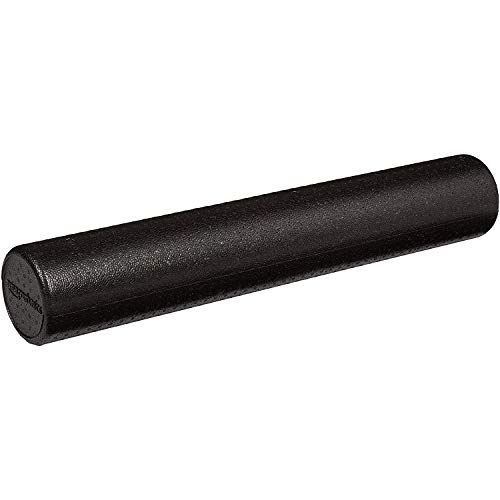
Smooth surfaces spread pressure and forgive placement errors, which is why every beginner pick in this guide is smooth. Patterns, grids, and knobs concentrate force onto smaller areas: valuable in trained hands on large muscles, miserable over bone and for new users. There is no smooth upgrade path that requires a pattern; it is a preference some users develop and many never do.
Foam type and core construction
EPE is light, cheap, and dent-prone under bad storage. EVA is smoother, more resilient, and the studio standard. EPP-style molded foam is firm, light, and durable with a speckled look. A hollow rigid core under EVA, as in the GRID line, is the construction that holds firmness longest. Match construction to your storage: a roller kept in a hot car should be chosen accordingly.
Storage deserves one more sentence of respect, because it quietly decides which construction reaches its second year. EPE's dent-proneness shows first in exactly the places rollers actually live: under a heavier item in a closet, against a hot car seat in summer, or stood on end in a corner taking a point load for months. The speckled EPP-class molded foams shrug off that treatment better, and the hollow-core GRID construction holds its firmness longest of all, at a price that only makes sense for daily rollers. The replacement test in this guide's FAQ, a permanent flat spot or a cracked surface, is usually a storage report rather than a rolling one. Buy the construction your storage can treat kindly, and the density you chose on purpose will still be the density you own next year.
The second-roller plan
Budget for the possibility that one roller is not the endpoint. The common settled pairs are long smooth plus short firm, or medium general plus extra-firm specialist. Buying a mid-priced first roller that stays useful as the gentle option is smarter than buying a premium specialist first and a gentle roller to recover from it.
Worked example: a heavier runner's first roller
Take an example buyer: a 210 lb runner, new to rolling, whose work is calves after runs and some back mobility on rest days, with the roller living in a car boot between the gym and home. The density self-test opens the decision and answers itself: no six months of rolling, no medium roller feeling vague, so the honest starting class is medium, with the caveat that body weight compresses every class one step softer in practice, which at 210 lb makes a true medium the working firmness rather than a compromise. Length follows the main job: legs plus some back is the 18 in case in this guide, long enough for two calves and short back work, short enough to live in a boot. Construction closes the sale, because the hot car is the storage fact. EPE dents under that life, so the pick comes from the EVA and EPP shelves: an 18 in medium EVA in the Yes4All pattern, or a medium molded EPP from the 321 STRONG line, both smooth as the surface section demands for beginners. The second-roller plan is already visible in the example: when the calves graduate and medium starts feeling vague there, a short firm 13 in roller joins the system, and the first roller remains the gentle option rather than a mistake to sell.
FAQ
Foam Rollers questions, answered straight
What diameter is standard?
Most home rollers are 5.5 to 6 inches across. Slimmer rollers sit lower and feel gentler; larger diameters increase leverage and pressure. Diameter is a secondary spec after density and length.
How do I clean a foam roller?
A damp cloth with mild soap, dried fully, is the standard routine for EVA, EPE, and EPP surfaces. Keep solvents and soaking away from foam; both shorten its life.
When should a roller be replaced?
When it has taken a permanent flat spot, the surface cracks, or a hollow core deforms. A roller that has changed shape has changed pressure, and not in a direction you chose.