Buying guide
Folding Equipment Buying Guide (2027): Measure the Slot, Price the Fold Tax, Test the Routine
How to buy folding and storable gym equipment: measure three storage slots, read folded dimensions before features, understand what folding costs in rigidity.
Measure three slots, in inches, before shopping
Small homes offer the same three storage slots: a flat slot (under a bed, behind a door, behind a sofa), a corner (closet floor, room corner), and a shelf or drawer. Measure each slot's length, width, and height, and the doorways and turns on the path to it. Write the numbers on paper and shop against them. Folded dimensions are the product in this category, and a slot measured from memory is a return waiting for a delivery date.
Read folded dimensions like a skeptic
Manufacturers measure folded states generously: pads removed, posts lowered, the friendliest orientation chosen. Find the folded figure for the exact model revision, note what must be removed or adjusted to achieve it, and add an inch of mercy in every direction. If a listing shows only in-use dimensions for a product sold as folding, treat the omission as information and keep shopping.
Top picks from our research
Full ranked list

Price the fold tax honestly
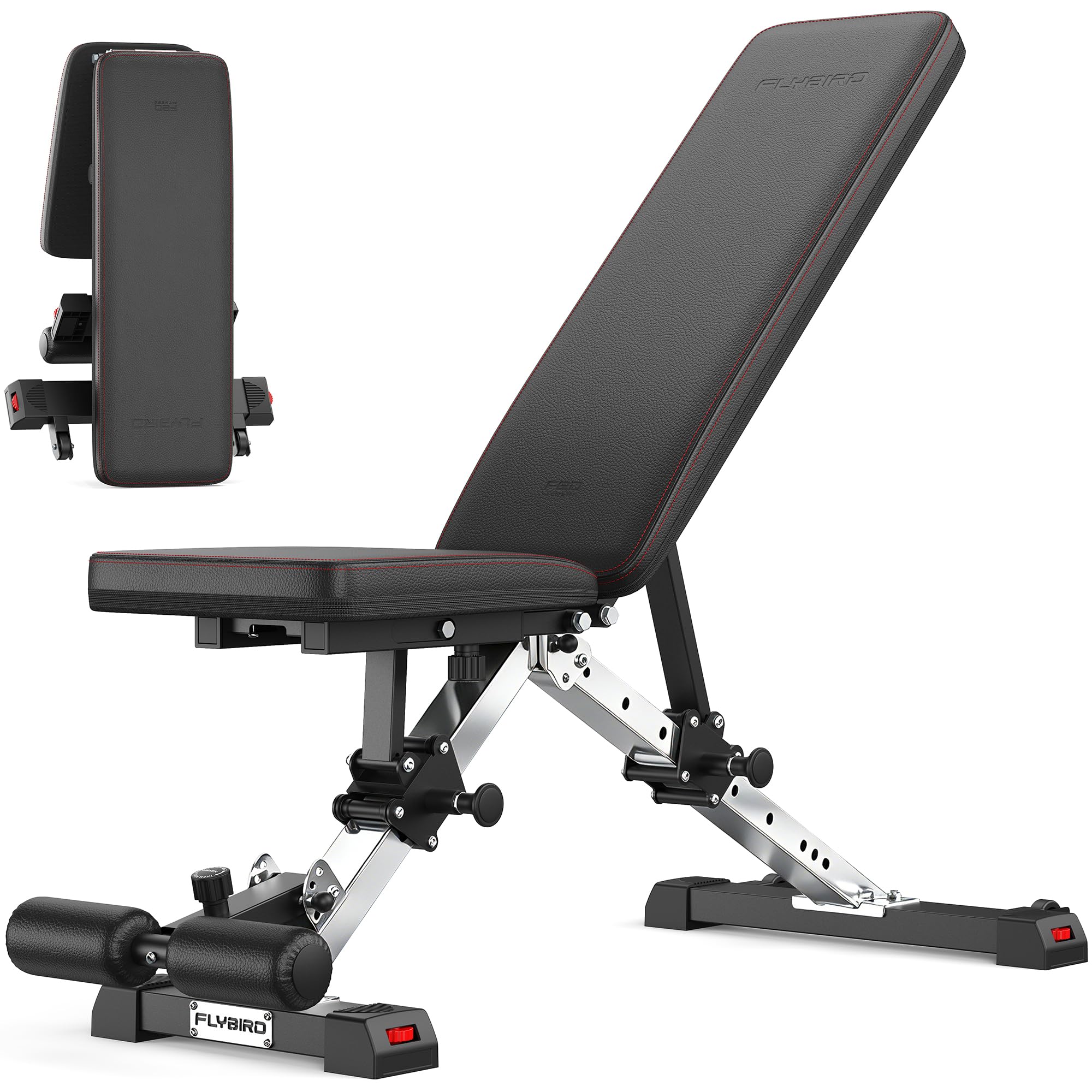
Folding costs rigidity, capacity, and ceiling. Hinges flex where welds do not; folding benches rate below fixed benches; folding treadmills shorten belts or cap speeds. None of this is hidden, and none of it matters if your training lives inside the envelope. It matters completely if your training lives at the envelope's edge. Compare your hardest regular session, not your best day, against the folded product's listed limits.
Rehearse the routine before you commit
Storage only works at the speed of life. Estimate the full cycle for each candidate: retrieve, unfold, train, fold, return. Anything over five minutes of total friction will eventually defeat a tired owner on a busy week, and the gym will migrate to living unfolded, which in a small home means living resented. Wheels, lift assists, and pin systems are not luxuries in this category; they are the adherence features.
Assign every piece a named home
The final check is a sentence you should be able to say for each purchase: this sleeps here. A piece without a named home will colonize the room it trains in. Build the storage map for the whole gym before buying the second piece, because slots interact: the bench panel and the walking pad may both want the same closet wall, and discovering that on delivery day is how storable gyms fail.
FAQ
Folding and Storable Equipment questions, answered straight
Is non-folding compact equipment ever better than folding?
Yes, and this hub ranks examples: the PowerBlock block and the mini stepper store superbly with no fold at all, because their working shape is already their storage shape. A fold is a means to a small stored size, not a virtue in itself. Buy the stored size, by whichever mechanism achieves it.
What folded thickness should I target for behind-door storage?
Most interior doors forgive about 4 to 6 in of panel before handles, hinges, and swing arcs complain. Test your exact door with a stack of books at the candidate's thickness and cycle it fully before ordering any panel-style product.
How do I verify a folded dimension before buying?
Use the manufacturer's specification sheet for the exact model over marketplace summaries, and cross-check with owner photos showing the folded unit against doors and closets, which reveal real-world bulk that dimension tables flatten away. When sources disagree, plan against the larger number.