Buying guide
Freestanding Punching Bag Buying Guide (2027): Bases, Fill, Height, and Floors
How to buy a freestanding punching bag: read base diameter and filled weight first, choose sand or water honestly, match height to your discipline.
Start with the base, not the bag
Every disappointment in this category is a base disappointment. Record three numbers for any bag you consider: base diameter, filled weight, and fill type. A 28 inch base at about 270 lb sand filled is a planted bag. A narrow base under 200 lb is a bag you will chase. Marketing leads with the striking surface because it photographs well; your training will be decided underneath it.
Sand versus water, decided by permanence
Sand is heavier in the same base, cannot leak, and makes any bag quieter and more stable. Water is easy to fill, easy to drain, and the right choice for renters and anyone who may move the bag within a year. Decide by how permanent the corner is, not by which fill sounds more serious, and if you choose water, budget a dense mat as part of the system.
Top picks from our research
Full ranked list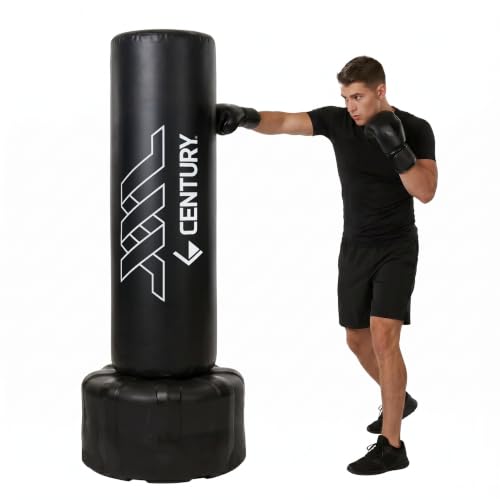

Height and the low zone
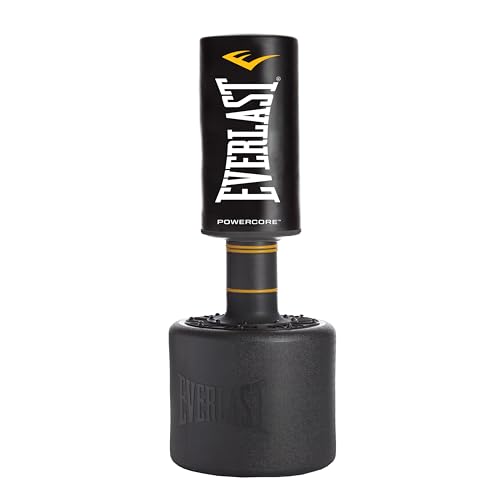
Total height is a weak spec. What matters is where the foam starts and ends. Boxing needs a strike zone centered on your chest to head height. Kickboxing needs foam continuing low enough for shin contact above the base. Torso bags trade total zone for targets. Lay your main combinations over the bag dimensions before ordering.
Foam, shell, and strike feel
High density foam under vinyl is the durable standard. EPE foam under PU synthetic leather is lighter and softer, fine for conditioning, faster to age under power. Air chamber cores feel forgiving and suit high volume work. None is best in isolation; match the feel to your hands, your volume, and how hard you honestly hit on a normal Tuesday.
Plan the room like equipment, not furniture
Measure a working circle, not a footprint: roughly six feet across for boxing, more for kicks. Keep the bag off shared walls to cut noise, put a dense mat down first, and fill the base in its final position. A freestanding bag bought with a room plan behaves like gym equipment; the same bag bought on impulse behaves like a problem.
FAQ
Freestanding Punching Bags questions, answered straight
What size freestanding bag should a beginner buy?
A full height cylinder in the mid tier, such as the Original Wavemaster or PowerCore class, unless space forces the compact option. Beginners outgrow mini bags and reflex only setups quickly, while a mid tier cylinder serves for years.
Do I need gloves and wraps for a freestanding bag?
Yes. Bag gloves and hand wraps protect knuckles and wrists on any bag in this guide, including the soft ones. The bag being forgiving does not make bare knuckle volume training a sound plan.
How do I stop a freestanding bag sliding?
Fully fill the base, prefer sand, add a dense mat, clean suction cups and the floor under them, and check for a slow water leak dropping the fill level. Sliding that survives all four fixes is the bag telling you it is undersized for your power.