Buying guide
Home Boxing Gym Setup Buying Guide (2027): Bag, Support, Gloves, Floor, and Timer in the Right Order
How to build a home boxing gym: choose hanging or freestanding first, plan the support and room honestly, size gloves and wraps, protect the floor.
Decide hanging versus freestanding before shopping
This is a housing decision disguised as an equipment decision. Hanging bags need structure: a joist that can take dynamic load, or floor space surrendered to a stand. Freestanding bags need floor grip and fill weight. Owners, renters, apartment dwellers, and garage owners answer differently, and every later choice in the build follows this one, so make it from your lease and your joists, not from a highlight video.
Plan the support and the true footprint together
Price the support with the bag, always: a kit without a stand is half a setup, and a stand's footprint is bigger than its frame once a bag swings from it. Lay out the training circle on your floor with tape - about 6 feet for one bag - and check doors, storage, and the other equipment against it. Rooms fail on paper less often than they fail on tape.
Top picks from our research
Full ranked list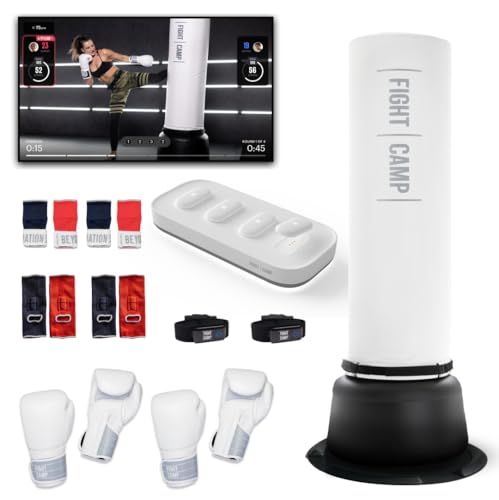
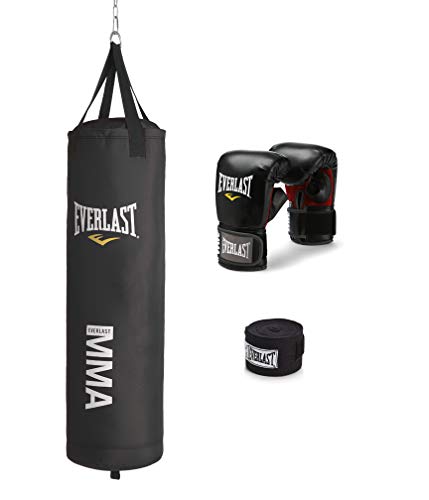

Gloves and wraps are safety equipment, not extras
Budget real bag gloves and full hand wraps with the first order, even when a bundle includes starters. Wrap every session; it is the cheapest injury prevention in the sport. Plan the glove upgrade path honestly too: regular trainers replace or upgrade gloves on a yearly rhythm, and a setup budget that pretends otherwise underprices the room.
Floor protection does three jobs
A mat zone under the training area protects the floor from bases and dropped gear, protects your feet and joints during footwork on hard surfaces, and absorbs the impact noise that travels to other rooms. Interlocking tiles suit permanent zones; roll out mats suit shared rooms. Skipping the floor layer is the false economy that generates most neighbor and landlord problems in home boxing.
Put a timer at the center of the room
Rounds are the unit of boxing training, and a timer is what makes a bag corner into a gym. Choose any system you will actually use: a wall interval timer, a boxing timer app on a tablet, or the built-in programming of a connected setup. Set the standard pattern - work rounds with a minute of rest - and let the clock, not your mood, end rounds. Every setup ranked in this topic assumes this final, cheapest component is present.
FAQ
Home Boxing Gym Setup questions, answered straight
In what order should I buy the components?
Bag core and its support together, gloves and wraps in the same order, floor protection before the first session, and the timer before the second. Reflex and speed bag stations come after a month of regular bag training proves the room is real.
How heavy should a home heavy bag be?
As a working rule, around half the boxer's body weight, which lands most adults on the 70 to 100 lb class. Too light and the bag flies and teaches chasing; too heavy and combinations stall. Freestanding bags substitute base stability for some of that mass, which is why their technique ceiling differs.
Can a home boxing gym share space with a lifting setup?
Yes, and garages do it constantly. Keep the bag's swing circle clear of the rack and bench permanently, not just on bag days, and give each station its own floor zone. The failure mode is a room where using one station requires moving the other.