Buying guide
Massage Chair Buying Guide (2027): Tracks, Scans, Clearance, Doors, and Delivery
How to buy a massage chair: pick the track first, match the height range to your users, measure recline clearance and the delivery route.

Pick the track, then everything else
Start with one question: should the rollers continue under the seat? If yes, you are shopping SL-track chairs only, and every S-track model, however polished, is out. If your use is back-focused, S-track chairs re-enter at better prices and sometimes better design. Let that single answer cut the market in half before you read a single program list.
Match the chair to the bodies
List every regular user with their height, then compare against maker ranges, leg extension, and shoulder width notes. A chair at the edge of its range for your main user will scan less accurately and fit less well than the same chair mid-range. For mixed households, optimize for the daily user and treat occasional users as guests the chair tolerates.
Top picks from our research
Full ranked list

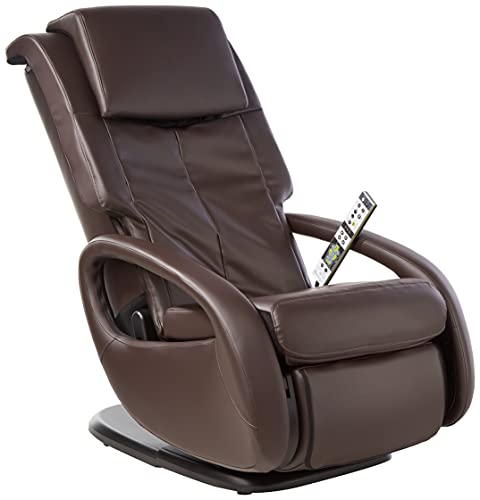
Measure the room in three states
Measure the chair upright, fully reclined, and mid-delivery. Upright footprint, reclined length and wall clearance, and the box route through doors and turns are three different measurements, and a chair must pass all three. Space-saving reclines change the wall number, swivel bases change how the footprint can be angled, and neither changes the delivery route.
Read airbags and rollers as one system
Rollers handle the back and track route; airbags handle shoulders, arms, hips, calves, and the holding actions in stretch programs. A chair strong in one and thin in the other feels incomplete in full programs. Check coverage area lists rather than airbag counts alone, because placement matters more than the raw number in a listing headline.
Price the whole purchase
Add delivery format, assembly time or service, a surge protector, floor protection under the base, and the return reality for a 200-plus pound object. A chair that is cheaper to buy can be dearer to own if it arrives in one oversized box to a third floor. The best value in this guide is always quoted against the installed, working chair, not the cart total.
Put names to the line items before comparing sticker prices, because they differ by chair and by house. Delivery format ranges from curbside freight to room-of-choice and full assembly, and the gap between those services on a chair this size routinely exceeds the price gap between two competing models. Stairs, tight turns on the route you measured, and old-house doorways all belong in the delivery conversation at order time, not at the truck. The return question deserves the same bluntness: ask what returning the chair actually involves, who arranges the freight, and what it costs, while the answer is still hypothetical. A purchase priced honestly across all of that can then be compared chair to chair, and the guide's value picks are chosen on exactly that installed basis.
Worked example: two heights, one den, a narrow door
Work an example household: two daily users, 5 ft 4 in and 6 ft 1 in, who want the rollers to continue into glute work, in a den reached through a standard interior door. The track question answers itself first and cuts the market: under-seat coverage means SL-track only, which removes the polished S-track designs, including the swivel-base Human Touch pattern, however well they would suit the room. The bodies section runs next. The chair must sit mid-range for the taller user rather than at its limit, so body scan and leg extension move to the top of the checklist, and both example finalists carry automatic scans: the Osaki OS-Champ pattern, SL-track with full-body airbags and foot rollers, and the Kahuna LM-6800 pattern, SL-track with a computer scan and triple foot rollers. The room then gets its three measurements, upright, reclined, and the delivery route through that door, with the reclined figure checked against the den's wall rather than assumed from the upright footprint. Whole-purchase pricing casts the final vote, comparing the two installed and delivered, not listed. The example's answer is whichever of the two SL chairs passes the door and the recline with the taller user mid-range, bought on its installed price; the exercise matters more than the badge, because every step eliminated something a program list would have hidden.
FAQ
Massage Chairs questions, answered straight
What is 3D or 4D in a massage chair?
3D rollers add in-and-out depth movement to the usual up-down and side-to-side paths, giving depth control over how strongly rollers press. Listings use 4D for rollers that also vary speed rhythm. It is a control upgrade, not a different track type.
Do I need zero gravity?
Most chairs in this class include it, and many users prefer the reclined weight distribution for full programs. Treat it as a standard expectation at mid-range and above rather than a premium differentiator.
How long do massage chairs last?
Established brands with parts support are the safer long-term buy, which is one reason this guide weights sales history. Upholstery care, keeping the chair out of direct sun, and not exceeding capacity are the owner-side factors that show up in long-term feedback.