Buying guide
Massage Gun Buying Guide (2027): Amplitude, Stall Force, and the Mini Trap
How to buy a massage gun: read amplitude and stall force before speed headlines, match size to your real routine, and price heads, cases, and charging honestly.
Start with amplitude, not percussions per minute
Marketing leads with speed because the number is big. Training value lives in amplitude: under 10 mm is surface work, 10 to 12 mm is the general-use band, and 14 to 16 mm is deep work on large muscles. Pick your band from your muscle groups first, then compare speeds inside it. A mini advertised at huge speed numbers is still a shallow tool, and owners discover that in the first leg session.
Stall force is the pressure budget
Stall force tells you how much pressing the motor tolerates. You should not lean your body weight into any gun, but large muscles invite real pressure, and a low-stall tool will fold exactly there. Where a maker publishes the figure, compare it. Where they do not, read the model as a light-to-moderate pressure tool and price it accordingly.
Top picks from our research
Full ranked list

Size honesty: where will it live?
A flagship in a hallway closet gets used less than a mini on a desk. Decide the storage spot before the model: gym corner with a case, desk drawer, travel bag, or shared family shelf. That answer eliminates half this guide correctly, because the best gun is the one inside your actual routine, and every owner theme in this category eventually says so.
The mini trap in this guide's title is the shadow of this section. A mini earns its desk drawer honestly when the work is surface-level and frequent, but its amplitude band does not change with enthusiasm, and owners who quietly expect deep leg work from a pocket tool end up owning two guns and using the second. The settled pattern in households that train seriously is a division of labour rather than a compromise: a full-size gun that lives where training happens, chosen on the amplitude and stall sections above, and a mini that travels, chosen on size alone. If the budget allows only one, let the training, not the travel, choose it, because trips are occasional and leg day is weekly. Deciding which life the gun will lead is the purchase; the model is paperwork afterwards.
Heads, cases, and charging are the ownership specs
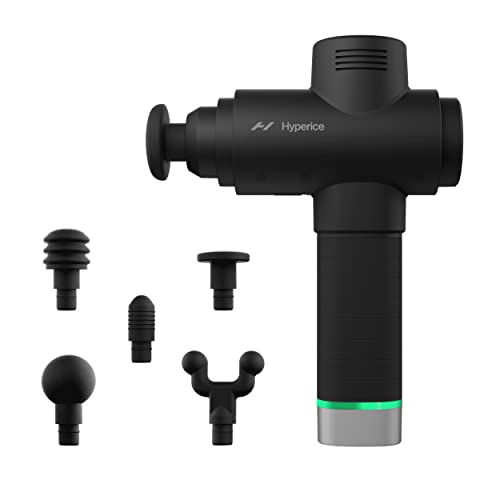
After the motor, daily life is heads and cables. Ball and flat heads do most work; exotic shapes are occasional. A real case protects heads and makes travel normal. USB-C or swappable batteries remove the two charging frictions owners complain about most. Score these at your tier rather than counting heads as a headline.
Noise and the shared home test
If anyone sleeps, studies, or takes calls within a wall of your training space, noise is a primary spec. Quiet-tuned motors and soft heads at low speed are a different product in practice. Buy for the house you live in, and if late sessions are your only training window, start from the quiet guide rather than adapting a loud flagship.
Worked example: heavy legs, late sessions, thin walls
Take an example buyer: a lifter whose recovery work is quads, glutes, and calves after evening sessions, in an apartment where a partner sleeps one wall away. The amplitude section runs first and sets the band at 14 to 16 mm, because the muscle groups named are the deep-work case, which removes every mini and most budget full-size guns regardless of their speed headlines. Stall force runs second and rewards published figures: the Theragun PRO pattern publishes 16 mm of amplitude with up to 60 lb of stall force, while the Hypervolt 2 Pro pattern offers a 14 mm class stroke with the maker asking you to check the listing for its current pressure figure, a transparency gap this guide prices as caution. The ownership section contributes its vote: the PRO pattern's two removable batteries, about 150 minutes each, suit a shared household gun that must never be found empty. The noise test is the example's honest complication, and it is handled with technique rather than denial: the deepest work happens before the house sleeps, while late sessions drop to low speeds and the soft dampener heads, SuperSoft among the PRO's six attachments, exactly the adaptation the noise section prescribes. The example's answer is the deep full-size gun, bought for the training, with its quiet hours planned like any other part of the program.
FAQ
Massage Guns questions, answered straight
How much should a first massage gun cost in tier terms?
A budget full-size gun covers learning and general use. Move to mid-tier for a calmer motor, a display, and better heads, and to premium for depth, materials, and battery systems. The jump that matters most is budget to mid; the flagship jump buys depth and finish.
Are expensive heads worth buying later?
Usually only the soft dampener style for sensitive areas and a replacement ball when the original wears. Most owners settle on two heads. Spend on the motor first.
What warranty signals quality here?
Multi-year coverage and a brand that stocks heads and batteries years later. In a category full of rebranded shells, parts availability in year three is the real premium feature.