Head to head
NordicTrack Commercial 1750 vs Horizon 7.4 AT (2027): Coach or Instrument?
Flagship iFIT runner against the value runner: decline and classes versus dial response and subscription freedom, on near-equal hardware.
NordicTrack Commercial 1750 Treadmill vs Horizon 7.4 AT Treadmill: the specs, side by side
| Spec | NordicTrack Commercial 1750 Treadmill | Horizon 7.4 AT Treadmill |
|---|---|---|
| Motor | 4.25 HP (current model; earlier versions 3.75 CHP) | 3.5 HP class (Rapid Sync Johnson Drive) |
| Speed range | 0-12 mph | 0.5-12 mph |
| Incline | -3% to 12% | 0-15% |
| Belt size | 60 x 22 in | 60 x 20 in |
| Capacity | 400 lb (current model) | 350 lb |
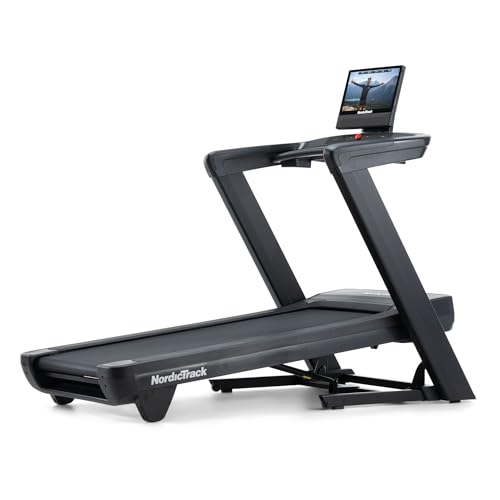 NordicTrack
 Commercial 1750 Treadmill
Coached marathon miles on a 60 x 22 in belt, decline included.
- Motor: 4.25 HP (current model; earlier versions 3.75 CHP)
- Speed range: 0-12 mph
Sources: NordicTrack Commercial 1750 product documentation, Amazon listing specifications
Check price on Amazonor add to your Amazon cart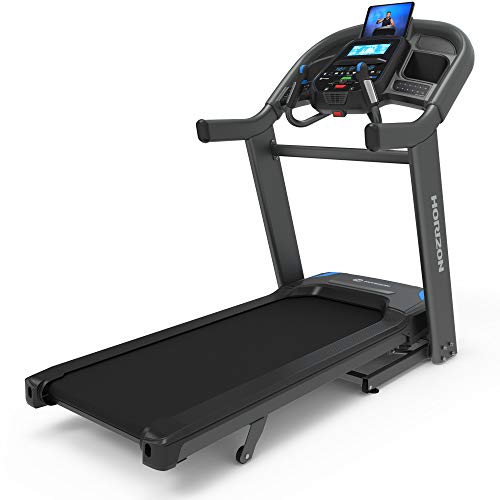 Horizon Fitness
Horizon 7.4 AT Treadmill
Rapid Sync drive, dial controls, and a runner's belt with no subscription.
- Motor: 3.5 HP class (Rapid Sync Johnson Drive)
- Speed range: 0.5-12 mph
Sources: Horizon Fitness 7.4 AT product documentation, Amazon listing specifications
Check price on Amazonor add to your Amazon cartOur recommendation
The hardware gap is smaller than the price gap suggests: both run full-size belts with strong drives. The 1750 adds decline, a big screen, and a coach. The 7.4 AT adds dial precision, a wider grade top end, and permanent independence from subscriptions. Runners who follow plans unaided should bank the difference; runners who follow coaches should not.
Grade philosophy
1750: -3% to 12%, built for terrain simulation. 7.4 AT: 0% to 15%, built for climbing load. Pick by your course goals: rolling courses favor the NordicTrack, hill strength favors the Horizon.
Pace change feel
Auto-adjust classes change pace for you on the 1750, smoothly but on the program's schedule. The Horizon's dials change it the instant you decide. Structured runners and self-directed runners want opposite things here.
Room for the runner: belt width and the rating
The hardware detail this comparison has not yet priced is the space each machine gives a tiring runner. The 1750's belt is 22 inches wide; the 7.4 AT's is 20, with the same 60 inches of length under both. Two inches of width sounds like a rounding error at mile two and feels like a lane at mile eighteen, when form loosens and feet start landing where they land rather than where they were aimed. The NordicTrack's RunFlex zones are tuned for exactly that phase of a run. Capacity runs the same direction: 400 lb against 350, and this hub's own guidance asks buyers to hold margin above the heaviest user because running loads are dynamic. A 240 lb runner sits comfortably inside both ratings; a 300 lb runner is spending the Horizon's margin and keeping the NordicTrack's. Drive strength follows the same slope, a 4.25 HP class motor against a 3.5, which shows up as composure under heavier footstrikes at tempo. None of this overturns the recommendation for lighter, interval-focused runners, for whom the Horizon's headroom is ample in every direction. It does mean the bigger runner is not choosing between philosophies at all; the tape and the scale have already chosen.
Two inches of width sounds like a rounding error until it is priced in fatigue. At tempo pace in hour two, lateral drift is real, and the 1750's 22 in belt forgives more of it than the 7.4 AT's 20 in, the same margin that separates their capacities: 400 lb against 350 lb, a gap that matters to heavier marathoners whose training loads are the largest in this guide. Ownership texture differs as much as geometry. The 1750's owners report software quirks interrupting occasional sessions, the tax on a computer that runs, while the 7.4 AT's complaint is a bigger assembly job than expected, paid once and forgotten. Runners deciding on room should therefore count three rooms: the belt's, the frame's rating, and the household's tolerance for a machine that occasionally behaves like software.
Who should skip both
Buyers who want the widest grade span in the hub should skip both and read about the fixed-deck flagship that runs from -6 to 15 percent, since this pair tops out at 12 percent of climb on one side and -3 of descent on the other. Anyone needing decline without a subscription should also pass: the machine here with negative grades charges a membership for its full experience, and the one without a membership never dips below flat, so the combination is not on this page. And runners above 400 lb exceed both ratings outright, which settles the question before philosophy gets a vote.
Choose NordicTrack Commercial 1750 Treadmill if…
- You follow guided plans and races with hills both ways
- A big screen keeps long runs engaging
- You accept membership as part of training costs
Choose Horizon 7.4 AT Treadmill if…
- Intervals are the core of your week
- You want zero recurring cost
- You already have a plan, a watch, and your apps
FAQ
Treadmills for Running questions, answered straight
Which deck feels better at mile fifteen?
Both are zoned systems with different tuning; the 1750 reads slightly softer overall, the 7.4 AT slightly firmer at push-off. Preference, not hierarchy.