Fix it
Treadmill Running Form Mistakes: Handrails, Overstriding, and the Habits That Hurt
Common treadmill running form mistakes and how to fix them: holding the handrails, overstriding to the front of the belt, staring at the console, running too close to the motor cover, skipping the warm-up, and jumping off a moving belt.
A treadmill changes running in one quiet way: the belt moves under you, so bad habits that would cost you speed outdoors cost you nothing here, and they settle in unnoticed. Holding the rails, reaching too far forward, and staring down at the console all feel stable on a belt, and all of them load joints and muscles in ways that show up later as sore knees, a tight back, or a plateau that will not move. The fixes in this guide are form fixes first and machine fixes second, tied to the belt sizes, handrail designs, and incline ranges of the treadmills in this hub.
Holding the handrails while running
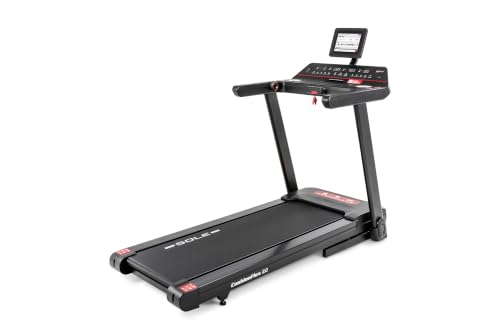
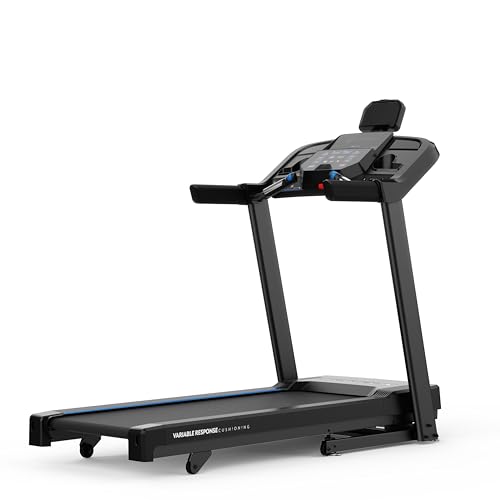
Gripping the rails leans you back, shortens your stride, and takes the work off your legs, which is why the run feels easier and the body feels worse afterwards. It is most tempting on narrow belts, where the rails feel close and safe: the XTERRA TR150 Folding Treadmill has a 50 by 16 inch belt and the Sunny Health SF-T7515 Smart Treadmill a 49.6 by 16.5 inch belt, so the rails are always within reach. Let go and use the rails only for mounting, for a brief balance check, and for stepping off. If you need speed or incline changes mid-run, use the controls that keep your hands free: the Horizon 7.0 AT Treadmill has QuickDial thumb controls that change speed and incline without reaching for the console, and the Sole F63 Treadmill keeps handrail controls in reach for the same reason. If you cannot run without holding on, slow the belt until you can, because a pace you can hold hands-free is your honest pace for today.
Overstriding to the front of the belt
You land with your foot well ahead of your hips, heel first, braking with every step. Outdoors the cost is obvious. On a treadmill the belt carries you through it, so the habit hides. Belt length decides how much room the fault has: the Horizon T101 Connect Treadmill has a 55 by 20 inch belt, which asks tall runners to shorten up slightly, and the XTERRA TR150 at 50 inches leaves no room for a long stride at all. The 60-inch class, including the NordicTrack Commercial 1750 Treadmill, the Sole F80 Treadmill, the Horizon 7.0 AT, the Sole F63, the NordicTrack T Series 10 Treadmill, and the ProForm Carbon Pro 9000 Treadmill, gives a tall runner room to land under the hips instead of ahead of them. Shorten your stride, raise your cadence a little, and aim to land with your foot beneath your knee rather than out in front of it. If you keep drifting to the front edge on a short belt, the belt is telling you the stride it can hold, and the honest answer is a shorter stride or a longer belt, not a faster one.
Staring down at the console
Your eyes drop to the screen, your head follows, your shoulders round, and your stride shortens to match a folded posture. Big screens invite it most: the NordicTrack Commercial 1750 and the ProForm Carbon Pro 9000 both carry 16-inch touchscreens, and a trainer-led class on a screen that size pulls the gaze down for a whole session. Set the display before the run, pick one number to check, and keep your gaze forward at the wall or the room ahead, glancing down only for a quick check. The Sole F80, with its functional console rather than a large screen, and the Horizon T101, with basic LED windows, make this easier by giving the eyes less to chase. If neck tension builds mid-run, that is the posture talking, and the fix is the gaze, not a stretch after the run.
Running too close to the motor cover
You drift forward until your toes are near the front roller cover, where there is no belt left to land on and no room to recover from a stumble. It happens most on short decks, because the safe landing zone is small: the Sunny SF-T7515 at 49.6 inches, the XTERRA TR150 at 50 inches, and the Echelon Stride Auto-Fold Treadmill at 55 by 20 inches all punish forward drift sooner than a 60-inch deck does. Find the middle of the belt by feel, with your feet landing roughly central, and use the side rails as a position check rather than a handhold: if your hands keep brushing them, you are too far forward or too far to one side. Slow the belt, re-centre yourself at a walk, and rebuild the pace from the middle. A runner who always ends up at the front is usually overstriding as well, so fix the stride first and the position usually follows.
Skipping the warm-up ramp
You step on, press your usual pace, and run cold, so the first minutes are stiff, the heart rate jumps, and small niggles get a head start. Every treadmill in this hub starts at 0.5 mph, which is the warm-up built into the machine, so use it. Walk for three to five minutes, let the pace rise in small steps, and only then reach your working speed. The Horizon T101 and the Horizon 7.0 AT make the ramp pleasant, because their Johnson Drive motors recalibrate per foot strike and stay smooth at slow walking speeds with no lurch when the pace changes. A warm-up is not lost training time; it is the part of the session that lets the rest of it happen without a strain. For walking-first guidance on starting speeds and gentle ramps, see our guide to the best treadmills for walking.
Running the same speed every session
The same pace, the same distance, the same day after day, and the body adapts to exactly that and no more. The plateau that follows gets blamed on the machine, but the machine has the variety built in. The Horizon 7.0 AT is the interval machine in this hub: its dials and a motor that recalibrates per foot strike make pace changes painless, so a session can alternate easy and hard minutes without a menu visit at speed. The Sole F80 runs from 0.5 to 12 mph with incline to 15 percent, and the NordicTrack T Series 10 runs to 12 mph with incline to 12 percent, so both give a self-directed runner plenty of range without a class to follow. Change one thing per session, pace or incline, and keep a simple note of what changed. Variety is not a programme; it is the habit of not repeating yesterday exactly.
Never varying the incline
Flat every run means the same muscles take the same load every run, and the calves, glutes, and Achilles never get the varied work that keeps them resilient. Incline is the easiest effort dial a walker or runner owns, and the range in this hub is wide: the Sole F80 and Sole F63 both reach 15 percent, the Horizon 7.0 AT reaches 15 percent, the NordicTrack Commercial 1750 and the ProForm Carbon Pro 9000 run from minus 3 to 12 percent, and the Horizon T101 reaches 10 percent. Add a little grade at a time, a couple of points for a few minutes, and let comfort decide the next step. The exception proves the rule: the XTERRA TR150 has manual incline in three positions up to about 10 percent, which means stopping and pinning the deck, so in practice it stays wherever it was left. If your machine has powered incline and you never touch it, that is a form habit, not a machine limit. The Horizon 7.0 AT review covers how its dials make incline changes a thumb movement rather than a console visit.
Jumping off a moving belt
You step off sideways while the belt is still moving, or hop off the back, because the session is over and the belt feels slow enough to beat. It is the most dangerous habit in this guide, because a moving belt plus a tired runner is exactly how falls happen, and it is entirely avoidable. Bring the belt to a walk, then to a stop, before stepping off, and use the side rails as a platform only once the belt has stopped. Keep the safety key clipped on while you run, as the troubleshooting guidance in this hub advises, because a key pulled in a stumble stops the belt faster than any button. This applies on every machine here, from the heavy Sole F80 to the flat-folding Echelon Stride, whose auto-fold design tempts owners to treat the machine as furniture the moment a session ends. A session ends when the belt stops, not when you decide it has. For the mechanical checks that keep a belt stopping cleanly, see our home treadmill troubleshooting guide.
Still stuck? Compare the current top picks
Full ranked list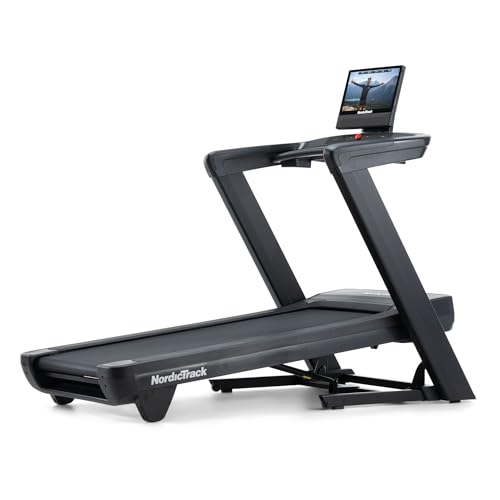
FAQ
Treadmills for Home questions, answered straight
Is it ever OK to hold the handrails?
Yes, briefly: for mounting and dismounting, for a balance check on a steep incline, and for steadying yourself if you stumble. Holding them through a whole run is the mistake, because it changes posture, shortens stride, and unloads the legs. If you need them for the whole session, the pace or the grade is beyond what your balance can hold today.
What belt length do I need to stop overstriding?
Sixty inches is the running standard in this hub, and the 60-inch belts on the 1750, the F80, the 7.0 AT, the F63, the T Series 10, and the Carbon Pro 9000 give a tall runner room to land under the hips. Fifty-five inches, as on the Horizon T101 and the Echelon Stride, jogs fine for most runners. Under 52 inches is walking territory, and the XTERRA TR150 and the Sunny SF-T7515 are scored as walkers for exactly that reason.
How fast should a warm-up ramp be?
Start at a walk around 0.5 mph, the starting speed of every machine in this hub, and build in small steps over three to five minutes until you reach working pace. If your breathing or your stride feels unsettled when you arrive at pace, the ramp was too fast. A good warm-up ends with you feeling ready to run, not with you already tired.
Can I step off to grab water mid-run?
Yes, but stop the belt first. Bring it to a walk, then to a stop, step off, and restart from a walk. Pausing with the safety key in place keeps the session safe and the belt ready. Stepping off a moving belt to save ten seconds is the habit this guide is trying to end, not a shortcut worth keeping.