In-depth review
Fitness Reality 810XLT Review (2027): The Cage a $2000 Build Can Actually Finish Around
Research review of the 810XLT as a $2000 build anchor: safety system, station math, attachment path, and the capacity honesty a solo lifter needs.
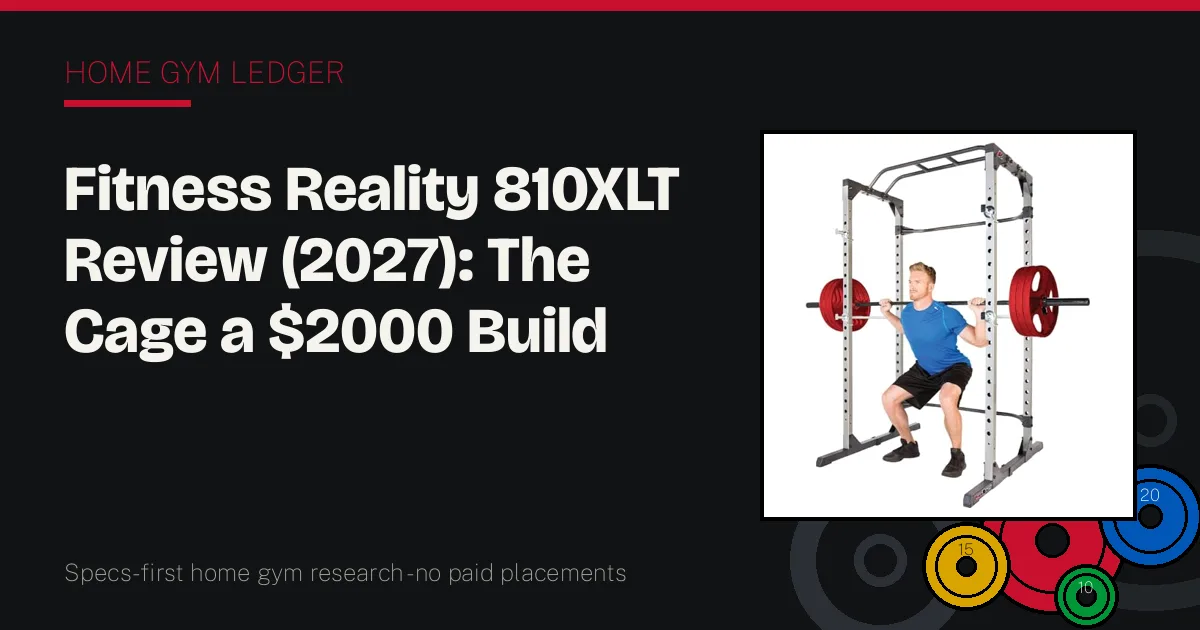
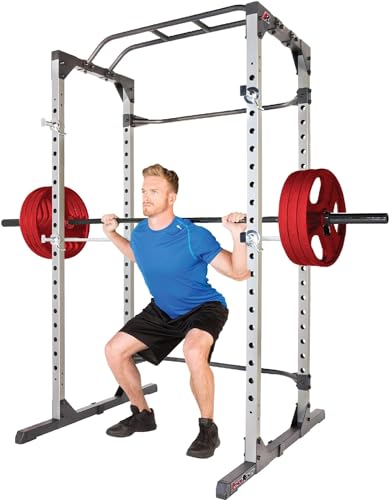
Fitness Reality 810XLT Super Max Power Cage
Rack build anchor: full cage safeties, a multi-grip pull-up bar, and room to grow by attachment.
- About 50.5 x 46.5 in at the base; plan roughly an 8 x 8 ft station with loading room
- Footprint
- About 83.5 in; confirm pull-up head clearance before ordering
- Height
- 800 lb listed cage capacity on this model
- Capacity
Our verdict
The 810XLT earns the anchor role because it spends the build's money on the three things a cage must do: hold safeties where a missed lift lands, hold a bar where every lift starts, and hold still while both happen. Its compromises are specification level rather than structural: standard hole spacing, pin and pipe safeties that reset slowly, and a home grade capacity figure that should be read as a program boundary. Around it, a $2000 total can still afford a real bar, real plates, and a real bench, which pricier cages quietly prevent. That system math, more than any single feature, is the review.
What we like
- Full length safety bars turn solo barbell training into a programmed decision instead of a risk calculation
- Multi-grip pull-up bar covers the vertical pull inside the same footprint, no second station needed
- The attachment path, including the cable system in this hub, grows the station instead of replacing it
What to watch out for
- Hole spacing is the standard pattern, so bench pin heights land less precisely than on Westside spaced uprights
- The listed capacity is a home training figure; maximal partial work belongs on heavier commercial steel
Who it is for
Barbell lifters building the rack column of an under $2000 gym, training alone in a garage or dedicated room.
Safeties are the product
A cage is a safety device that also holds a bar. The 810XLT runs full length safety bars inside the uprights, set per lift: just below a squat's bottom, just above the chest on bench. Owners who train alone describe the same conversion, from negotiating with themselves on top sets to programming them. Set the safeties during warm-ups, test them with the empty bar once, and the system's whole promise is operational.
Station math beyond the base dimensions
The base footprint is a product dimension; the station is a room dimension. Add the bar's length across the uprights, loading clearance beyond each sleeve, bench walk-back behind, and the cable attachment's depth if it joins the build. Roughly 8 by 8 ft hosts all of it without choreography. Garages that measure the base and skip the lanes discover the difference with the first plate change.
The attachment path, priced as a path
The lat and low row attachment in this hub fits this cage by name, and that specificity is worth money: universal attachments are where home gym budgets go to negotiate. The path continues with dip and storage options in the same line. Buy the cage for today's lifts; value the path because year two's training will want one of its branches.
Capacity honesty for solo lifters
The listing's 800 lb figure describes the cage structure under the maker's conditions, not an invitation. A home program's real ceiling arrives earlier, at the plates owned and the bar's working grade. Treat the cage number as headroom that keeps normal training far from any edge, which is exactly the relationship a safety device should have with its lifter.
Key specifications
- Footprint
- About 50.5 x 46.5 in at the base; plan roughly an 8 x 8 ft station with loading room
- Height
- About 83.5 in; confirm pull-up head clearance before ordering
- Capacity
- 800 lb listed cage capacity on this model
- Frame
- 2 x 2 in steel uprights with 1 in holes, per the listing
- Build role
- Rack build core; trains only once the bar and plates picks join it
What owners report
Commonly praised
- Stability through heavy home sessions is the theme owners return to most
- It is the purchase that made the garage read as a gym rather than storage with weights in it
- Assembly is described as one long afternoon with a second pair of hands for the uprights
Common complaints
- Powder coat scuffs where the J-hooks meet the uprights
- Pin and pipe safeties take longer to reset between movements than drop-in designs
- Adding the cable attachment stretches the station deeper than the first floor plan allowed
Recurring themes from owner reviews on retailers and forums, summarised by our editors. Updated October 2026.
Sources: Fitness Reality 810XLT product documentation, Amazon listing specifications
Also consider
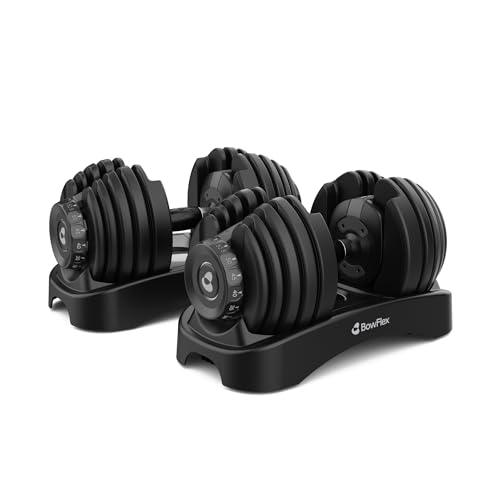 BowFlex
 SelectTech 552 Adjustable Dumbbell
Compact build anchor: dial changes and fine low steps where a cage will never fit.
- Weight range: 5 to 52.5 lb per dumbbell, 15 settings
- Increments: 2.5 lb steps from 5 to 25 lb, then 5 lb steps to the ceiling
Sources: BowFlex SelectTech 552 product documentation, Amazon listing specifications
Check price on Amazonor add to your Amazon cartChoose the dial pair instead if the room cannot give a station; it is the other complete build in this hub, not a lesser apology for one. Read our BowFlex SelectTech 552 Adjustable Dumbbell review
 Fitness Reality
 Lat Pulldown and Low Row Cable Attachment for 810XLT
Rack build expander: plate loaded lat pulldowns and low rows on the cage you already own.
- Fit: Made for the Fitness Reality 810XLT cage in this hub; not a universal attachment
- Load system: Plate loaded carriage using Olympic plates from the build
Sources: Fitness Reality cable attachment documentation, Amazon listing specifications
Check price on Amazonor add to your Amazon cartNot an alternative but the cage's own second act; buy it after the bar and plates have made the cage a gym.
Research-based assessment: manufacturer specifications and documentation, cross-checked against retailer listings and recurring themes in published owner feedback. We do not claim hands-on testing we have not performed.
FAQ
Home Gym Under $2000 questions, answered straight
Does the 810XLT need to be bolted down?
Most home owners train on it freestanding on a floored station, with the loaded plate storage and the cage's own weight settling it. Renters and careful owners add the board and pad footing described in this hub's garage guide. Follow the manual's guidance for your floor and loads.
Is the pull-up bar usable for tall lifters?
Depends on the ceiling more than the cage: at about 83.5 in tall, the bar leaves bent knees for tall lifters in standard rooms, which most accept. Measure ceiling height plus head clearance before the cage, not after.
What breaks first on a cage like this?
Nothing structural in normal owner reports; the wear list is cosmetic coat at hook contact, J-hook lining, and hardware that wants a seasonal snug. That wear profile is why a cage anchors a build meant to last a decade.