Buying guide
Vibration Plate Buying Guide (2027): Motion Types, Frequency, Platform Size, and Capacity
How to buy a vibration plate: choose the motion family first, read frequency and amplitude together, size the platform to your stance.
Choose the motion family first
Oscillation rocks around a pivot and lets stance width steer intensity. Linear motion lifts the whole platform in small fast steps. Tri-planar motion moves in three directions at once. Combined 4D models stack families together. These are different inputs, and no speed number converts one into another. Decide which family matches the sessions you picture, then compare models inside that family.
Read frequency and amplitude together
Frequency is how many cycles per second the platform completes; amplitude is how far it travels. A high frequency with tiny amplitude can feel gentler than a lower frequency with a long travel, especially on oscillating plates where your foot position sets the amplitude you receive. Spec sheets that print only one of the two numbers are telling you half the story.
Top picks from our research
Full ranked list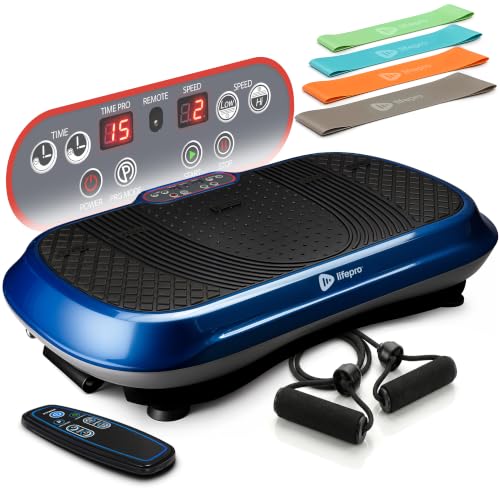
Size the platform to your stance
Write down the positions you will actually use: feet together, shoulder width, wide stance, seated, hands on platform. Measure those against the listed platform dimensions, not the shipping box. Then measure the storage or permanent spot, including outlet access, because a plate that fights its room loses to a lesser plate that fits it.
Capacity, base weight, and floors
Keep the heaviest user comfortably under the maker capacity, and remember that dynamic positions load a base differently from standing. Heavier bases feel more settled; lighter bases travel and store better. On any hard floor, budget for a dense mat: it protects the floor, steadies the base, and reduces the sound your downstairs or next room hears.
Controls, programs, and honest extras
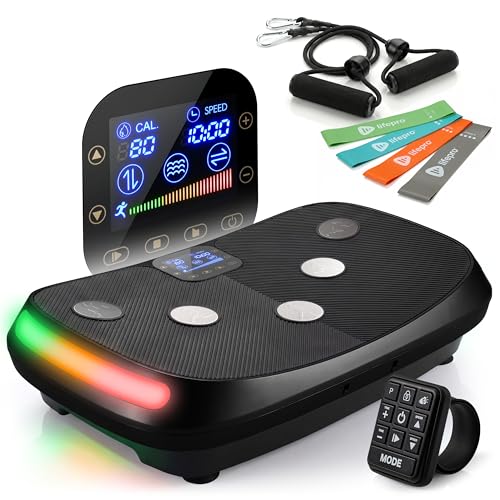
Judge controls by reach: a remote or wristband you can use mid-session beats a richer panel you cannot. Preset programs are convenience, not quality. Bands, speakers, and apps should never outrank motion type, platform size, and capacity in the decision, because you will use the first three every session and the extras occasionally.
Reach has a second half worth judging in the listing photos: visibility. A panel angled for a standing user, with figures large enough to read at arm's length while the platform moves, gets used for progression; a small display read by bending double gets ignored, and ignored controls quietly flatten a training habit into one default setting. Anchor points deserve the same practical eye when bands enter your sessions. Bands clipped to a base designed for them behave; bands improvised around a plate that never planned for them pull the unit and the user in directions neither enjoys. None of these details appear in a speed count, and all of them appear in your third week of ownership, which is when this category is actually won or lost.
Worked example: an apartment beginner at 240 lb
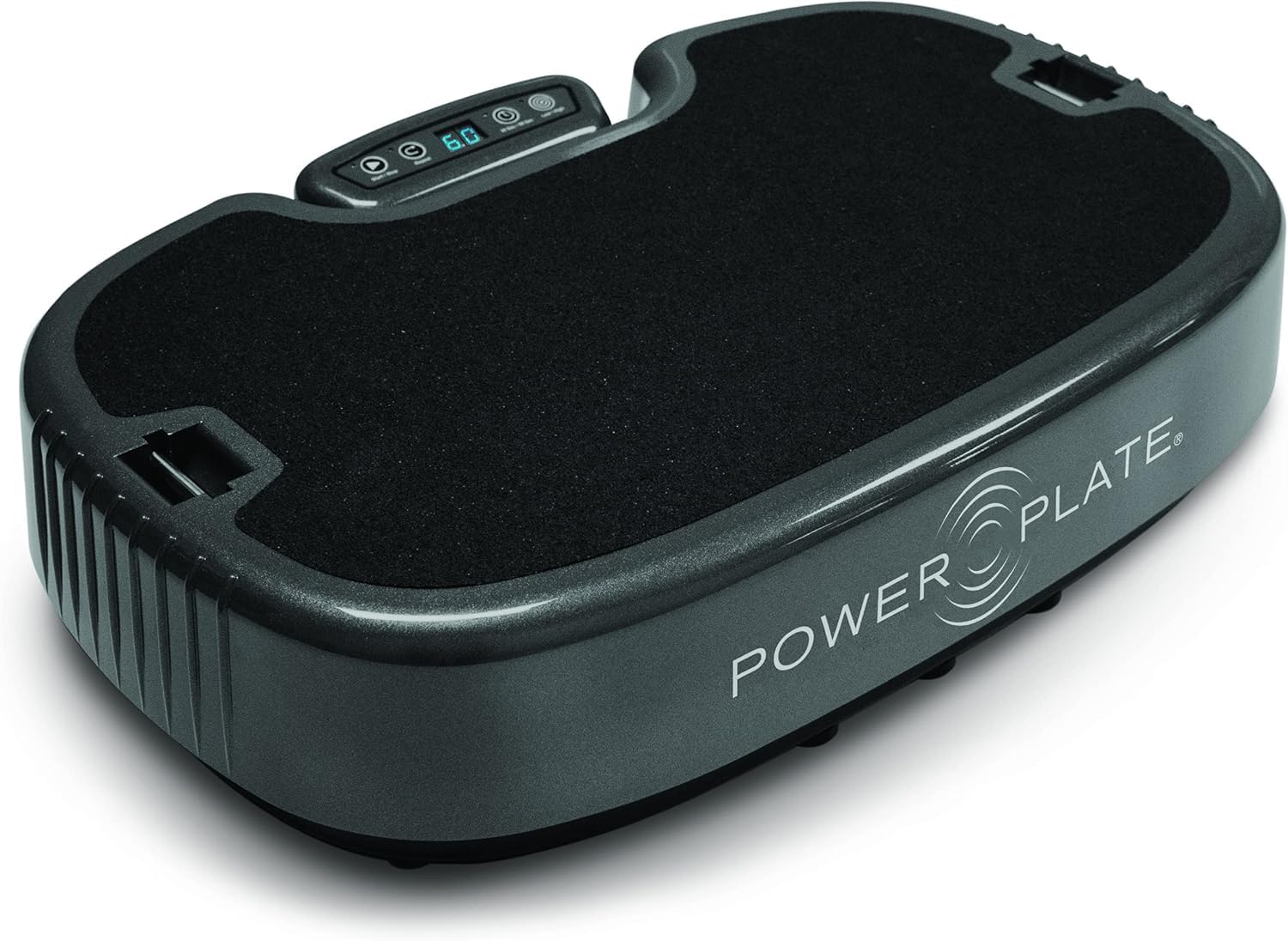
Consider an example buyer: 240 lb, first plate, apartment with a neighbour below, sessions pictured as standing work and seated calf positions, stored in a closet between uses. The motion family comes first, and oscillation fits the picture, because stance width steering intensity gives a beginner a built-in progression and the family's feel at low settings is the gentlest entry in the guide. Capacity runs next and eliminates a famous name: the tri-planar Power Plate's 264 lb maker listing sits too close to 240 lb once the capacity section's warning about dynamic positions is applied, while the 330 lb class that most oscillation models share leaves the margin this guide insists on. Platform size then separates the survivors. The compact budget plates around 21 in long suit feet-together work, but the wide stance this buyer plans wants the 30 in class, the LifePro Waver's roughly 30.5 by 15.3 in platform being the pattern, with 99 speed levels whose low-end steps the FAQ values for beginners. The floor plan signs the decision: a dense mat under the plate, bought in the same order, for the neighbour's ceiling and the hardwood alike, and a closet measurement confirming the platform slides in standing on edge. Change the buyer to a lighter, experienced user chasing intensity and the same steps can crown the tri-planar machine instead.
FAQ
Vibration Plates questions, answered straight
Is more speed settings always better?
No. Step size matters at the low end, where beginners live, more than the total count. A plate with fine low steps and 30 settings can be easier to progress on than one with 180 coarse-feeling steps.
What is a sensible first budget?
Enough to buy inside a known motion family from a maker with real documentation. The budget picks in this guide meet that bar; below it, listings get vague about motors, frequency, and capacity, which are the specs that matter.
Should I buy a plate with a handlebar?
If holding a support decides whether you will start, yes, and this guide includes a handle option. Most users who start without one never miss it, and handle models cost storage space every day.