Buying guide
Weight Storage Buying Guide (2027): Weigh Your Set, Measure Your Wall, Then Buy Steel
How to buy weight storage: total your actual set weight, check rail and peg fit for the largest pieces, plan footprint and floor protection.
Weigh the collection you own, not the one in photos
Add up every dumbbell individually and every plate by size. A 5 to 50 lb hex run in 5 lb steps is about 550 lb; a basic Olympic plate set is 245 to 300 lb before extra 45s. Compare those totals against maker ratings with at least a quarter of headroom, because ratings assume even loading and your heaviest pair always lands hard at the end of a set.
Check fit at the extremes
Racks fail at the biggest pieces, not the average ones. Measure your widest dumbbell head, your thickest bumper, and your longest adjustable tray, then check them against rail length, cradle width, and peg length on the listing. Two minutes with a tape measure prevents the classic outcome: a beautiful rack with the 50s still on the floor.
Top picks from our research
Full ranked list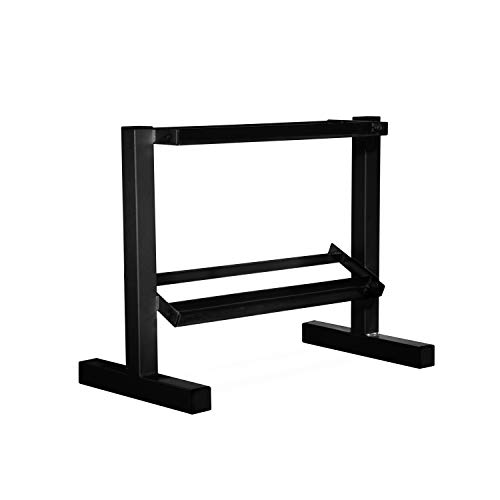

Plan the wall as a system
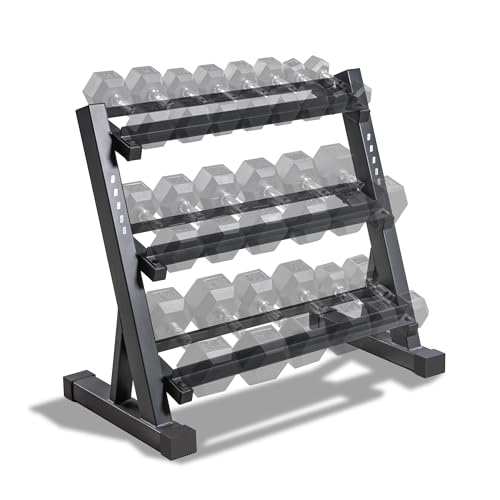
Storage pieces share walls with racks, benches, and doors that swing. Lay the wall out on paper at full scale: plate storage within a step of the rack uprights, dumbbell storage where pairs are grabbed, trays for the shapeless accessories. Order along that plan and the gym organizes itself; order opportunistically and the pieces fight each other forever.
Protect the floor under concentrated load
A loaded storage wall puts a small car's worth of weight on a dozen small feet. Dense rubber flooring or a mat run under the storage line spreads that load and stops feet from printing into hardwood or tile. Foam under a fully loaded rack is too soft and settles unevenly; storage belongs on the dense end of your flooring.
Stage purchases with the collection
Buy storage for the set you have plus the next two pairs or plates, not for the dream collection. Vertical stands and two-tier racks retire gracefully to secondary duty when a three-tier arrives, so staged buying wastes little. The exception is the permanent garage build with a final set already owned; there, buy the heavy-duty rack once.
FAQ
Weight Storage and Organization questions, answered straight
How much headroom above the rated capacity is enough?
Aim for a rating at least 25 percent above your set's current total, more if the set is actively growing. Headroom absorbs uneven loading, hard re-racks, and the next pairs you have not bought yet.
Are wall-mounted dumbbell racks a good idea?
For a few light pairs into studs, they can work. For real collections, floor racks carry loads walls should not. Keep wall mounting for accessories, bands, and light items.
What is the best storage for adjustable dumbbells?
Their maker stand, at working height, with the trays on it. Adjustables on generic rails waste their design and risk tray damage; stands also solve the floor-space problem by footprint-matching the dumbbells.