Buying guide
Yoga Equipment Set Buying Guide (2027): Mat Size, Thickness, Materials, and Bundle Math
How to buy a yoga equipment set: size the mat to your body, match thickness to your floor, read block and strap specs, and count only the pieces you will.
Size the mat to your body first
Length is the least forgiving spec in the box. A mat should exceed your height enough that head and heels stay on it in full extension; in practice that makes 68 in a short to average format, 71 to 72 in the adult standard, and longer formats the tall buyer's territory. Width is comfort: 24 in is standard, 25 to 26 in gives wider stances room. No bundle extra compensates for a mat that crops your practice, so settle size before looking at piece counts.
Match thickness to floor and practice style
Thin dense mats (3 to 5 mm) plant a standing foot and travel well, and they belong on carpet or sprung floors. The 6 mm class is the all round home choice. Thick foam (12 mm and beyond) exists for hard floors and floor heavy practice, and it honestly trades away standing balance stability. Name your floor and your dominant class style, and the thickness decision makes itself.
Top picks from our research
Full ranked list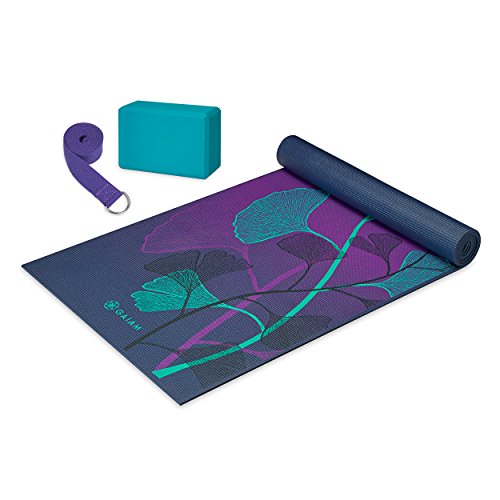


Read the materials like a spec sheet
PVC mats are the durable, grippy standard with a break in character of their own. TPE is lighter, double sided in many designs, and wipes clean because its surface is closed cell. Basic foams (often NBR or EVA blends) deliver thickness cheaply and compress sooner. None is universally best; they are cost, weight, and lifespan positions. Blocks follow the same logic: dense EVA holds shape under load, soft foam is forgiving and light, cork is firm and bought separately.
Count blocks in pairs and straps in feet
Two blocks at matching size and density is the working standard for supported poses; a one block kit is a starter that plans its own upgrade. For straps, 6 ft covers average reaches, 8 ft suits taller bodies and doubles better as a carry loop, and a metal buckle outlasts plastic. These are small line items that decide whether a bundle is complete or merely long.
Do the bundle math before the bundle charms you
Price the pieces you will use, not the pieces in the photo. Towels you would never buy, bands outside your practice, and a bag too small for the kit all inflate the count without adding value. Conversely, a set whose mat you will keep for years is cheap at a premium price, because the mat is the piece every session touches. The rankings in this hub are built on exactly that arithmetic.
FAQ
Yoga Equipment Sets questions, answered straight
Should a beginner buy a set or pieces separately?
A set, in almost every case: the bundle price for mat, two blocks, and strap beats piecing together, and matched pieces remove guesswork. Buy separately only when you already know a specific preference, like a cork block or a rubber mat, that sets do not offer.
What is the most common set buying mistake?
Choosing by piece count and ending with a thin, short mat surrounded by extras. Mat length, thickness, and material are felt in every session; the fifth and sixth pieces are felt occasionally.
How do I care for a set so it lasts?
Wipe mats down after sweaty sessions, air dry fully before rolling, store rolls loosely out of direct sun, and keep blocks dry. Most odor, curling, and surface breakdown complaints in owner feedback trace to damp, tight, hot storage.