Fix it
Cold Plunge Tub Problems and Fixes: Warm Water, Slow Leaks, Cloudy Water, and Chiller Faults
Fix the common cold plunge tub problems: water that will not stay cold, inflatable tubs losing air, cloudy water in unfiltered tubs, chiller errors.
Plunge tub faults divide cleanly into water problems, air problems, and machine problems, and most of them yield to routine rather than parts. Work this list before assuming a tub or chiller has failed, and keep sealed chiller internals where they belong: with the maker's support channel.
Water warms up too fast between sessions
Check the lid first: a lid left ajar or a warped cover leaks more cold than the walls ever will. Confirm the tub sits out of direct sun, verify full inflation on portable models since soft walls insulate poorly, and top up ice or check chiller airflow clearance before blaming capacity. Ambient heat waves defeat every design briefly; shade and lid discipline are the standing fix.
Inflatable tub slowly loses pressure
Inflate fully, then listen and feel along seams and around valves, using a soapy water brush over suspects to spot bubble trails. Tighten or reseat valve caps first, since valves outnumber punctures as causes in owner reports. Patch true punctures with the kit's repair materials on a clean, dry, deflated surface and cure fully before refilling.
Water turns cloudy or develops an odor in an unfiltered tub
The water has reached the end of its honest life. Drain fully, wipe the interior with a maker safe mild cleaner, rinse, and refill, then tighten the routine: shower off heavy lotions and soils before plunging where practical, skim after sessions, keep the lid on, and follow sanitizer guidance made for your tub type. Cloudiness that returns within a day of a fresh fill points at the fill source or a contaminated lid underside.
Chiller runs but the water will not reach the set point
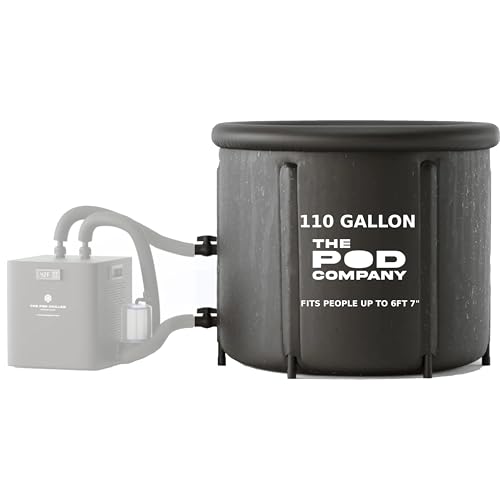
Verify the chiller has its specified airflow clearance and that its filter is clean, since a clogged filter strangles circulation. Check hoses for kinks and confirm the pump is primed and moving water, and give a large warm tub a realistic pull down window before judging. A system that plateaus well above set point after those checks is a support call with the model and error details ready.
Draining takes forever or will not finish
Use gravity properly: the drain outlet must sit above the discharge point with the hose running downhill without rises. Open any air vent or loosen the lid so the tub does not vacuum lock, and clear the outlet screen of debris. For the last inch, every design here accepts a small submersible pump as the owner's upgrade, which turns a chore into minutes.
Condensation and damp around an indoor setup
Cold surfaces in warm rooms sweat; that is physics, and the fix is management. A waterproof mat or tray under the tub, a fan moving room air after sessions, and prompt wiping of the lid underside and surrounding floor keep moisture from becoming a floor problem. Persistent damp in one spot suggests a slow fitting weep, so inspect connections with the system running and dry.
Still stuck? Compare the current top picks
Full ranked list

FAQ
Cold Plunge Tubs questions, answered straight
How often should an ice tub's water be changed?
With lid discipline and a basic care routine, owners commonly run days to a couple of weeks depending on use frequency and climate. Any cloudiness, odor, or visible debris ends the debate: change it, clean the tub, and refill.
Can I leave an inflatable tub filled all season?
Many owners do, in a shaded spot with the lid on and pressure checked weekly. Sun, heat, and storm exposure age the material fastest, so a filled season outdoors is a lifespan trade the maker guidance for your model should arbitrate.
My chiller shows an error code. What now?
Record the code, check water flow and filter state first, since low flow triggers the most common codes, then power cycle once per the manual. If the code returns, it is the maker's support conversation, with the code, model, and your flow checks ready to report.