In-depth review
Day 1 Fitness Wall Ball Review (2027): A Soft Cover and a Standard Diameter That Forgive Early Mistakes
Full research review of the Day 1 Fitness wall ball: 14 in diameter, soft cover grip, balanced fill, weight range from 6 to 30 lb, and the slam rule.
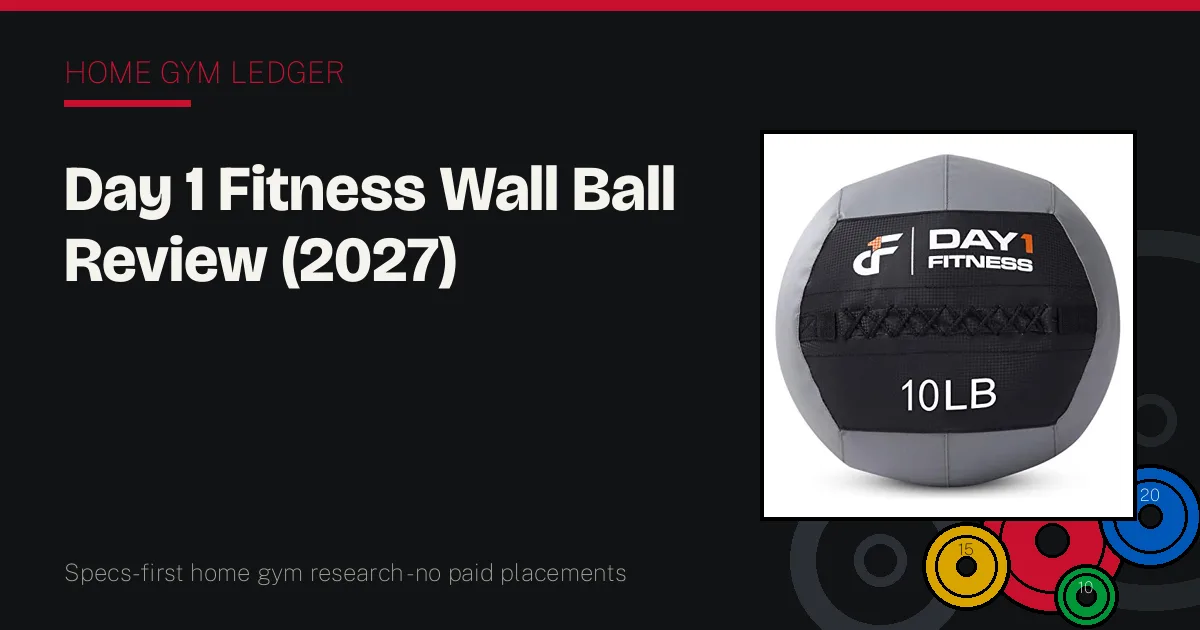
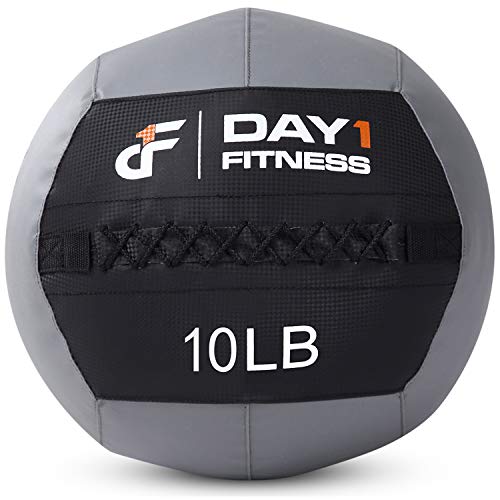
Day 1 Fitness Wall Ball
Full diameter wall ball with a soft, grippy outer cover.
- Wall ball, soft and low bounce
- Ball type
- 6 to 30 lb range (check listing for current steps)
- Weight options
- Approx. 14 in across most weights
- Diameter
Our verdict
The Day 1 Fitness Wall Ball is a straightforward tool that gets the two things a wall ball must get right: diameter and catch feel. At about 14 in across most weights it arrives in both hands the same way every time, and its soft cover is forgiving when a catch comes back at your face, which is exactly the moment a beginner needs forgiveness. The balanced fill keeps it from wobbling in flight, and the grip stays usable in garage heat. Its limits are honest ones: it takes up far more storage space than its weight suggests, the cover collects dust on garage floors, and the stitching is the part to inspect after heavy use. It is not a slam ball and should never be used as one. Bought for wall ball shots and throw-and-catch conditioning, it does the job at a fair price without asking you to learn anything twice.
What we like
- Standard large diameter makes catches predictable
- Soft cover is forgiving when a catch comes back at your face
- Balanced fill, so the ball does not wobble in flight
What to watch out for
- Takes up far more storage space than its weight suggests
- Cover is a dust magnet on garage floors
- Not a floor slam tool
Who it is for
Beginners and home gym owners learning wall ball shots, plus anyone who wants a standard-diameter wall ball for squat and throw conditioning.
Diameter first: why 14 inches is the lesson
Wall ball training is a catching skill before it is a strength skill, and diameter is what makes the catch learnable. The Day 1 Fitness ball measures about 14 in across most weights, which is the standard size for wall ball shots, and owners say the diameter feels right straight away. That size means both hands meet the same target on every rep, whether the ball is 6 lb or 30 lb, so the rhythm of squat, throw, and catch can settle in without the target changing under you. A smaller ball at the same weight would demand a tighter, less forgiving catch and would teach a different movement altogether.
The soft cover and the catch that comes back
A wall ball always comes back, and a beginner will misjudge the return sooner or later. This is where the soft cover earns its place: it is forgiving when a catch comes back at your face, and the stitched synthetic panels give a grip that owners say stays usable in garage heat. The cover is not a luxury finish; it is the part of the ball that decides whether a mistimed catch ends the set or just ends the rep. Low bounce completes the picture, because the ball is designed to be caught rather than rebounded, so it arrives in your hands instead of bouncing away from them.
Weight range: 6 to 30 lb, and where to enter it
The range runs from 6 lb to 30 lb, which covers learning loads through serious conditioning work in a single line. The light end is where this ball makes its case for a beginner: 6 lb is light enough to learn the full squat-to-throw pattern with clean form, and the balanced fill means there is no heavy spot to surprise you in flight. Owners praise the even balance, and that matters more as the reps pile up, because a ball with a heavy spot wobbles and a wobbling ball is harder to catch at the top of a set. Move up the range only when the pattern is automatic at your current weight, not when your arms feel fresh on rep one.
Storage, stitching, and the slam rule
Living with this ball means accepting its bulk. It takes up far more storage space than its weight suggests, and owners warn it is too bulky to store in a small rack, so plan a floor corner or a large shelf before it arrives. The cover is a dust magnet on garage floors, which is cosmetic but real, and a quick wipe keeps the grip honest. The one inspection habit the record supports is the stitching: owners check it after heavy use, and a glance at the seams after a hard week costs nothing. The hard rule is the slam rule. Wall ball covers and stitching are not built for floor slams, so this ball never goes to the floor as a slam tool; keep a dead-bounce slam ball for that job and this ball will last.
Key specifications
- Ball type
- Wall ball, soft and low bounce
- Weight options
- 6 to 30 lb range (check listing for current steps)
- Diameter
- Approx. 14 in across most weights
- Shell / Cover
- Soft synthetic cover, stitched panels
- Bounce
- Low, designed to be caught, not rebounded
What owners report
Commonly praised
- Diameter feels right for wall ball shots straight away
- Even balance, no heavy spot
- Cover grip stays usable in garage heat
Common complaints
- Stitching is the part owners inspect after heavy use
- Too bulky to store in a small rack
Recurring themes from owner reviews on retailers and forums, summarised by our editors. Updated November 2026.
Sources: Day 1 Fitness wall ball product documentation, Amazon listing specifications
Also consider
 REP Fitness
 Soft Medicine Ball / Wall Ball
A 14 in hand-stitched soft medicine ball in a full 4 to 30 lb family, built for wall ball work.
- Ball type: Soft medicine ball / wall ball, low bounce
- Weight options: 4 to 30 lb family (manufacturer listing); linked option per listing
Sources: REP Fitness soft medicine ball product documentation, Amazon listing specifications
Check price on Amazonor add to your Amazon cartChoose the REP soft medicine ball if you want a hand-stitched shell and a 14 in diameter held across a full 4 to 30 lb family, starting 2 lb lighter, for weekly high rep wall ball volume.
 Champion Sports
 Leather Medicine Ball
Classic synthetic leather medicine ball in the old school gym style.
- Ball type: Medicine ball, rebounding
- Weight options: Approx. 4 to 22 lb range in small steps (check listing)
Sources: Champion Sports leather medicine ball documentation, Amazon listing specifications
Check price on Amazonor add to your Amazon cartChoose the Champion Sports leather medicine ball if your work is traditional medicine ball drills and partner passing with a classic cover feel, accepting its smaller diameter that grows with weight rather than a standard wall ball size.
Research-based assessment: manufacturer specifications and documentation, cross-checked against retailer listings and recurring themes in published owner feedback. We do not claim hands-on testing we have not performed.
FAQ
Medicine Balls and Slam Balls questions, answered straight
Can I slam the Day 1 Fitness wall ball into the floor?
No. It is a wall ball, built for throws and catches with a soft stitched cover, and floor slams are the impact pattern its stitching is not made for. Use a dedicated slam ball for floor work and keep this ball for wall shots.
What Day 1 Fitness weight should a beginner start with?
Start at the light end of the 6 to 30 lb range. The large diameter makes even a light ball feel substantial in the catch, so a weight you can throw and catch cleanly for a full set is the right first buy, and you can move up the same line once the rhythm is automatic.
Where do I store a ball this big?
Give it a floor corner or a wide shelf, not a small rack. Owners report it is too bulky for small racks, and the cover picks up dust on garage floors, so a spot off the floor dust line and away from rough walls will keep both the ball and its stitching in better shape.