Fix it
Kettlebell Swing Form Mistakes: The Errors That Turn a Hinge Into a Squat
Kettlebell swing form mistakes and how to fix them: squatting the swing, pulling with the arms, rounding the back, leaning back at the top, gripping too tight, and learning on the wrong weight, tied to the bells in this guide.
The swing is a hip snap, not a front raise and not a squat with a bell in it. The hips drive, the arms stay loose like ropes, and the bell floats to chest height because the hips threw it there, not because the shoulders lifted it. Every mistake in this guide breaks that deal in a different place, and each one moves the work from the hips to somewhere smaller: the arms, the shoulders, or the lower back. The fixes are small and physical, and they work on every bell in this hub, because the hinge is the same whether the bell is a 10 lb learning weight or a 53 lb working weight. The buying mistakes, weight, finish, and window, are covered in our guide to kettlebell weight selection mistakes, and the bell itself, rust, chips, and grip, in the kettlebell troubleshooting guide. This page is about the body.
Squatting the swing instead of hinging
You bend the knees deeply, drop the hips, and lift the bell with your quads, which turns the swing into a front squat with a weight swinging between your legs. The tell is the knees: if they travel well forward and the hips barely move back, you are squatting. Fix it with the wall drill: stand a foot from a wall, hinge back until your backside touches it, and keep the shins near vertical. The bell should pass behind you, not under you. Learn the pattern on a light bell, a 10 or 15 lb Amazon Basics Cast Iron Kettlebell single or a light bell from the SPRI Vinyl Coated line, which runs from 5 to 25 lb, so the hips can learn the snap without the quads rescuing every rep. When the hinge is clean, the swing feels like a jump without leaving the ground, and the quads stop doing the talking.
Pulling the bell up with the arms
Your shoulders shrug, your elbows bend, and the bell rises because your arms lifted it, which means the hips never did their job and the shoulders tire in minutes. The arms are ropes, not cranes: they connect the bell to the body and nothing else. Fix it by loosening the grip to a hook in the fingers and thinking of the snap as a jump that throws the bell forward. If the bell still will not float without arm help, the weight is too heavy for the pattern today, so drop down and rebuild the snap. The Kettlebell Kings Cast Iron Kettlebell helps here, because its powder coat handle takes chalk and keeps a loose grip secure, so the hands can stay relaxed through high-rep sets. A bell that floats to chest height on hip power alone is the test, and it either passes or it does not.
Rounding the lower back at the bottom
Your back rounds as the bell passes behind you, because the hinge went too deep or the bell pulled you forward, and the lower back takes a load it was never meant to carry at speed. This is the mistake that turns a training session into a sore week. Fix it by treating the hike pass like a football snap: chest up, back flat, bell hiked back with straight arms, and the snap starting the moment the bell passes the knees. Stop the set the moment the back rounds, even if the set was meant to be ten reps, because a rounded rep is not a rep. A REP Fitness Kettlebell in the 9 to 53 lb core range gives you a learning weight and a working weight in the same finish, so the pattern learned light transfers cleanly when the bell gets heavier.
Leaning back and hyperextending at the top
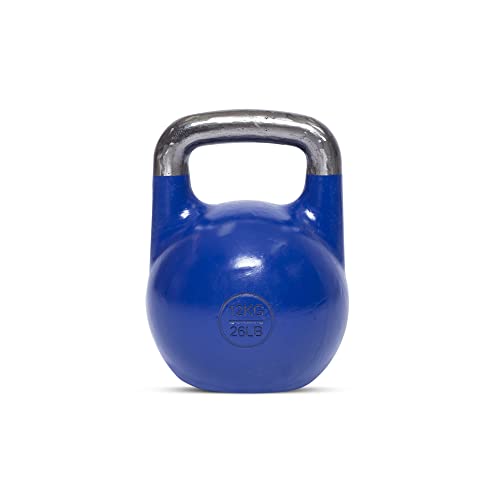
You finish the swing leaning backwards, ribs flared, lower back pinched, because the bell pulled you forward and you overcorrected. The top of the swing is a tall plank, not a backbend: stand tall, squeeze the glutes, pull the ribs down, and let the bell float to chest height and fall back on its own. If the bell climbs above the shoulders, the arms are lifting again, so shorten the float and keep the snap honest. The Bells of Steel Competition Kettlebell suits this fix, because its uniform shell, about 210 mm across every weight from 8 to 32 kg, keeps the bell's balance point identical as you go heavier, so the top position never has to be relearned for a new bell.
Letting the bell drift away from the body
The bell swings wide on the backswing, the shoulders load up to control it, and the hinge loses its tight snap, because the bell has left the body's centre line. Keep the bell close: on the backswing it passes high on the inner thighs, with the elbows near the ribs, and on the upswing it floats straight out from the chest. The forearm bruising that follows a wide swing is the same problem the kettlebell troubleshooting guide covers for cleans, and the fix is the same in both: punch the hand through, keep the bell close, and never let it flop away from the body. A wide traditional window helps the bell sit close without pinching the wrist, which is why the Yes4All Cast Iron Kettlebell, with its wide window for one or two hand grip across a 5 to 100 lb line, is a forgiving teacher for this fault.
Gripping the handle to death
White knuckles, pumped forearms, and torn calluses all point at the same fault: a grip so tight the handle cannot rotate in the hand, so the skin drags across it on every rep. Grip the handle in the fingers, not deep in the palm, and let it rotate rather than dragging across the skin, which is exactly how the troubleshooting guide treats callus tears. Finish decides how much help you get: powder coat takes chalk well, so the Kettlebell Kings and REP Fitness bells hold a loose grip through high-rep sets, while the Amazon Basics enamel finish resists chalk and needs liquid chalk or light lifting gloves instead. Smooth any rough casting spot on a budget bell's handle with fine sandpaper, an accepted fix, and manage total swing volume while the hands adapt.
Breathing backwards through the swing
You hold your breath through the snap, or inhale as the bell rises, and the brace falls apart at the exact moment the hips need it most. The breath belongs to the hinge: a sharp exhale through the hip snap, a quick inhale as the bell falls back down. The exhale is short and hard, like a grunt without the noise, and it tightens the brace right when the load peaks. Practice it with a light bell first, because the rhythm has to survive speed, and a breath held through ten fast reps is a set that ends with dizziness instead of training. The SPRI Vinyl Coated Kettlebell line, light and coated from 5 to 25 lb, is a good rhythm teacher: the weight never distracts from the breathing, and the pattern learned there carries straight onto the heavy bells.
Learning the hinge on a bell that is too heavy
A bell that is too heavy hides bad form behind momentum from the first rep: the swing becomes a squat, the arms pull, the back rounds, and every fault in this list arrives at once, because the weight forces compensation. The hinge is a skill before it is a strength movement, and skills are learned light. Size the first bell to your press, not your swing, as the weight selection guide argues, and add weight only when the current bell feels light on the swing and the hinge stays clean at full speed. The Yes4All line runs from 5 to 100 lb as singles, so the learning weight is a cheap single rather than a commitment, and the Onnit Primal Kettlebell starts at 18 lb, half a pood, which is already a real weight for many beginners rather than a learning weight. If the bell is pulling you forward or your lower back is doing the talking, it is too heavy for the learning phase, whatever the chart says.
Still stuck? Compare the current top picks
Full ranked list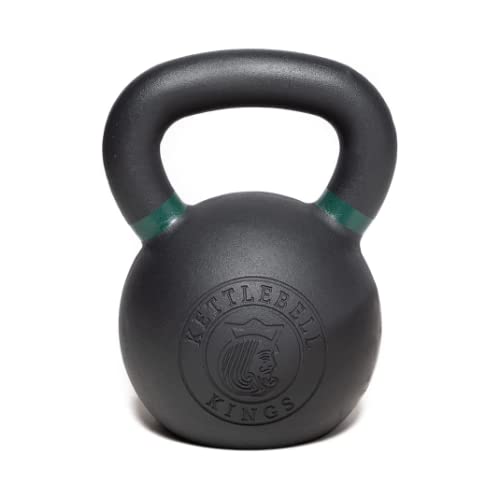

FAQ
Kettlebells questions, answered straight
What weight should I learn the swing with?
The weight you can press overhead with control and swing with a clean hinge, not the weight you can deadlift. If you are choosing between two weights and unsure, take the lighter one: a bell that is slightly too light still teaches the hinge, while a bell that is too heavy teaches compensation. The best kettlebells for beginners guide ranks first bells by exactly this logic.
One hand or two hands first?
Two hands, until the hinge is clean at full speed. The two-hand swing teaches the snap without the rotation a single-hand swing adds, and it lets both hands share the grip load while the pattern settles. Move to one hand only when the two-hand swing looks identical from the first rep to the last, and drop the weight when you do, because one hand carries the whole bell. Competition bells help the switch: the Bells of Steel shell stays the same size across weights, so the hand position never changes.
How high should the bell go?
Chest height on the float, driven by the hips. If the bell climbs above the shoulders, the arms are lifting, and if it stops at the waist, the snap is soft. Overhead swings are a different exercise with a different risk profile, not a harder version of this one, and this guide does not teach them. A bell that floats to the chest and falls back on its own is the whole movement.
Why do my forearms hurt more than my hips?
Because the arms are doing the work the hips should be doing, usually through a tight grip or an arm pull. Loosen the grip to a finger hook, let the handle rotate, and check the first two fixes in this list. If the forearms still burn after the grip and the hinge are fixed, the bell is too heavy for the pattern today. The troubleshooting guide covers the callus and grip side of the same problem.
How many swings per session?
Sets of ten clean reps, with the hinge identical on the first and the last, beat one long set that falls apart halfway. Two or three sets is a full learning session, and five sets is a workout. Stop a set the moment the back rounds or the arms start pulling, because reps after that point teach the fault, not the swing. Add sets before adding weight, and add weight only when the current bell feels light and the form survives the jump.