Head to head
Manduka PRO vs Liforme Original (2027): Lifespan and Cushion or Peak Grip?
PRO and Liforme compared on surface material, grip dry and damp, cushion and thickness, care rules, and which practice each mat actually serves.
Manduka PRO Yoga Mat 6mm vs Liforme Original Yoga Mat: the specs, side by side
| Spec | Manduka PRO Yoga Mat 6mm | Liforme Original Yoga Mat |
|---|---|---|
| Thickness | 6 mm high-density cushion | 4.2 mm |
| Material | PVC, closed-cell surface | Eco polyurethane top with natural rubber base |
| Dimensions | 71 x 26 in standard; extra-long version also sold | Approx. 72.8 x 26.8 in (manufacturer listing) |
| Weight | Approx. 7.5 lb in standard size (manufacturer listing) | Approx. 5.5 lb (manufacturer listing) |
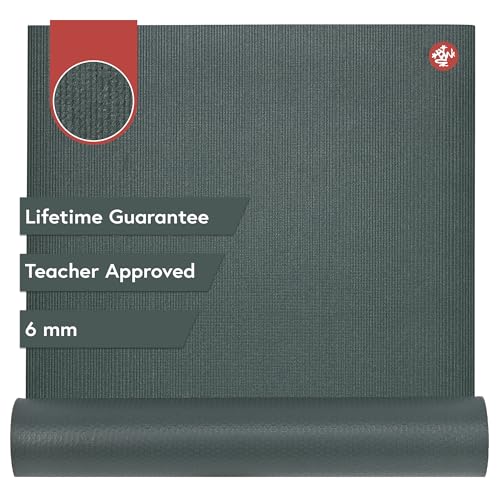 Manduka
 PRO Yoga Mat 6mm
The dense 6 mm PVC mat with a lifetime-class reputation and a break-in period owners respect.
- Thickness: 6 mm high-density cushion
- Material: PVC, closed-cell surface
Sources: Manduka PRO product documentation, Amazon listing specifications
Check price on Amazonor add to your Amazon cart Liforme
 Original Yoga Mat
A polyurethane and rubber mat with etched alignment markers and the strongest damp-hand grip here.
- Thickness: 4.2 mm
- Material: Eco polyurethane top with natural rubber base
Sources: Liforme Original product documentation, Amazon listing specifications
Check price on Amazonor add to your Amazon cartOur recommendation
Buy the Manduka PRO for a dry, home-based daily practice measured in years. Buy the Liforme for flowing and warm practice where hand slip is the recurring problem. This is the premium category's cleanest fork: time versus traction.
Surface and grip character
Closed-cell PVC that needs a break-in and then grips consistently for years, against polyurethane that grips at maximum from early on and peaks as hands get damp. Neither surface is better in the abstract; they peak in different practices.
Cushion and profile
The PRO carries 6 mm of dense cushion and the weight that comes with it. The Liforme is 4.2 mm with a performance profile and a more generous standard footprint. Floor-heavy weeks favour the PRO; movement-heavy weeks favour the Liforme.
Care and ageing
The PRO forgives: wipe it down, store it anywhere indoors. The Liforme requires gentle cleaning and protection from heat and sun, and its top layer will show wear sooner. Price that discipline honestly before choosing the grip.
Choose Manduka PRO Yoga Mat 6mm if…
- Your practice is daily, home-based, and mostly dry
- Cushion under floor work is a top priority
- You want the longest service life in this guide
Choose Liforme Original Yoga Mat if…
- Hands slipping limits your flowing or warm practice
- You use alignment references in your poses
- You will follow a strict care and storage routine
FAQ
Premium Yoga Mats questions, answered straight
Which mat is better for a beginner?
The PRO, for most beginners: forgiving care, more cushion, and a lower running cost over years. Beginners in heated classes are the exception and should start with the grip argument.
Which holds up better after three years?
The PRO, on surface condition, in the owner record. The Liforme at three years is a well-worn high-performance surface; the PRO at three years looks early in its life.
Can I own both sensibly?
Many practitioners do: the PRO as the home mat and the Liforme for heated or travel-to-studio grip work. It is a rational split if the budget allows two premium purchases.