Fix it
Massage Gun Mistakes: Pressure, Placement, and the Errors That Waste a Session
Massage gun mistakes that waste a session: pressing hard enough to stall the motor, working bone and joints, staying too long on one spot, and using the wrong head for the area.
A massage gun is a forgiving tool used badly more often than it is used well. The gun faults, stalling, loose heads, charging problems, are covered in the massage gun problems and fixes guide. This page covers the user faults: the pressure, placement, and speed choices that stall the motor, irritate joints, and leave muscles no better than they started. The fix in almost every case is the same shape: less pressure, slower passes, the right head, and a lighter hand than feels natural the first time you hold the gun.
Pressing so hard the motor stalls
Stalling is the gun telling you the pressure has passed its design limit, and it is the most common user error in this category. Let the head float on the muscle and let the gun's own weight do the pressing. The numbers in the records make the point concrete: the Therabody Theragun PRO (5th Gen) is rated to a stall force of up to 60 lb with a 16 mm amplitude, while the Therabody Theragun Mini (2nd Gen) is rated to only 20 lb with a 12 mm amplitude, so the same lean that the PRO absorbs will stop the Mini dead. If the motor slows or stalls, back off, switch to a larger ball head to spread the force, and drop a speed level. A gun that stalls only in your hand on one muscle is usually reporting your pressure, not a fault, which is exactly how the problems and fixes guide puts it.
Using the gun directly on bone and joints
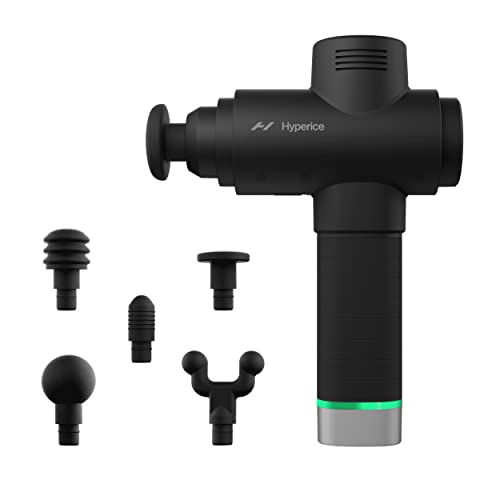
Muscle is the target, and bone is not. Running a percussive head straight over a kneecap, a shin, an elbow, or the spine feels like deep work and is mostly vibration driven into a joint, which irritates the area without helping the muscle around it. Work the muscles on either side of the joint instead, and keep the head moving on soft tissue. This is where the head choice matters: the Theragun PRO ships with six heads including a SuperSoft and a Dampener for sensitive areas near joints, and the Hyperice Hypervolt 2 Pro ships with five heads including a cushion head that softens the same job. The fork head, on either gun, belongs alongside the spine and Achilles, never on top of them. If an area is bony under the skin, the gun goes around it.
Staying too long on one spot
Parking the gun on a single knot for minutes does not work the knot loose faster; it overstimulates one small patch of tissue and leaves it sore and guarded. Keep the head moving in slow passes, and return to the same area in a later pass rather than camping on it. A practical shape is a minute or two per muscle group, moving the whole time, then a second pass if the area still wants attention. The auto-stop timers on many models exist for this reason: they are a usage guide, not a limitation to defeat. If you find yourself holding the gun in one place because the spot hurts, you are pressing too hard as well as too long, and the first fix in this list is the one to revisit.
Using the wrong head for the area
Every head in the box exists for a different job, and the default ball is not the right answer everywhere. The bullet head is for small, precise spots such as the arch of the foot and the forearm, not for the whole quad. The flat head suits large flat muscles. The fork head suits either side of the spine and the Achilles. The soft heads suit sensitive areas and bony neighbours. The TOLOCO Massage Gun ships with ten heads on the common kit listing, which makes it a useful experiment platform for learning these differences, while the Hypervolt 2 Pro keeps the choice simpler with five: flat, cushion, standard ball, bullet, and fork. Spend one session learning what each head feels like on a forgiving area such as the calf before using them on tender spots, and the sessions get better immediately. For a head-by-head comparison across the range, see the best massage guns ranking.
Starting at top speed on a cold muscle
Full speed on a cold muscle is a shock, not a warm-up: the tissue is tight, the percussion lands hard, and the session starts with flinching instead of loosening. Start at the lowest speed, let the muscle warm under light passes, and only then climb the speeds. The guns in this guide give you room to do it properly: the Theragun PRO runs five speeds from 1750 to 2400 percussions per minute, the Theragun Mini runs three speeds at 1750, 2100, and 2400, and the Ekrin B37S runs five speeds on a quiet-drive brushless motor. Use the bottom of the range for the first minute on every muscle, and treat the top speeds as the finish, not the opening. The best quiet massage guns guide is worth a look here too, because a gun you can run at low speed in a shared room is a gun you will actually warm up with.
Using the gun on an acute injury
A fresh strain, a swollen joint, a bruise still changing colour, or an area that is hot and tender to touch is not a massage gun job. Percussion on acutely injured tissue adds impact and blood flow to an area that is already inflamed, and it can set recovery back. Give the injury rest first, and use the gun on the muscles around it only once the acute phase has settled and the area is no longer hot or swollen. The same rule covers post-workout soreness that is sharp rather than dull: dull, general muscle soreness is the gun's home ground, while sharp, localised, or worsening pain is a reason to stop and seek professional advice. No gun in this guide changes that line, including the Hyperice Hypervolt Go 2, whose 10 mm stroke and two heads make it a gentle travel tool, not a treatment device.
Chasing the deepest setting for every muscle
Amplitude is depth of stroke, and deeper is not better on every muscle. The Theragun PRO at 16 mm is the deepest tool in this guide and suits large leg muscles after heavy training, but that same depth is too much for forearms, shoulders, and the neck area, where a shallower stroke is the right call. The BOB AND BRAD Q2 Mini at 7 mm and the Hypervolt Go 2 at 10 mm exist precisely because small muscles and sensitive areas want a short, gentle stroke. Match the gun and the speed to the muscle: deep and slow for quads and glutes after leg day, light and shallow for calves, forearms, and anywhere near bone. The best massage guns for lifters guide ranks the deep tools for the heavy jobs, and it is honest about which muscles do not need them.
Skipping the warm-up value of light passes
The most underused feature of a massage gun is the light pass before training: a minute per muscle at low speed, which wakes the tissue up and gets blood moving before the first set. Owners who only reach for the gun after training miss half its value, and the ones who do use it as a warm-up report the same thing: the first set feels readier. The Ekrin B37S suits this job well, with a quiet-drive brushless motor and a battery rated to about eight hours of light use, so it can live by the rack and be picked up for a minute before every session without a charging routine. The Theragun Mini plays the same role in a pocket body, with a 12 mm stroke that still feels like a real gun on calves and quads. Keep the passes light, keep them moving, and save the deep work for after training. The Theragun PRO review covers the full warm-up and recovery routine for the flagship, and the same shape applies to every gun in this guide.
Still stuck? Compare the current top picks
Full ranked list

FAQ
Massage Guns questions, answered straight
How long should I use a massage gun on one muscle?
A minute or two per muscle group, with the head moving the whole time, is the shape most owners settle on. Return for a second pass if the area still wants attention rather than camping on one spot. If the area is sore the next day, the session was too long or too hard, not too short.
Can I use a massage gun every day?
Yes, if the sessions stay short and the pressure stays light enough that the motor never stalls. Daily use goes wrong when every session is a maximum-depth, maximum-speed leg day. Vary the intensity the way you vary training, and give any area that feels raw a day off. The problems and fixes guide covers the heat and shutdown signs that say a session ran too long.
Which head should I use on calves and shoulders?
The standard ball head is the safe default for calves, and a soft or cushion head suits shoulders and anywhere near bone. The bullet head is for small precise spots such as the forearm, not for broad muscles. When in doubt, start with the softest head that still reaches the muscle, and only move to a firmer head once the area is warm.
Is it normal for the gun to slow down when I press?
Yes, up to a point: every gun has a stall force, and pressing past it slows or stops the motor by design. The Theragun Mini is rated to 20 lb, so it will slow much sooner than the Theragun PRO at 60 lb. If the gun slows only under your pressure, ease off. If it stalls with no pressure at all, charge it fully and retest before contacting support.