Fix it
Medicine Ball Weight Selection Mistakes: Buying Too Heavy, Too Light, or the Wrong Ball
Medicine ball weight selection mistakes that waste money and stall training: a slam weight bought for wall throws, a rebounding ball bought for slams, and one weight bought for a whole household.
Medicine ball buying goes wrong before the first throw, because the weight that is right for one movement is wrong for another, and the ball type that is right for slams is wrong for wall throws. A ball you can slam confidently is usually far too heavy to throw at a target overhead, and a ball light enough for partner passing is usually too light to train power. The medicine ball troubleshooting guide covers what goes wrong with the ball itself, leaks, seams, grip, and bounce. This page covers what goes wrong with the choice: the weight and type mistakes that leave owners with a ball they cannot throw, a ball that comes back at their face, or a ball nobody in the house can use. The ranked shortlist underneath it all is our best medicine balls guide, with the home-gym and wall-ball angles in the home gym guide and the beginner wall ball guide.
Buying a slam weight for wall-ball throws
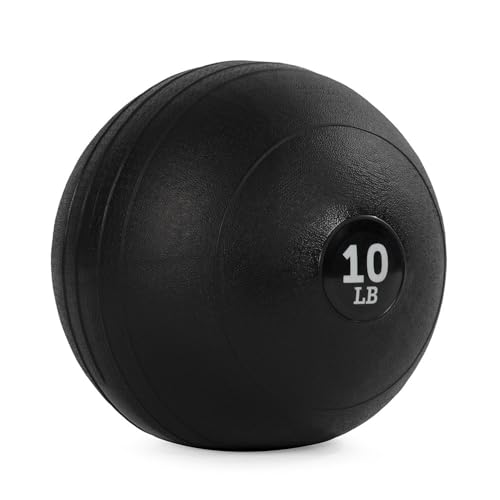
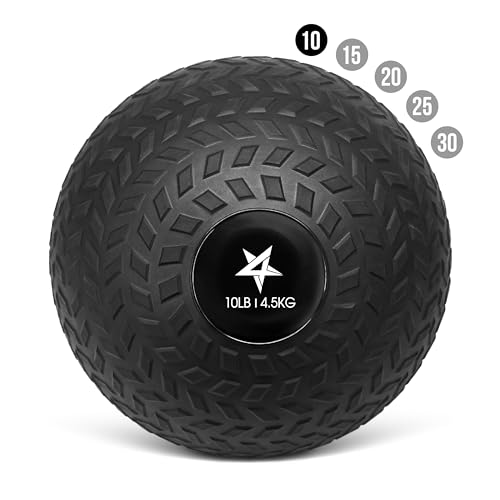
Slam balls and wall balls are different tools that happen to be round. A slam ball is built to land dead: the Titan Fitness Slam Ball runs 10 to 60 lb with minimal bounce, and the Yes4All Slam Ball runs 10 to 40 lb the same way. A wall ball is built to be caught: the Day 1 Fitness Wall Ball runs 6 to 30 lb in a soft stitched cover, and the REP Fitness Soft Medicine Ball runs 4 to 30 lb the same way. Throw a 20 lb slam ball at a target and it drops dead or thuds back wrong; throw a soft wall ball and it comes back to your hands. Buy the weight for the throw you will actually do, and if the program mixes slams and wall throws, accept that it needs two balls, not one compromise.
Starting wall-ball work at 20 lb or more
The wall-ball throw is a squat plus a throw, and both halves have to stay clean for the rep to count. Beginners who start at 20 lb or more usually squat shallow, press the ball instead of throwing it, and catch it low and late, which is how shoulders and wrists get sore. Start where the range starts: the Day 1 Fitness Wall Ball begins at 6 lb and the REP Fitness Soft Medicine Ball begins at 4 lb, and both give a beginner a ball that can be thrown with full hip drive and caught at chest height. Add weight only when the catch is clean for a full set, because a heavier ball thrown badly trains the bad throw, not the legs.
Choosing by diameter instead of weight
Wall balls are all about 14 inches across, whatever they weigh. The Day 1 Fitness Wall Ball is approximately 14 inches from 6 to 30 lb, and the REP Fitness Soft Medicine Ball is 14 inches across its 4 to 30 lb family, so the ball looks identical on the shelf at every weight. The weight is in the fill, not the size, which is why a first-time buyer who picks by feel in the shop ends up with the wrong load. Read the weight label, not the diameter, and check it again on delivery, because a 14 inch ball that weighs 20 lb when you expected 10 lb is a training error you will feel in the first set.
Buying a rebounding medicine ball for slams
A medicine ball that rebounds is built for throws and catches, not for slams. The Amazon Basics Medicine Ball rebounds off walls and floors across its 4 to 20 lb range, and the Champion Sports Leather Medicine Ball carries a moderate rebound across 4 to 22 lb. Slam either one into the floor at full force and the bounce comes straight back at your face, which is the opposite of what a slam is for. Slams need a dead-bounce ball: the REP Weighted Slam Ball, the Titan Fitness Slam Ball, the Yes4All Slam Ball, and the TRX Slam Ball are all built to land dead. Buy the bounce for the job, and never slam a ball whose record says it rebounds.
Buying a dead-bounce slam ball for partner passing
The mirror image of the last mistake: a slam ball kills the pass. Partner work, chest passes, and rotational throws need the ball to come back with energy, and a dead-bounce ball just drops at your partner's feet. For passing, buy a rebounding ball: the Amazon Basics Medicine Ball at 4 to 20 lb, the Champion Sports Leather Medicine Ball at 4 to 22 lb, or the JBM Medicine Ball at 2 to 12 lb for light work. The REP Fitness Soft Medicine Ball is the middle ground, a low-bounce soft ball built for throws and catches rather than slams, and it suits partner work better than any true slam ball. If the program is half slams and half passing, it needs two balls, and the passing ball should be the lighter of the two.
Skipping the light end for rehab and learning
Every range in this guide has a floor, and the floor is where learning and rehab live. The JBM Medicine Ball starts at 2 lb, the Amazon Basics Medicine Ball starts at 4 lb, and the REP Fitness Soft Medicine Ball starts at 4 lb. A buyer whose lightest option is a 10 lb slam ball, the floor of the Titan, Yes4All, and TRX ranges, has no ball for shoulder rehab, no ball for teaching a throw pattern, and no ball for a lighter training partner. The light ball is not a wasted purchase: it is the teaching tool, the warm-up tool, and the rehab tool, and it costs the least in the range. Buy the light end first when anyone in the house is returning from injury or learning the movements.
Buying one weight for the whole household
One ball cannot serve two lifters whose strength differs by half. A 20 lb ball is a wall-ball weight for a strong lifter and a slam weight for a lighter one, and the same ball is a warm-up weight for one person and a working weight for another. Households that buy one ball end up with one person training well and one person compensating. The honest route is singles across the range: slam balls here are sold individually, the REP Weighted Slam Ball runs from light conditioning weights past 100 lb, the Titan Fitness Slam Ball covers 10 to 60 lb, and the Yes4All Slam Ball covers 10 to 40 lb, so each person can own the weight that matches their throw. Buy the second ball when the first one is right, not instead of getting the first one right.
Buying a set instead of the weight you will actually throw
A boxed set looks like value until half its balls are weights you will never throw. The useful buy is the single ball that matches your movement today: a 14 lb Dynamax Standard Medicine Ball for soft throws and catches, a 10 lb TRX Slam Ball for a first slam weight, a 6 lb Day 1 Fitness Wall Ball for a first wall-ball weight. Train with it for a few weeks, learn what your throw actually is, and only then buy the next weight up once you know the number. The home gym guide ranks the singles worth building a run from, and the set price should follow that decision rather than lead it.
Still stuck? Compare the current top picks
Full ranked list
FAQ
Medicine Balls and Slam Balls questions, answered straight
What weight medicine ball should a beginner start with?
Start at the light end of the ball type you will actually use: 6 to 10 lb for wall balls, where the Day 1 Fitness Wall Ball starts at 6 lb; 10 lb for slams, the floor of the Titan, Yes4All, and TRX ranges; 4 to 8 lb for medicine-ball passing and core work, inside the Amazon Basics and Champion ranges. If you are choosing between two weights and unsure, take the lighter one: a ball that is slightly too light still teaches the throw, while a ball that is too heavy teaches compensation.
Can I use the same ball for slams and wall balls?
No, not well. Slams need a dead-bounce ball that lands and stays down, and wall balls need a soft 14 inch ball that comes back to your hands. The REP Weighted Slam Ball and the REP Fitness Soft Medicine Ball are the two ends of that split inside one brand, and the best medicine balls guide ranks both jobs separately for exactly this reason.
Why are all wall balls 14 inches?
Because the catch target should stay the same size whatever the load. The Day 1 Fitness Wall Ball and the REP Fitness Soft Medicine Ball are both about 14 inches from their lightest to their heaviest option, so the throw and the catch feel identical while the weight changes. Diameter tells you nothing about the load; the weight label is the only number that matters.
How heavy should a slam ball be?
Ten to 20 lb covers most lifters for power work, where the slam should be fast enough to stay a throw rather than a drop. Stronger lifters can work up through the Titan Fitness Slam Ball to 60 lb and the REP Weighted Slam Ball past 100 lb, but the test is speed: if the slam has slowed to a controlled drop, the ball is too heavy for the movement today.
Is a heavier ball always a better workout?
No. A ball you cannot throw with speed and control trains nothing except the compensation. Speed, full range, and a clean catch matter more than the number on the label, and a lighter ball thrown hard beats a heavier ball muscled through a short, ugly rep. Add weight only when the current ball moves fast and the form survives the jump.