Fix it
Ski Erg Form Mistakes: The Errors That Turn a Full-Body Pull Into an Arm Workout
Ski erg form mistakes and how to fix them: pulling with the arms, standing stiff through the stroke, flared elbows, rushing the recovery, damper set to maximum, and the wrong stance on the platform.

The ski erg looks like an arm machine and trains like a full-body one, and that gap is where every mistake in this guide lives. The drive comes from the hips and the lats, the arms finish the pull, and the recovery is slow while the drive is fast. Get that deal right and the machine builds conditioning that carries into rowing, running, and real skiing. Get it wrong and the shoulders do all the work, the pace collapses, and the machine gets blamed for a technique problem. The ski machine troubleshooting guide covers what goes wrong with the machine itself, cords, flywheel, mounts, and consoles. This page is about the body. The machines underneath it all are ranked in our best ski machines guide, with the rowing alternative in the rowing machine form mistakes guide.
Pulling with the arms instead of hinging
Your shoulders shrug, your elbows bend early, and the handles move because your arms pulled them, which means the hips never did their job and the shoulders tire in minutes. The ski erg is a hinge plus a crunch: bend at the hips, let the lats engage, and drive the handles down with the whole trunk, so the arms are ropes that finish the pull rather than cranes that start it. If the shoulders burn first on every piece, the arms are working alone. Drop the pace, exaggerate the hinge for a few strokes, and feel the hips and lats take the load back. The Concept2 SkiErg rewards this most clearly, because its air flywheel answers a good hinge with a smooth, heavy pull and answers an arm pull with a thin, fast one.
Standing tall and stiff through the stroke
You pull from a near-upright stance with straight legs, which leaves the hips out of the movement and hands all the work to the shoulders and arms. The catch position needs a soft knee bend and a hinge at the hips, chest leaning over the handles, so the body can unfold into the pull. Think of the start as a shallow deadlift position rather than a standing row: hips back, knees soft, weight balanced across the whole foot. The drive then starts from the floor and the hips, not from the shoulders. If the lower back feels the work, the hinge is doing its job; if only the shoulders feel it, the stance is still too tall. A useful drill is to pause at the catch for a full second before pulling, which forces the hinge position to hold still instead of collapsing into an upright pull the moment the stroke starts.
Hands finishing high with elbows flared
Your hands stop at chest height with the elbows out wide, which shortens the stroke and loads the shoulders at their weakest angle. The pull should finish with the hands passing the hips, elbows tucked close to the body, like finishing a lat pulldown rather than a front raise. Keep the elbows in from the catch: if they flare, the lats disengage and the shoulders take over. A simple check is the finish position: hands below the waist, elbows near the ribs, chest still leaning forward. If the hands finish high, the stroke is half a stroke, and the flywheel never gets the full drive.
Rushing the recovery
You yank the handles down, then snap straight back up for the next pull, so the recovery is as fast as the drive and the rhythm collapses within a minute. The ski erg wants the opposite: a fast, committed drive and a slow, controlled return, with the flywheel spinning down between strokes. Rushing the recovery also pulls the cords back before the flywheel has finished its work, which is what makes the next pull feel rough and uneven. Slow the return to about twice the drive time, let the arms rise on their own, and breathe on the recovery rather than holding your breath through it. The Concept2 SkiErg with its PM5 monitor makes this visible: a steady rhythm holds the numbers, a rushed one does not.
Setting the damper to 10 and calling it a harder workout
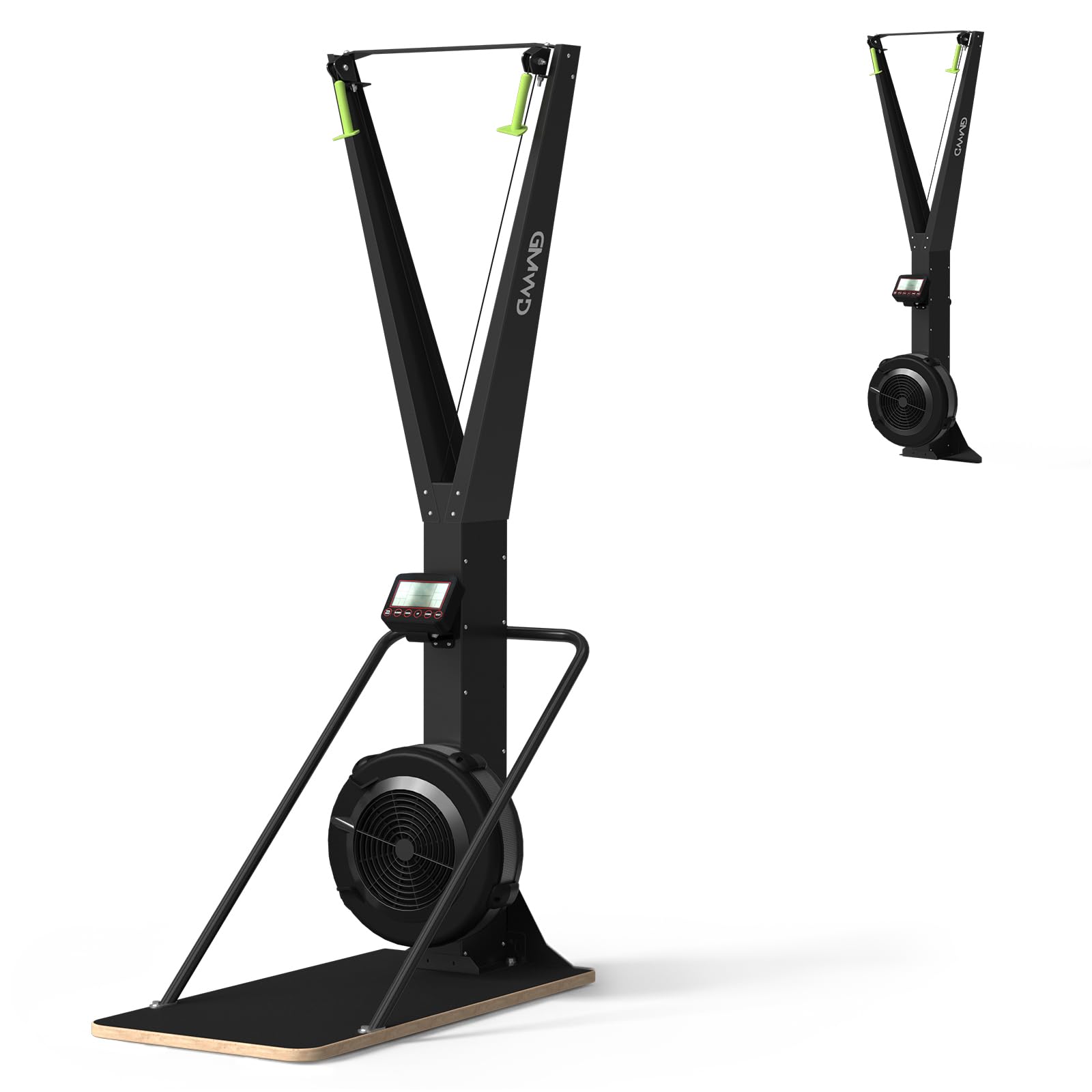
The damper is drag, not difficulty, and maximum drag is not maximum training. The Concept2 SkiErg carries a spiral damper, and the GMWD Ski Machine SK01 and the Marcy Cross Country Ski Trainer NS-0357-SKI each carry a 10 level damper adjustment. A high setting makes each pull heavier and slower, which suits short power pieces and punishes steady training; a middle setting lets you hold a fast, full stroke for the whole session. Start in the middle of the range, adjust by feel across a week, and judge the setting by whether your pace holds for the full piece, not by how hard the first ten pulls feel. The damper that lets you finish the workout is the right one. The common trap is changing the damper mid-session to chase a feeling: pick a setting, train the whole piece on it, and only then decide whether it was right.
Feet too close together on the platform
You stand with feet together like a skier on a narrow track, which leaves no base for a hard pull and lets the body wobble with every stroke. The stance is shoulder width, feet planted flat on the platform, weight balanced across the whole foot rather than on the toes. The Concept2 SkiErg floor stand is about 24 by 52 inches for a reason: the platform is built for a real athletic stance, not a narrow one. A narrow stance also shortens the hinge, because the hips cannot move freely between close feet. Set the feet, check the width against the shoulders, and only then take the handles.
Double-poling every stroke
You pull both arms together on every stroke, which is powerful and also one-dimensional: the double pole is the sprint gear, not the only gear. The cross-country pattern alternates the arms, left then right, which spreads the load, keeps the rhythm sustainable, and trains the coordination the machine is actually for. Use double-poling for short power pieces and intervals, and alternate for steady training and longer sessions. If the alternating pattern feels awkward at first, slow the pace until the arms and the hinge sync; the coordination arrives within a few sessions, and the shoulders will notice the difference immediately.
Expecting air-erg timing from a rail trainer
Not every ski machine in this guide is an air flywheel machine, and the form cues do not transfer one to one. The Sunny Health and Fitness Ski Training Machine runs on a bodyweight and sliding rail friction system, not an air flywheel, so its resistance comes from friction rather than air and its pull feel is different from the Concept2 SkiErg, the GMWD Ski Machine SK01, and the Marcy Cross Country Ski Trainer. On a rail trainer the timing is set by the slide, not by the flywheel spin-down, so the slow-recovery cue from this guide does not apply the same way. Learn the machine you own: air flywheel machines reward the hinge and the slow return, rail trainers reward a steady slide rhythm, and mixing the two sets of cues is how owners conclude a good machine has bad form.
Still stuck? Compare the current top picks
Full ranked list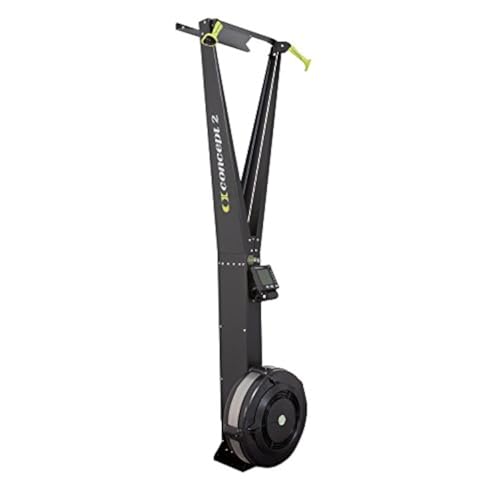
FAQ
Ski Machines (Ski Ergs) questions, answered straight
What damper setting should I start on?
The middle of the range on your machine. The GMWD Ski Machine SK01 and the Marcy Cross Country Ski Trainer both give you 10 levels, and the Concept2 SkiErg gives you a spiral damper to adjust the same way. Start in the middle, train a week there, and move up or down by feel. Higher is heavier and slower per pull, not a better workout.
Should my feet move during the stroke?
They stay planted on the platform, shoulder width apart, with the weight balanced across the whole foot. A slight rise onto the toes at the catch is normal as the hinge loads, but the feet should not shuffle, slide, or lift. If the feet move, the stance is too narrow or the pull is too arm-heavy, and both are covered in the fixes above.
How long should a ski-erg session be?
Short intervals first: a few minutes of steady pulling with the form in this guide, then longer pieces as the rhythm holds. The machine suits both sprint intervals and steady conditioning, but the form has to survive the duration you choose. If the arms start pulling and the hinge disappears halfway through, the session was too long for the technique today, whatever the clock says.
Can I use the SkiErg arms-only?
Yes, for short pieces, and it is a legitimate shoulder and lat session. But it is a fraction of the machine: the hinge is the point, and an arms-only routine on a full-body erg is like buying a rowing machine and never using the legs. Keep arms-only work as a finisher, not the main session.
Is the SkiErg hard on shoulders?
Only when the arms do the work alone. A hinge-driven pull with the elbows tucked and the hands finishing past the hips keeps the shoulders in a strong position through the whole stroke. If the shoulders hurt, the first fix is the first one in this guide: hinge, let the lats drive, and let the arms finish rather than start.