In-depth review
StrongTek Professional Wooden Balance Board Review (2027): The Rocker Standard
Full research review of the StrongTek wooden rocker board: deck size and surface, tilt behavior, capacity, and desk-day usability.
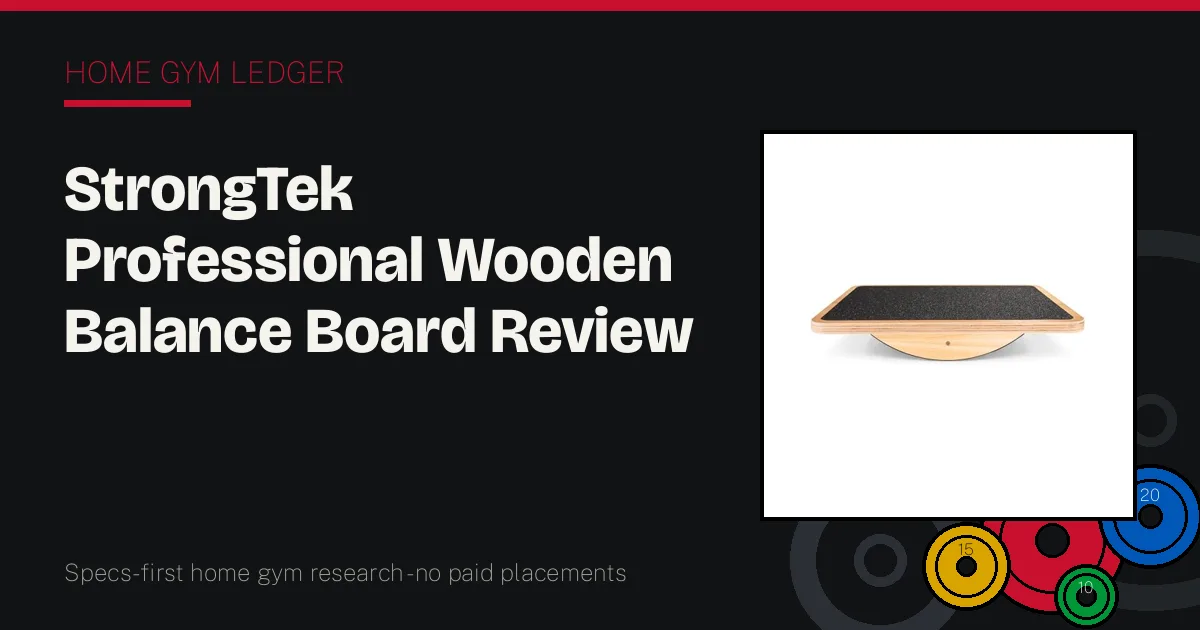
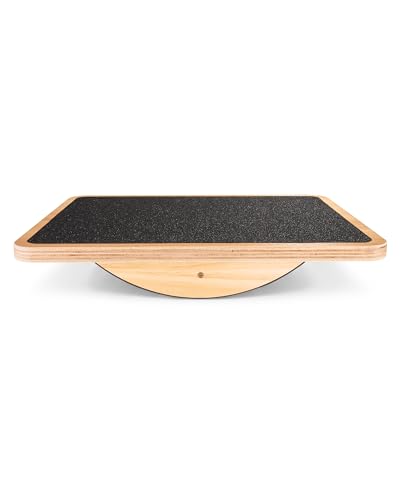
StrongTek Professional Wooden Balance Board
A hardwood rocker board with anti-slip surface, the standing-desk and starter standard.
- Built-in rocker base
- Base type
- Hardwood deck, about 17.5 x 13.5 in maker listed class
- Deck
- Rocker angle in the 10 to 12 degree class, maker listed
- Tilt
Our verdict
If rocker boards have a reference model for home and office use, this is close to it: hardwood, a confident anti-slip surface, a sensible tilt, and capacity headroom. It will bore an athlete in a fortnight and serve a desk worker for a decade, and the product seems to know which of those it is for. Judge it as infrastructure for a standing habit, not as a training frontier, and it is excellent.
What we like
- Rocker base tips in two directions with natural end stops, so it is safe beside a desk
- Hardwood deck feels and ages like equipment rather than a plastic accessory
- Anti-slip top works with shoes, socks, or bare feet
What to watch out for
- Two-direction motion is mastered quickly by athletic users
- Wood deck needs the usual care around water and hard impacts
- Not the cheapest rocker in this guide
Who it is for
Standing-desk users, beginners, and households wanting one durable, gentle board everyone can share.
Rocker geometry in daily use
The built-in curve tips forward and back and settles at its ends, so the board behaves itself when you step on half-distracted with a coffee in hand. That predictability is precisely what a training board gives up and a desk board must keep.
Deck, surface, and footwear
The anti-slip top works across the footwear range owners actually use, including bare feet during home workouts. Hardwood underfoot feels planted compared with plastic discs, and the deck size fits a natural stance for most adults without encouraging an overly wide one.
A desk day, realistically
Owners settle into intervals: on the board for a call or a focused stretch of work, off it for the next task. The board stores flat under the desk between intervals and asks for nothing: no inflation, no parts, no setup. That zero-friction profile explains its long ownership stories.
Limits, named
Two directions only, a fixed tilt, and no upgrade path inside the product. Users who catch the balance-training bug will buy a second, harder board. The StrongTek usually stays in service anyway, at the desk, which softens the economics of outgrowing it.
Key specifications
- Base type
- Built-in rocker base
- Deck
- Hardwood deck, about 17.5 x 13.5 in maker listed class
- Tilt
- Rocker angle in the 10 to 12 degree class, maker listed
- Capacity
- 350 lb maker listed
- Surface
- Anti-slip top surface, maker listed
What owners report
Commonly praised
- Lives under desks for years, according to long-term owners
- Build quality justifies itself over plastic rockers
- Gentle enough for all-day intermittent use
Common complaints
- Too easy, say users who wanted a trainer rather than a desk board
- Deck is compact for very wide stances
- Felt pads and finish want occasional attention on hard floors
Recurring themes from owner reviews on retailers and forums, summarised by our editors. Updated November 2026.
Sources: StrongTek professional wooden balance board documentation, Amazon listing specifications
Also consider
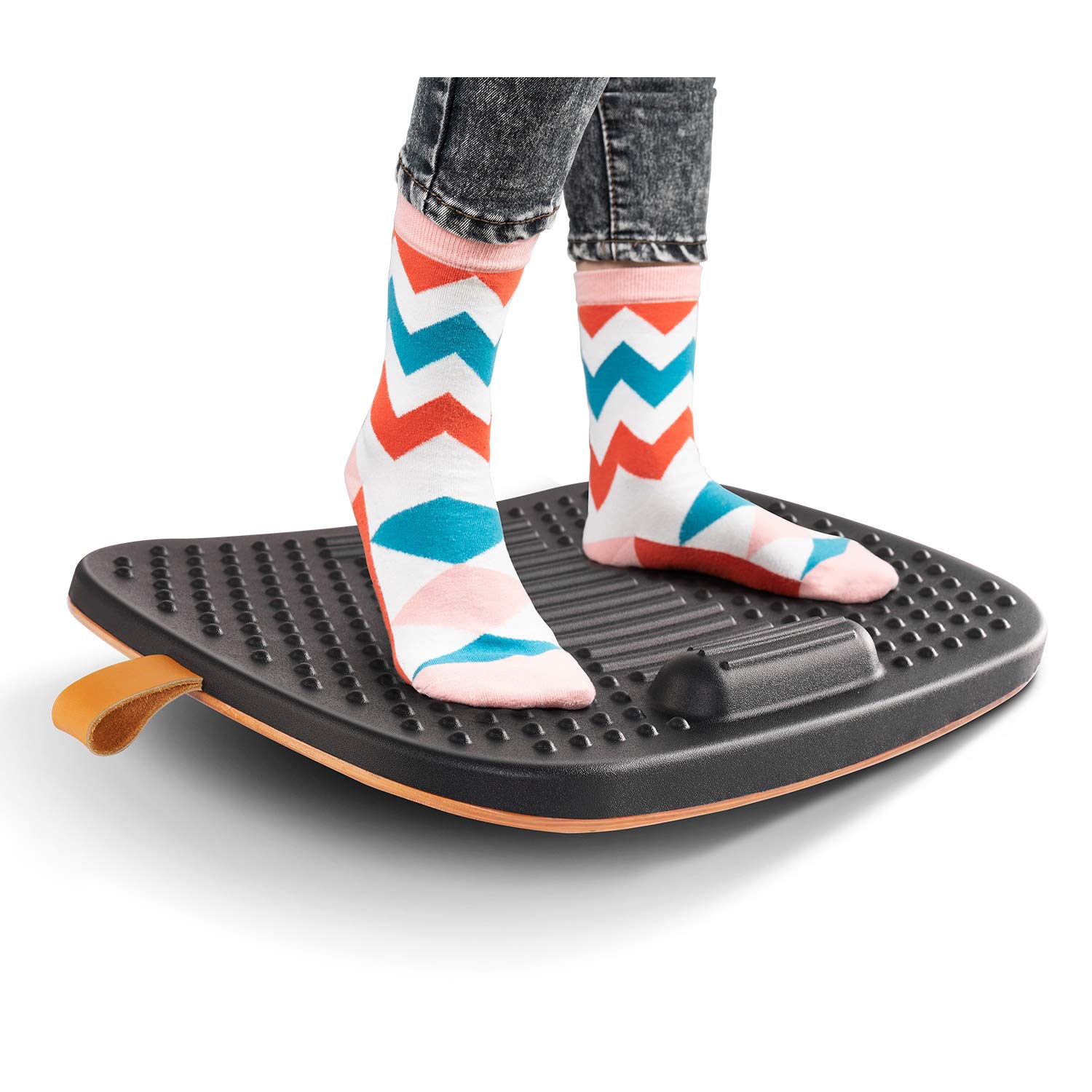 FEZIBO
 Standing Desk Mat Balance Board with Anti-Fatigue Bar
A hardwood rocker board wearing a cushioned anti fatigue mat, with a massage bar underfoot.
- Base type: Wooden rocker board with cushioned mat top
- Deck: About 20 x 12 in, natural hardwood core with high density latex top, maker listed
Sources: FEZIBO standing desk mat balance board product documentation, Amazon listing specifications
Check price on Amazonor add to your Amazon cartChoose the FEZIBO desk board for a cushioned latex top, a foot massage bar, and a hardwood core at a mid tier price.
 EveryMile
 Wobble Balance Board
A molded plastic wobble board with a 15.7 in round deck, for home and desk use.
- Base type: Fixed dome pivot, 360-degree wobble
- Deck: Molded plastic round deck, about 15.7 in maker listed
Sources: EveryMile wobble balance board documentation, Amazon listing specifications
Check price on Amazonor add to your Amazon cartChoose the EveryMile if you prefer wobble motion at a lower spend and accept a fixed dome.
Research-based assessment: manufacturer specifications and documentation, cross-checked against retailer listings and recurring themes in published owner feedback. We do not claim hands-on testing we have not performed.
FAQ
Balance Boards and Trainers questions, answered straight
Will it scratch my floor?
Use it on a mat or low carpet in rooms with delicate flooring, as with any board. Owners on hard floors commonly add a thin mat and report no issues.
Is it good for exercise, not just desks?
For gentle drills and beginner work, yes. For progression-focused training, its fixed two-direction motion is a ceiling, and the wobble or roller guides are the step up.
How much space does it need?
About its deck footprint plus comfortable standing room. It is the smallest-commitment board in this guide alongside the wobble discs.