Buying guide
Balance Board Buying Guide (2027): Rocker, Wobble, Roller, Dome, and the Floor Underneath
How to buy a balance board: choose the base format by goal, match deck size to your stance, check capacity and surface, and plan the practice space and support.
Choose the format by the goal, in one sentence
Movement while I work means a rocker or desk board. A full home exercise tool means a dome trainer. A skill I want to learn means a roller. Gentle variety at home means a wobble. Write your sentence before shopping, because every format in this guide is the best answer to one of those sentences and a poor answer to the other three.
Understand what each base does to difficulty
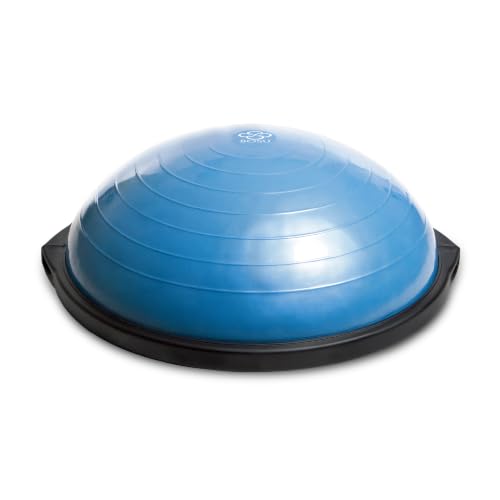
Rockers limit motion to two directions with end stops. Wobble domes free every direction but keep the deck attached. Rollers free every direction and let the base travel, which multiplies difficulty. Inflatable surfaces trade speed for forgiveness. Adjustability is rare in this category, so the base you buy is largely the difficulty you keep.
Top picks from our research
Full ranked list
Size the deck to feet and stance
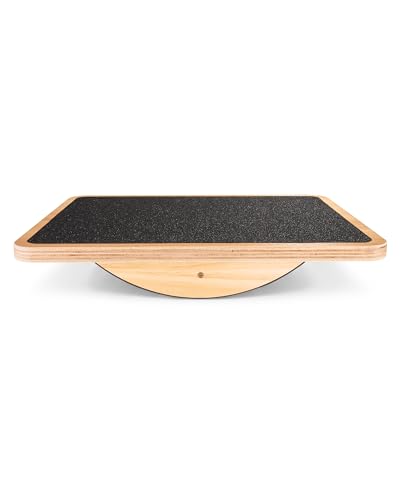
Measure your natural stance and your shoe length, then compare with deck dimensions, especially on round wobble boards where diameter decides everything. Overhang is not automatically wrong in sport formats, but for desk and beginner use a deck that fits both feet flat is the calmer purchase.
The numbers in this guide's picks show how much the formats differ. Round wobble decks run about 15 to 16.5 in across, which suits one centred stance and rehab-style work, while the desk rockers are oblong, around 20 by 12 in on the FEZIBO pattern, sized for a working stance held for hours. Skill decks stretch longest: the Indo Board's oval runs about 30 by 18 in, giving the feet room to walk and reposition as the roller travels. Match the deck to the stance your sentence implies. A desk worker shuffling on a 15 in round will feel perched; a beginner balancing on a 30 in roller deck has bought travel they did not ask for. When in doubt between two sizes inside the right format, the larger deck is the calmer first purchase, and the one that survives your ambitions longest.
Plan the floor, the support, and the storage
Every dynamic board needs a suitable surface: a mat or low carpet for rollers, a non-marking spot for rockers, a clear rectangle for anything that moves. Beginners in any format need support within reach. Then measure storage, because a 30 inch deck and a loose roller either get a home or become clutter that ends the habit. When a deck starts slipping, a roller runs away from you, or the wobble wears uneven, Balance Board Problems and Fixes works through the causes before you replace the board.
Capacity, grip, and build honesty
Keep user weight comfortably inside the maker capacity, check that the surface matches your practice style (bare feet, socks, or shoes), and favor simple, solid construction over accessory bundles. In this category the deck and base are the product; carry bags and DVDs are not a tiebreaker worth a worse board.
Worked example: a desk worker's first board
Consider an example buyer: office work from home, hardwood floors, around 200 lb, no balance training history, and the goal sentence written honestly as movement while I work. That sentence eliminates most of the catalogue at a stroke. The dome trainer is an exercise tool rather than a desk companion, the roller formats ask for support, clearance, and attention a workday cannot give, and the round wobble boards free every direction under a person trying to type. What remains is the rocker family, and the example narrows to two patterns. The FEZIBO desk board offers an oblong deck around 20 by 12 in, a gentle 8.5 degree tilt, and a cushioned anti-fatigue top with a massage bar, built for hours of small movement. The StrongTek wooden rocker is smaller at about 17.5 by 13.5 in with a firmer 10 to 12 degree rock, suiting shorter standing spells and a buyer who wants more motion per hour. Capacity is a non-issue at 200 lb against 320 and 350 lb maker listings, so the floor plan decides: the desk edge serves as the beginner support the planning section insists on, the board lives slid under the desk between spells, and the hardwood gets the non-marking spot the same section prescribes. The example's answer is the cushioned desk rocker for all-day use, with the wooden rocker as the pick if standing time is measured in focused sessions instead.
FAQ
Balance Boards and Trainers questions, answered straight
What is a sensible first-board budget?
Enough for a solid deck in the right format from a maker with real specifications. The budget picks in this guide clear that bar; the false economy is buying the wrong format cheaply and rebuying the right one.
Do I need special shoes?
No. Bare feet and flat, grippy footwear are the common choices. Avoid slippery socks on smooth decks, and avoid cleated or heavily lugged soles that can damage surfaces.
How often should I practice?
Short, frequent sessions build the skill and the desk habit better than rare long ones. Stop any session when form gets sloppy or you feel unsteady, and progress drills gradually as control improves.