Fix it
Treadmill Assembly Mistakes: The Build Errors That Make a New Machine Feel Broken
Treadmill assembly mistakes that turn a new machine into a month of complaints: building a 310 lb machine alone, pinching the console cable, skipping belt centering and incline calibration, and folding before the latch locks.
A treadmill earns its reputation in the first hour, before a single run. The faults in our home treadmill troubleshooting guide, belt drift, squeaks, slipping, console errors, mostly start as assembly choices: a cable pinched in the upright, a belt never centered, a lift never calibrated, a deck folded before its latch caught. None of them means the machine is broken. All of them feel broken, and all of them are fixed in the build, not in the return window. This guide works through the eight assembly errors owners report most on the machines in this hub, from the 310 lb Commercial 1750 down to the budget TR150, so the first run starts on a machine that was actually finished.
Building a 310 lb machine alone
The NordicTrack Commercial 1750 Treadmill assembles to roughly 310 lb, and owners describe delivery and assembly as a two-person, half-day job. The Sole F80 Treadmill carries the same warning in its own record: assembly weight surprises buyers working alone. The console mast is the part you least want to be holding alone while fasteners start, because a pivoting 16-inch screen on a mast has no safe place to rest mid-build. Build the machine in its final position on its mat, with the doorway path measured before delivery day, and treat the second person as part of the purchase, not a favour. The 1750 review plans the build the same way, as a half-day with the deck run through its full grade range and the belt tracked at a walk before the packaging leaves the room. The XTERRA TR150 Folding Treadmill is the honest exception in this hub: owners report assembly is manageable alone, which is one more reason it suits first-time buyers, and its full review covers the solo build in detail.
Tightening every bolt before the frame is square
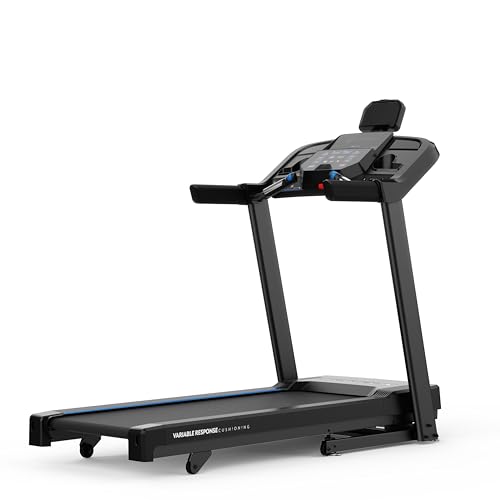
Upright bolts want to be snugged, not torqued, until both uprights are seated and the frame is square, and only then tightened in the manual's order. A bolt forced against a misaligned upright is how threads cross and frames sit crooked, and a crooked frame is the quiet cause of a belt that never quite tracks straight. The Horizon 7.0 AT Treadmill carries steady complaints about its assembly instructions, so the fix starts before the first bolt: unhurried time, the instructions open, tools and parts laid out and counted, nothing discovered mid-build. That unhurried hour is the cheapest insurance in this whole guide, and the Horizon 7.0 AT review records the same lesson from the owner side.
Pinching the console cable inside the upright
The console cable runs up the upright to the screen, and a pinched harness is the assembly fault behind a console that never wakes. The troubleshooting guide lists the first checks for a dead console, safety key seated, breaker on the frame near the cord, outlet live, and all three are worth checking first, but if they check out and the screen is still dark, the harness is the next place to look. Route the cable through its channel before the upright is bolted tight, pull it gently to confirm it moves freely, and never let a bolt or a mast joint sit on it. On screen models like the Commercial 1750 and the ProForm Carbon Pro 9000 Treadmill, both with 16-inch touchscreens, the cable carries the whole connected experience, so a pinch costs more than a display.
Forgetting the safety key in the parts bag
The safety key ships in the parts bag, and a surprising number of dead-on-arrival reports end there. The troubleshooting guide lists it first for a reason: confirm the safety key is fully seated before anything else. Find the key before the first power-on, clip it to the console, and test that the belt starts and stops with it, because a key pulled in a stumble stops the belt faster than any button, and that only works if the key is actually in the machine. Put the spare, if the box includes one, somewhere you will find it in six months, not in the recycling with the packaging.
Running before the belt is centered
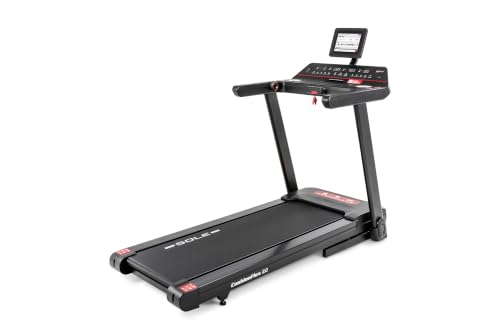
A belt that starts off-center wears one edge and drifts further with every mile, and the fix is a first-day check, not a first-month repair. Run the belt empty at 3 mph, watch which way it walks, and turn the rear roller bolt on the side it moves toward by a quarter turn, then wait 30 seconds and check again. Small turns only: over-correction is how a centered belt becomes a sideways one. Once the belt tracks straight, check tension before the first real run: if the belt slips or hesitates underfoot, raise tension evenly, a quarter turn per side, testing between turns, and mark the bolts with tape before you start so both sides stay even. The 60-inch class, the Commercial 1750, the Sole F80, the 7.0 AT, the Sole F63 Treadmill, the NordicTrack T Series 10 Treadmill, and the ProForm 9000, all give you room to see the drift clearly at a walk. On the 50-inch TR150 and the 49.6-inch Sunny Health SF-T7515 Smart Treadmill the same check matters more, because a narrow belt leaves less room for error, and belt length is also what decides how much room your stride has, which our guide to treadmill running form mistakes covers in full.
Skipping the incline calibration
The lift calibrates itself on level ground, and it can only do that job unloaded. Unload the deck, stop the belt, and power-cycle at the wall so the lift can calibrate, and never stand on a deck while it calibrates. Then run the incline through its full range before the first workout: minus 3 to 12 percent on the Commercial 1750 and the ProForm 9000, 0 to 15 percent on the Sole F80, the F63, and the 7.0 AT, 0 to 12 percent on the T Series 10. A deck that sits visibly crooked after calibration is a lift-motor warranty issue, and it is far better found on day one, with the packaging still in the room, than on day thirty.
Leaving manual incline pinned at the wrong setting
Powered incline forgives inattention; manual incline does not. The XTERRA TR150 offers three manual positions up to about 10 percent, which means stopping, pinning the deck, and restarting, so in practice it stays wherever it was left. Check the pin is fully seated before the first run, and know which of the three positions it is in, because a deck pinned one notch high on day one becomes the gradient every walk is measured against. The Sunny SF-T7515 is the contrast in this hub: 12 auto levels up to about 12 percent, so the grade changes from the console, but the same first-day check applies, run the incline through its range and confirm it moves smoothly at every level.
Folding it away before the latch locks
A folded deck that is not locked is a deck waiting to fall. The Sole F63 folds with a hydraulic assist and locks upright. The Commercial 1750 and the ProForm 9000 lower on a folding assist. The Echelon Stride Auto-Fold Treadmill folds itself flat, with the handlebar folding in one motion. In every case the check is the same: lift the deck until the latch clicks, tug it to confirm the lock holds, and only then walk away. The budget folders need the same check at the other end of the move: the TR150 folds upright and rolls on transport wheels, so roll it to its corner before the latch is set, not after, because a locked deck is not meant to be wheeled around. Measure the ceiling before the first fold, because a deck that folds up into a low ceiling is a problem found too late, and keep the two feet of clear space behind the deck that the room plan asks for, so the fold never has to happen in a crowded corner. For the machines that solve storage most aggressively in this guide, our Echelon Stride vs Sunny SF-T7515 comparison weighs flat folding against compact budget incline.
Still stuck? Compare the current top picks
Full ranked list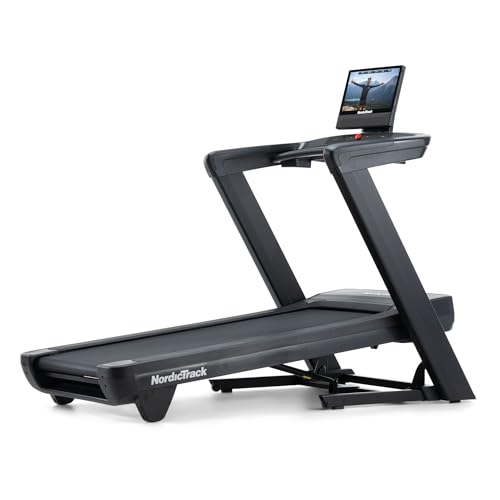
FAQ
Treadmills for Home questions, answered straight
How long does treadmill assembly take?
The Commercial 1750 is a two-person, half-day job by owner report. The Horizon T101 Connect Treadmill sets up faster than most full-size treadmills. The XTERRA TR150 is manageable alone. The 7.0 AT is the cautionary case: its assembly instructions draw steady complaints, so the honest answer for that machine is unhurried time with the parts laid out first. Plan the morning, not the hour before a planned first run, and keep the instructions, tools, and parts laid out before starting rather than discovering a step mid-build.
Do I really need a second person?
For the 310 lb Commercial 1750, yes, and for the Sole F80, whose assembly weight surprises solo buyers. The part that needs the second pair of hands is the console mast, a pivoting 16-inch screen on the 1750 that nobody should hold alone while fasteners start. Budget machines are different: the TR150 is the honest solo build in this hub.
Why is my brand-new treadmill console dead?
Check the safety key first, then the breaker on the frame near the cord, then the outlet, exactly as our troubleshooting guide lists them. If all three check out, the assembly fault to look for is a console cable pinched inside the upright during the build. For screen models, a full power-off at the wall for a minute also clears most update-related freezes.
Should I lubricate the belt before the first run?
Check centering first, and lubricate the deck center per the manual, which is also the troubleshooting fix for a dry belt. Do not over-lubricate: a belt that feels greasy on top needs a wipe, not more silicone, and over-lubrication is itself a cause of slipping underfoot.
Can I assemble it upstairs?
A 310 lb machine does not move rooms casually once built, and the Sole F80 is heavy even folded, so build it where it will live. The Echelon Stride is the storage-first exception: its auto-fold design stores dramatically flatter than upright folders. Whatever the machine, measure the doorway path and the ceiling at incline before delivery day; our best treadmills for home guide works through the room maths in full.