Head to head
TriggerPoint GRID X vs OPTP PRO-Roller 36 (2027): Maximum Pressure or Maximum Forgiveness?
TriggerPoint GRID X and OPTP PRO-Roller 36 compared on density, length, surface, construction, and which routine each one actually serves.
TriggerPoint GRID X Foam Roller vs OPTP PRO-Roller Standard Density (36 in): the specs, side by side
| Spec | TriggerPoint GRID X Foam Roller | OPTP PRO-Roller Standard Density (36 in) |
|---|---|---|
| Length | 13 in long, 5.5 in diameter | 36 in long, 6 in diameter, full round (half round also sold) |
| Density | Extra firm, the firmest in this guide | Standard density, medium-soft |
| Surface | GRID patterned EVA foam | Smooth |
| Material | EVA over a hollow rigid core | EVA foam, solid body |
| Support note | Maker positions it for dense muscle and experienced users | Maker positions it for exercise, balance, and mobility routines |
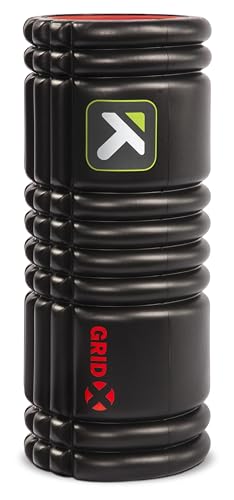 TriggerPoint
 GRID X Foam Roller
The GRID turned up: extra-firm density for users the original feels soft to.
- Length: 13 in long, 5.5 in diameter
- Density: Extra firm, the firmest in this guide
Sources: TriggerPoint GRID X product documentation, Amazon listing specifications
Check price on Amazonor add to your Amazon cart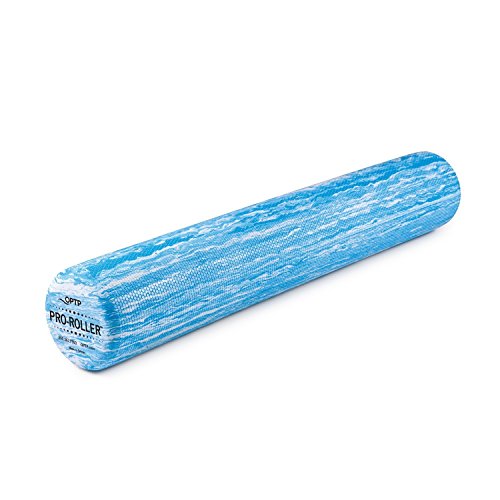 OPTP
OPTP PRO-Roller Standard Density (36 in)
The studio long roller: standard-density EVA in full and half-round profiles.
- Length: 36 in long, 6 in diameter, full round (half round also sold)
- Density: Standard density, medium-soft
Sources: OPTP PRO-Roller product documentation, Amazon listing specifications
Check price on Amazonor add to your Amazon cartOur recommendation
Buy the TriggerPoint GRID X if you are a heavy, experienced roller who compresses standard rollers and wants the firmest focused pressure in this guide for large, dense muscle groups. Buy the OPTP PRO-Roller 36 if your routine is full-length back, balance, and mobility work on a forgiving long roller. These two sit at opposite ends of the foam roller category, and the right choice is decided by the routine, not by which roller looks more serious.
Density and session character
The GRID X is extra firm, the firmest density in this guide, and delivers strong focused pressure that owners upgrading from the original GRID describe as finally enough. The OPTP is standard density, medium-soft, and suits lying and balance work where the roller should support rather than dig in. One session is intense and short, built around placement on dense muscle; the other is relaxed and long, built around lying positions. Firm-roller fans find the OPTP vague on legs, and the X would find the OPTP routine punishing, which is exactly the point.
Length and the body area each serves
Length decides the job before density does. The GRID X is 13 in long, a focused format for legs, glutes, and sectioned back work, with the same short-format limits as the original GRID for back work. The OPTP is 36 in long, a full-length roller that spans the shoulders for lying back work and covers two legs at once. The OPTP needs a real storage corner and is awkward in small flats; the X lives by the rack permanently. Buy the length that matches the body area you roll most, not the roller that looks more impressive.
Surface: patterned pressure against smooth support
The X carries the GRID patterned EVA surface, which concentrates pressure into zones and rewards good placement technique on large muscles, while punishing casual placement over bone. The OPTP is smooth, and its surface stays smooth and consistent over years, which suits back placements beside the spine and two-leg work without pattern bite. Pattern is a pressure tool for trained hands; smooth is a support surface for lying routines. Neither surface is better in general, and each is wrong for the other roller routine.
Construction, ageing, and profile options
The X is EVA over a hollow rigid core, a build that holds its extra-firm density with no softening over heavy use. The OPTP is solid EVA, and its foam holds shape better than basic EPE at this softness, with a surface that mobility users say stays consistent over years. The OPTP also offers a half-round profile option that doubles as a balance and stretch aid, which the GRID X line does not offer. The X is a specialist that does one density for years; the OPTP is a studio tool that does a routine for years.
Choose TriggerPoint GRID X Foam Roller if…
- You are a heavy, experienced roller who compresses standard rollers
- Focused pressure on large, dense muscle groups is your main job
- You already own a kinder roller for mobility and back work
Choose OPTP PRO-Roller Standard Density (36 in) if…
- Your routine is full-length back, balance, and mobility work
- You want a forgiving standard-density roller for lying positions
- You want the half-round profile option for balance and stretch setups
FAQ
Foam Rollers questions, answered straight
Can one roller cover both jobs?
Not honestly. The X is too firm, too short, and too patterned for lying back work, and the OPTP is too soft for deep leg pressure. The settled household pattern is a pair, and the TriggerPoint GRID X review explains why a second, kinder roller is the usual answer beside the X.
Which one lasts longer?
Both are built to last in their own class. The X keeps its extra-firm density with no softening over heavy use thanks to its hollow rigid core, while the OPTP keeps a smooth, consistent EVA surface over years of studio-style use. Longevity is not the deciding factor here; density and length are.