Fix it
Vibrating Foam Roller Won't Turn On: The Power Checks, In Order
Your vibrating foam roller won't turn on: dead battery or dead charger, dirty port, switch fault, or a motor that quits under weight, diagnosed in order against the rollers in this guide.
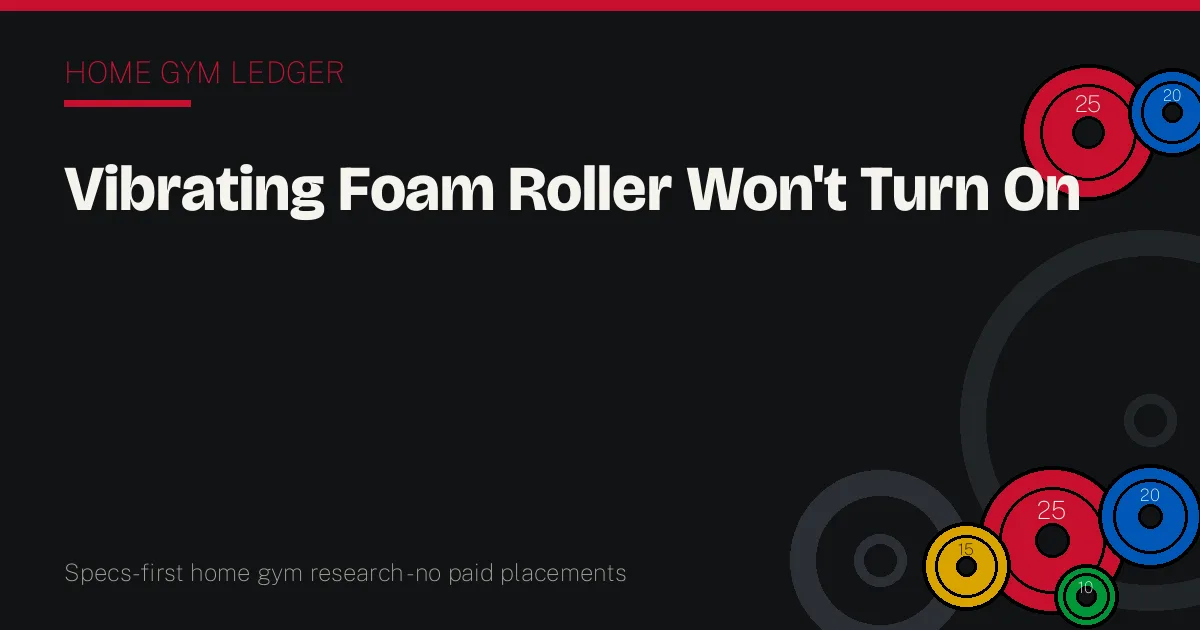
A vibrating roller that will not turn on is usually telling you about its battery, not its motor, and the order of the checks matters more than any single one of them. Work this list top to bottom before ordering a replacement, because the first three fixes cost nothing and solve most dead rollers. The checks are written against the eight rollers in our best vibrating foam rollers guide, so the battery ratings, charger types, and switch quirks named here are the ones those models actually carry. The rest of the failure family, weak vibration, walking across the floor, foam wear, is in the vibrating foam roller problems and fixes guide. This page is only about power: the roller that does nothing when you press the button.
It is flat, not broken: charge it to full first
Every roller in this guide is rechargeable, and a flat battery looks exactly like a dead roller: no light, no buzz, no response. The ratings differ wildly, which is why the same symptom means different things on different models. The URBNFit is rated up to 6 hours per charge, the longest routine here, while the Hyperice Vyper 3 is rated around two hours and the Therabody Wave Roller around 180 minutes, and the FITINDEX 5-Speed is rated 2 plus hours at its highest speed. The TriggerPoint GRID Vibe Plus and the LifePro Surger are both rated for multi-hour light use, which means a week of short sessions between charges. Charge uninterrupted to full before judging anything: many models protect the pack by refusing a top-up routine of tiny charges, so a roller that has lived on five-minute top-ups can behave as if it is dead when it is only confused. If the charge light never comes on at all, move to the next fix, because the fault is upstream of the battery.
The charger is the fault, not the roller
Chargers are the most replaced part in this category and the most mis-matched. The URBNFit charges by micro USB, a dated cable that is easy to confuse with a phone charger of the wrong output, while the FITINDEX 5-Speed charges by USB-C, and the GRID Vibe Plus and the Zyllion ZMA-22 both ship with a charger included, which is the one to use. Use the original or a spec-matched charger, and test the cable itself: a cable that charges a phone slowly may not start a roller at all. The LifePro Surger is the honest warning here, because owners report that charging takes a while from empty, so a roller left on the wrong charger for twenty minutes and declared dead was never given a fair test. Give the correct charger an uninterrupted hour before moving on.
The port is dirty, or the plug is not seated
Sweat, lotion, and gym-floor grit collect around charging ports and end caps, and a plug that looks seated can be a millimetre short of contact. Clean the port gently with a dry cloth or a soft brush, keep water away from ports and seams, and push the plug home until it sits flush. The GRID Vibe Plus deserves a special mention: owners note that its end cap and charging access are fiddly with cold hands, so a port that seems blocked is often an end cap that is not fully open or not fully closed. Check the end caps are fully seated while you are there, since a loose cap is also the common rattle source that owners mistake for motor noise. If the plug still will not seat, inspect the port for a bent pin before forcing anything, because a bent pin is a support conversation, not a cleaning job.
The switch or button is the fault
When the battery is full and the charger is right, the next suspect is the control itself. The Zyllion ZMA-22 is the clearest example in this guide: its battery door and switch feel basic, and a switch that does not click positively is a switch worth suspecting. Clean around the controls with a dry cloth, because sweat and lotion are the common culprits, then press each speed step in turn: the rollers here run three to five speeds, and a specific speed step that has vanished while the others work is a pattern to note with a date for support, since intermittent control faults rarely fix themselves. If no step responds at all but the charge light behaved normally, the fault is between the switch and the motor, which is a warranty topic, not a home repair. Do not open the housing to look: the battery and motor are sealed for a reason.
It starts, then dies in seconds
A roller that buzzes once and quits is almost never a dead motor: it is a battery that cannot hold a charge, or a protection circuit doing its job. The usual cause is the top-up habit, many short charges instead of full ones, which several models in this guide protect against by refusing to run until they have had a proper charge. Run the roller down to a normal session end, then charge it uninterrupted to full and retest. The FITINDEX long roller carries the honest owner theme here: battery life shortens over the first year for some, which is normal lithium ageing rather than a defect, and the fix is a shorter interval between full charges rather than a new roller. If runtime keeps shrinking week to week after full charges, record the pattern with dates for a warranty claim, because a battery that loses a visible share of its runtime every month is a failing pack.
It runs unweighted but dies under your body
Test in three stages before blaming the battery: unweighted on a mat, then under one leg, then under your full torso. If it is strong unweighted and fades only at full load, that is the motor class limit, and it is the honest difference between the tiers in this guide. The Hyperice Vyper 3 carries a 34 W high-torque motor that owners report holding its speed character under body weight, which is what the premium buys. Budget motors fade when weighted, and that fade is physics on a budget core, not a fault to fix. If the weakness appeared suddenly at all loads after months of strength, that is different: sudden weakness at every load points to battery age, which is a support conversation. Shift position so the core sits under the working muscle while you decide, and do not confuse a motor that cannot hold load with a motor that will not start.
It was stored flat, hot, or for months
Lithium packs self-discharge in storage, and a roller left for months in a hot car or a sunny room can arrive at a charge state its protection circuit refuses to wake from. The foam side of storage matters too: the buying guide in this hub warns against storing any roller under heavy kit or in heat, because foam over a rigid core holds shape while solid foam bodies can compress permanently. Rotate which face bears weight in storage, keep the roller out of hot cars and direct sun, and if it has sat for months, give it a full uninterrupted charge before the first test, not a five-minute top-up. One hard limit: if the battery has swollen, or the roller smells hot or chemical after charging, retire it. A swollen pack is a hazard, not a repair, and no saving is worth it.
When it is a warranty claim, not a fix
Some dead rollers are simply done, and the skill is knowing when to stop troubleshooting. A motor note that turned to grinding, a dead zone along the roller that appeared suddenly, a battery that swells or overheats, or controls dead on every speed step after a full charge are all warranty topics, because each one changes the tool from controlled pressure to a hazard. Record the pattern with dates: when the fault first appeared, which speeds still work, how runtime changed week to week. That record is what support asks for, and it is also what separates a genuine failure from a flat battery in the same conversation. The second-year test from the buying guide applies here too: end caps, chargers, and support that still answers. Premium brands pass it easily; budget rollers should be priced as if they might not, which is why the price of the roller and the depth of its support belong in the same decision.
Still stuck? Compare the current top picks
Full ranked list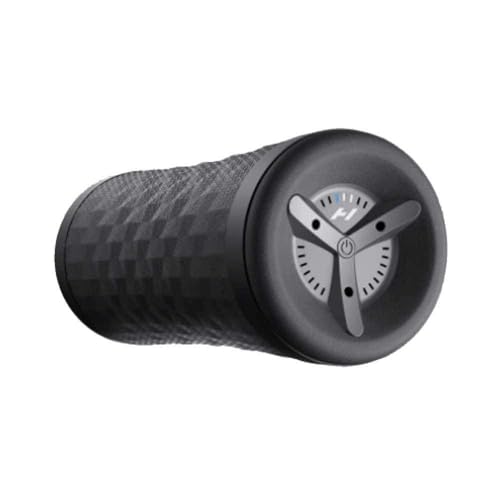

FAQ
Vibrating Foam Rollers questions, answered straight
Can I use the roller while it charges?
Only if the manual explicitly allows it. Most models in this guide are designed for cordless sessions and charging between them, and running tethered also changes how the roller moves under you. Default to no, and charge between sessions instead. If your model is one of the few that allows it, the manual says so in plain language.
How long should a full charge last in real routines?
Shorter than the headline rating, because ratings are measured at light use. The URBNFit is rated up to 6 hours, the Wave Roller around 180 minutes, the Vyper 3 around 2 hours, and the FITINDEX 5-Speed 2 plus hours at its highest speed, but in short daily sessions owners describe charging every week or two, with heavy users charging more often. Treat the rating as a session count rather than a promise, and recharge on a routine rather than waiting for the roller to die mid-session.
Do I need the app for the roller to work?
No. The Hyperice Vyper 3 and the Therabody Wave Roller both offer Bluetooth app routines, and the Wave Roller lets the app set speed during guided sessions, but all speeds are available from the roller controls on both models. The app adds guided routines and automatic speed changes; it is not a power switch, and a roller that will not start has a battery or charger fault, not an app fault.
Only one speed works. Is the roller broken?
Probably not yet, but note the pattern with a date. A single vanished speed step while the others work is the intermittent control fault the troubleshooting guide warns about: clean around the controls, charge to full, and retest. If the same step stays dead across two full charges, it is a support conversation, because intermittent control faults rarely fix themselves and a dead speed is a dead speed.
Is it safe if the battery swells?
No. Retire the roller. A swollen battery, a hot or chemical smell after charging, or a motor note that turned to grinding are the three signs the troubleshooting guide lists as the end of the roller's life, and none of them is a home repair. Do not charge a swollen pack again, and do not store it under heavy kit.