In-depth review
Nitrofit Limber Pro Review (2027): The Seated Routine Machine, Assessed on Specs
Full research review of the Nitrofit Limber Pro: pivoting seat mechanics, position display, padding and footprint, capacity.
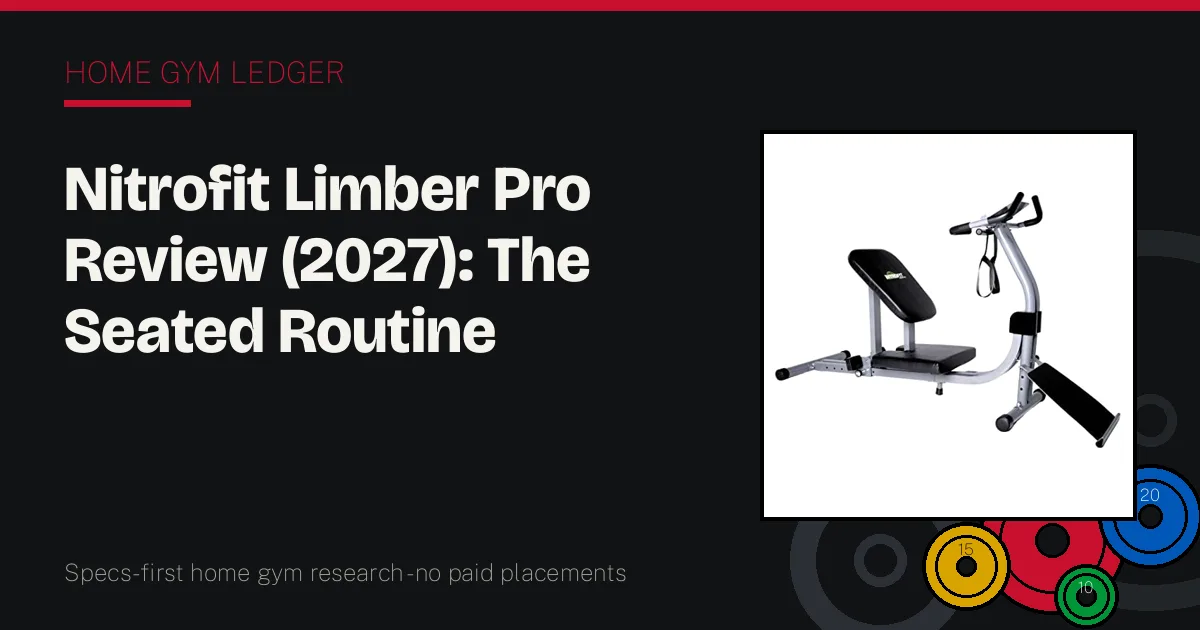

Nitrofit Limber Pro Stretch Machine
A seated full-body stretch trainer with a pivoting seat and calibrated stretch display.
- Seated full-body stretch trainer with pivoting seat
- Type
- Body-weight pivot with calibrated position display
- Adjustment
- 250 lb (manufacturer listing)
- Max user weight
Our verdict
The Limber Pro is the most complete seated stretching machine in this hub because it treats the routine as the product. The pivoting seat and moving handlebar let your own weight settle you into a position, the display gives that position a number you can return to, and the padded supports make longer holds a realistic plan rather than an endurance test. Its costs are literal floor space and a premium tier price for a passive machine. Buy it if a guided, repeatable seated routine is the goal and a room corner is available. Look elsewhere if your training is leg-angle work, where this format simply does not compete.
What we like
- Pivoting seat and moving handlebar let body weight set the position instead of a crank
- Stretch display and numbered settings make a routine repeatable from session to session
- Padded seat, knee, and arm supports suit longer holds than bare frame designs
What to watch out for
- Largest footprint in this guide; it is a piece of furniture, not a closet item
- Seated format does not offer the wide leg angle positions a splits frame is built for
Who it is for
Home users building a daily seated stretching routine who have a permanent corner for the machine and value repeatable settings.
How the pivot seat changes the setup
Most seated trainers ask you to arrange your body around a fixed frame. The Limber Pro reverses that: the seat pivots and the handlebar moves, so position comes from shifting your weight and reading the display. Owners describe the learning curve as one or two sessions, after which the setup is faster than arranging straps and pads on a static frame. The display is the quiet headline feature, because a numbered setting turns a vague daily habit into a logged routine.
Positions covered, and the honest gaps
The seated format covers back, hip, leg, and shoulder positions from one chair, which is the widest coverage in this guide. The gaps are structural: there are no wide leg angle positions of the kind a leg stretcher frame is built around, and there is no standing work. Read the purchase as buying the seated catalogue completely, not as buying every stretching position that exists.
Padding, capacity, and fit
The seat, knee, and arm padding are sized for holds rather than quick demonstrations, and the stated 250 lb capacity covers most households. Fit is mostly about the corner: the assembled machine is furniture-scale. Measure the footprint from the spec table, add mounting room, and confirm the corner before the box arrives, because returning a machine of this size is the worst outcome in the category.
Ownership themes
Long-term praise centers on routine adherence: owners say the structured setup keeps the habit alive. Complaints concentrate on size surprise and on buyers who discovered they only used a couple of positions, which made the premium hard to defend. Both themes are knowable before purchase, and the buying guide in this hub is built around exactly that check.
Key specifications
- Type
- Seated full-body stretch trainer with pivoting seat
- Adjustment
- Body-weight pivot with calibrated position display
- Max user weight
- 250 lb (manufacturer listing)
- Assembled size
- Approx. 50 x 23 x 31 in class footprint - check current listing dimensions
What owners report
Commonly praised
- The routine feels structured, which owners say keeps them using it
- Padding and seat comfort come up repeatedly in long-term feedback
- Assembly is described as straightforward for a machine of this size
Common complaints
- Size surprises buyers who pictured a smaller device
- Price is hard to justify for owners who only use two or three positions
- Moving it between rooms is a two-person job
Recurring themes from owner reviews on retailers and forums, summarised by our editors. Updated November 2026.
Sources: Nitrofit Limber Pro product documentation, Amazon listing specifications
Also consider
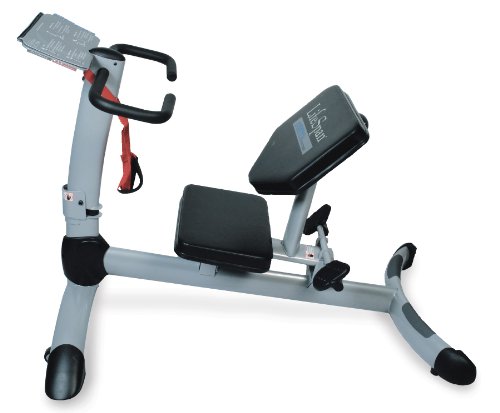 LifeSpan
 SP1000 Stretch Partner Pro
A seated stretch partner with a pivoting seat, back pad, and a routine built around the seat angle.
- Type: Seated stretch trainer with pivoting seat and back pad
- Adjustment: Body-weight seat pivot with position guidance
Sources: LifeSpan SP1000 Stretch Partner Pro product documentation, Amazon listing specifications
Check price on Amazonor add to your Amazon cartChoose the LifeSpan SP1000 if you want the same seated pivot format at a mid-tier price and can accept a smaller position catalogue. Read our LifeSpan SP1000 Stretch Partner Pro review
 Precor
 240i Commercial Series StretchTrainer
The gym-floor stretch station design, brought home: seat, kneeling pad, and wrist straps.
- Type: Seated and kneeling stretch station with handlebar and wrist straps
- Adjustment: Body position and strap placement, no geared settings
Sources: Precor 240i StretchTrainer product documentation, Amazon listing specifications
Check price on Amazonor add to your Amazon cartChoose the Precor 240i if you already know the gym StretchTrainer routine and want that exact seat, strap, and kneeling format at home. Read our Precor 240i Commercial Series StretchTrainer review
Research-based assessment: manufacturer specifications and documentation, cross-checked against retailer listings and recurring themes in published owner feedback. We do not claim hands-on testing we have not performed.
FAQ
Stretching Machines questions, answered straight
Does the Limber Pro need power or assembly tools beyond the basics?
It is a passive machine with no motor; the display is a position indicator, not a powered drive. Assembly is a bolt-together job owners describe as straightforward, and the machine's size makes a second pair of hands useful.
Can two people of different sizes share one Limber Pro?
Yes. The pivot format has no sized frame to adjust between users beyond seat position habits, and the numbered display helps each user keep a separate logged setting for shared positions.
Is the Limber Pro suitable for leg angle training?
Not as its main job. It includes leg positions within a seated routine, but wide angle leg work belongs to the frame designs like the ProForce Stretchmaster covered in this hub.