Buying guide
Stretching Machine Buying Guide (2027): Format, Adjustment, Capacity, and the Corner Test
How to buy a stretching machine: choose the format from your routine, read adjustment systems for repeatability, check capacity and fit honestly.
Start from positions, not products
Write down the positions your routine actually uses this month. Seated back and hip work points at a seated trainer. Leg angle work points at a frame. A single hamstring focus points at a small device that costs and stores like an accessory. Every disappointment in this category traces back to buying a format for a routine it does not cover, so the position list is the whole decision in miniature.
Read the adjustment system for repeatability
A stretching routine compounds when settings repeat. Numbered displays, angle scales, ratchet steps, and geared drives all exist to answer one question: can you find yesterday's setting in ten seconds? Free-sliding and body-position-only systems work, but they put the logging burden on you. Decide how much structure you want the machine to supply.
Top picks from our research
Full ranked list

Check capacity and fit like an owner
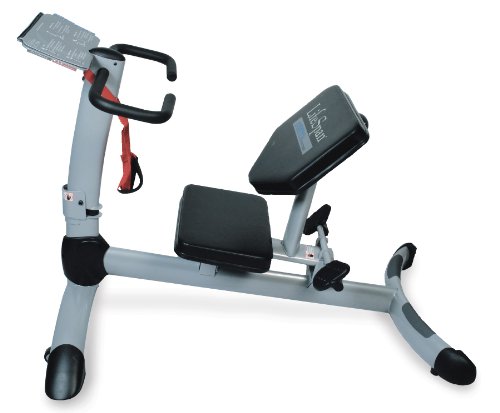
Use the stated maximum user weight, then check the fit specs behind it: seat size on seated machines, leg length geometry on frames, and heel and knee placement on hamstring devices. Where a listing publishes a thin capacity figure, treat the gap as a risk to price in, and favour makers who publish complete numbers.
Measure opened, stored, and mounted
Three sizes decide whether a machine survives in your home: the assembled footprint, the opened working size with you on it, and the stored size if it folds. Leg frames are the trap: their working width includes your legs. Seated trainers are the commitment: they do not fold, so their corner must be real.
Padding is a session-length spec
Padding thickness reads like a comfort extra and behaves like a training spec. Short sessions forgive thin pads anywhere. Longer holds move contact pressure to the top of the owner complaint lists on budget frames. Match padding to the hold lengths in your actual routine, not the ones in the product photos.
FAQ
Stretching Machines questions, answered straight
What is the most common buying mistake in this category?
Buying a format that does not cover the routine: a leg frame for a general routine, or a seated trainer for leg angle training. The position list check in the first section exists to prevent exactly that.
Are expensive stretching machines built differently, or just branded differently?
Both happen. Premium money visibly buys frame gauge, padding density, and adjustment hardware in the seated class. In budget leg frames the mechanism concepts are similar and the differences are padding, finish, and documentation.
Should I buy for the routine I want or the routine I have?
The routine you have, with one step of headroom. Machines bought for an imagined daily practice become furniture. A format that serves the current routine and covers the next position or two is the honest target.