Head to head
EVA Foam Tiles vs Rubber Flooring (2027): Cushioning Is Not Protection
EVA foam tiles and rubber flooring compared on load behavior, denting, cleaning, comfort, and which rooms each material truly serves.
ProsourceFit Extra Thick Puzzle Exercise Mat (1 inch EVA) vs IncStores 8mm Strong Rubber Interlocking Tiles: the specs, side by side
| Spec | ProsourceFit Extra Thick Puzzle Exercise Mat (1 inch EVA) | IncStores 8mm Strong Rubber Interlocking Tiles |
|---|---|---|
| Material | EVA foam interlocking tiles per maker specification | Recycled rubber interlocking tiles per maker specification |
| Thickness | 1 inch (other thicknesses in the maker line) | 8 mm |
| Coverage | Per pack coverage stated on maker listing by tile count | Sold per tile and in packs; coverage per tile stated on maker listing |
| Installation | Loose lay puzzle interlock with detachable borders | Loose lay interlocking, cut to fit; no adhesive required for home use |
| Surface use | Low impact exercise, stretching, and play areas per maker guidance | Racks, benches, dumbbell areas, and cardio equipment per maker guidance |
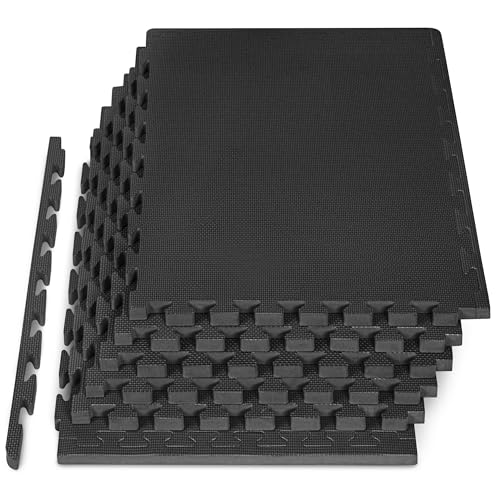 ProsourceFit
 Extra Thick Puzzle Exercise Mat (1 inch EVA)
One inch of EVA foam in puzzle form: the comfort pick for low impact rooms and play gyms.
- Material: EVA foam interlocking tiles per maker specification
- Thickness: 1 inch (other thicknesses in the maker line)
Sources: ProsourceFit puzzle mat product documentation, Amazon listing specifications
Check price on Amazonor add to your Amazon cart IncStores
 8mm Strong Rubber Interlocking Tiles
The manufactured rubber tile benchmark: consistent 8 mm rubber, clean edges, real gym behavior.
- Material: Recycled rubber interlocking tiles per maker specification
- Thickness: 8 mm
Sources: IncStores Strong Rubber Tiles product documentation, Amazon listing specifications
Check price on Amazonor add to your Amazon cartOur recommendation
Buy foam for rooms where bodies meet the floor: stretching, yoga, martial arts, kids training. Buy rubber for rooms where equipment and iron meet the floor. The materials are not rivals; they are answers to different questions, and the only wrong purchase is asking one to do the other's job.
What each does under load
Foam compresses by design, cushioning knees and falls, and keeps the dent where a rack foot stood. Rubber resists compression, stays level under equipment for years, and returns a dropped dumbbell's energy to the floor protection job instead of absorbing it as damage.
Comfort and stability trade
An inch of foam is the kindest surface here for floor work and the least stable for heavy standing lifts, where a firm base matters. Rubber in shoes feels like a commercial gym: hard, grippy, and honest. Training style, not preference in a showroom, should arbitrate.
Cleaning and lifespan
Rubber mops clean and shrugs off chalk, sweat, and dragged benches. Foam absorbs more, shows scuffs sooner, and tears at the corners of dropped dumbbells, but replaces tile by tile for very little money. Lifespan follows duty: each material lasts for years at its own job and months at the other's.
Choose ProsourceFit Extra Thick Puzzle Exercise Mat (1 inch EVA) if…
- Your training is floor based and low impact
- Kids or martial arts share the room
- Comfort is worth more than equipment duty
Choose IncStores 8mm Strong Rubber Interlocking Tiles if…
- Racks, benches, or dumbbells live on the floor
- You want one install for five plus years
- Easy mopping matters in a garage or basement
FAQ
Gym Flooring and Rubber Mats questions, answered straight
Can foam go under a treadmill as a cheap fix?
Thin foam under a treadmill compresses unevenly and can let the machine rock; a dense equipment mat from this guide is the correct product for that job and still inexpensive. Save foam for the open floor beside the machine.
Is thicker foam ever a rubber substitute?
No. Thickness changes foam's comfort, not its compression character under point loads. A 1 inch foam tile under a rack fails the same way a half inch tile does, on a slightly slower schedule.
Which is better for a kids plus parents room?
Foam in the shared open area, with any parent equipment standing on a rubber zone or equipment mats at the room's edge. The mixed layout costs little more than foam alone and keeps both generations' training honest.