In-depth review
IncStores 8mm Strong Rubber Tiles Review (2027): The General Gym Floor, Judged Over a Whole Room
Full research review of the IncStores 8 mm Strong rubber tiles: installation reality, edge system, odor timeline, durability themes, and room cost math.
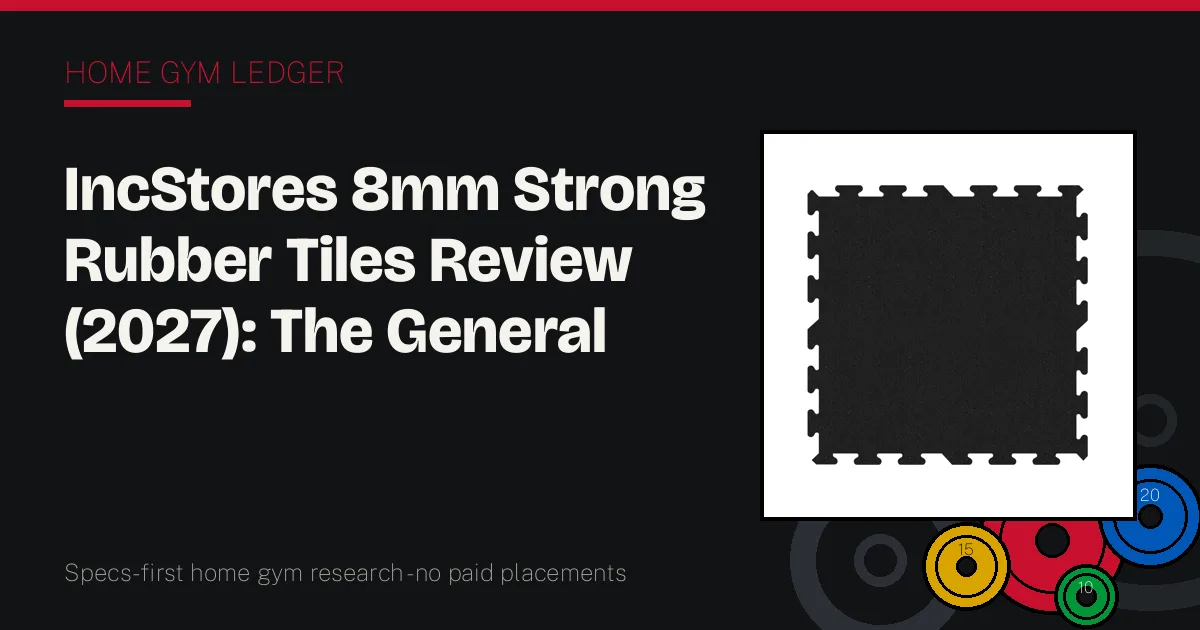

IncStores 8mm Strong Rubber Interlocking Tiles
The manufactured rubber tile benchmark: consistent 8 mm rubber, clean edges, real gym behavior.
- Recycled rubber interlocking tiles per maker specification
- Material
- 8 mm
- Thickness
- Sold per tile and in packs; coverage per tile stated on maker listing
- Coverage
Our verdict
These tiles are the sensible center of home gym flooring: dense 8 mm rubber, interlocks that stay down, and center, corner, and border pieces that make a room look built rather than improvised. They protect floors under the equipment most homes actually own and clean up with a mop. The honest costs are the category costs, unhidden: recycled rubber odor in the early weeks, a real per room budget, and a hard surface that asks for a separate mat when barefoot comfort matters. For a general gym built once and used for years, this is the floor this guide would lay first.
What we like
- Dense rubber construction resists indentation from racks and benches far better than foam
- Interlocking edges and center, corner, and border pieces give a finished room edge
- 8 mm class thickness balances floor protection, door clearance, and cost for most home gyms
What to watch out for
- New rubber smell needs ventilation time before a closed room feels neutral
- Per tile pricing makes full rooms a real budget line, not an accessory
Who it is for
Home gym owners flooring a garage, basement, or spare room for mixed strength and cardio training with moderate loads.
Installation: a weekend with a sharp blade
The interlock system lays without adhesive, and the skill is in the perimeter: measure twice, cut tiles to walls with a straightedge and a fresh blade, and expect rubber cutting to be slow, dusty work. Border and corner pieces finish the visible edges so the room does not end in puzzle teeth. Owners consistently say the second half of the room goes twice as fast as the first, and that the result looks professional enough to change how the whole gym feels.
Living on 8 mm rubber
Daily training on this surface is uneventful, which is the compliment flooring wants. Racks and benches sit without the rocking foam introduces, dumbbells set down hard do not reach the slab, and chalk and dust mop up without soaking in. Standing lifts feel stable in shoes. Barefoot work is firm, and most owners add one large exercise mat in the floor work zone rather than wishing the whole room were softer.
Odor and the first month
Recycled rubber announces itself. Owners report the smell strongest in week one, fading with ventilation, a maker guided wash, and time, faster in garages than in sealed basements. Plan the install when windows can open, and do not schedule it the day before guests use the room. By month two the topic disappears from owner discussion entirely, which is the pattern for every real rubber product in this guide.
Room cost, done honestly
Price your room by covered area, add cutting waste, and compare against the roll alternative in this guide before ordering. Tiles usually win in small to mid rooms and in rooms with obstacles; rolls win as area grows. Buying in one batch matters: fleck patterns vary subtly between runs, and a mid room batch change is visible in raking light.
Key specifications
- Material
- Recycled rubber interlocking tiles per maker specification
- Thickness
- 8 mm
- Coverage
- Sold per tile and in packs; coverage per tile stated on maker listing
- Installation
- Loose lay interlocking, cut to fit; no adhesive required for home use
- Surface use
- Racks, benches, dumbbell areas, and cardio equipment per maker guidance
What owners report
Commonly praised
- Tiles stay flat and locked through years of training, owners report
- Finished look elevates a garage gym immediately
- Cleans with a mop without soaking seams the way foam can
Common complaints
- Initial rubber odor is the most common complaint across all rubber flooring
- Cutting tiles to fit releases the same smell and needs a sharp blade and patience
- Color fleck consistency varies slightly between batches in some reports
Recurring themes from owner reviews on retailers and forums, summarised by our editors. Updated November 2026.
Sources: IncStores Strong Rubber Tiles product documentation, Amazon listing specifications
Also consider
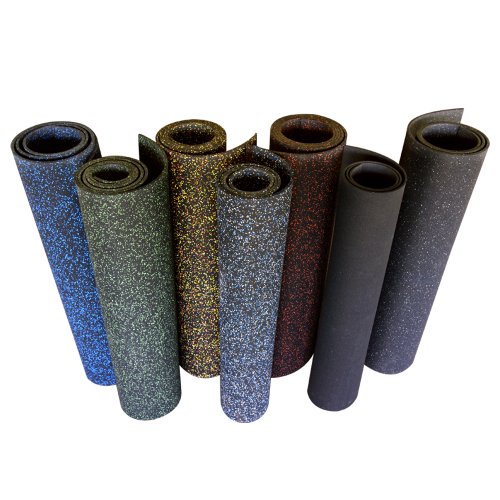 Rubber-Cal
 Elephant Bark Rubber Flooring Roll
A recycled rubber roll for whole rooms: few seams, custom lengths, and a utility surface that disappears under a gym.
- Material: Recycled rubber flooring roll per maker specification
- Thickness: Maker listed thickness options by roll selection; confirm on listing
Sources: Rubber-Cal Elephant Bark product documentation, Amazon listing specifications
Check price on Amazonor add to your Amazon cartChoose the Elephant Bark roll if your room is large and open, where seams beat interlocks on cost and appearance. Read our Rubber-Cal Elephant Bark Rubber Flooring Roll review
Research-based assessment: manufacturer specifications and documentation, cross-checked against retailer listings and recurring themes in published owner feedback. We do not claim hands-on testing we have not performed.
FAQ
Gym Flooring and Rubber Mats questions, answered straight
Can I install these over carpet?
Makers generally advise hard subfloors for rubber tiles. Low pile carpet installations exist in owner practice but can feel spongy and shift under racks. For a serious gym, the honest route is exposing the hard floor or building the gym where one already exists.
Do the interlocks hold under a heavy rack?
Yes, in normal home use the tiles stay locked and flat, particularly when the layout runs wall to wall. Point loads sit on the rubber, not on the interlock tabs, and owners report years of stability under rack feet.
How do I clean rubber tiles without damaging them?
Vacuum grit, mop with water and a maker compatible neutral cleaner, and avoid solvent heavy products that attack rubber. Dry the floor before training resumes. That routine, monthly in dusty garages, is the whole maintenance contract.