Head to head
Foam vs Rubber Interlocking Tiles (2027): ProsourceFit Puzzle Mat vs Rubber King Tiles
Foam and rubber interlocking tiles compared head to head on load, cushioning, seams, smell, and cost per square foot over five years.
ProsourceFit Puzzle Exercise Mat EVA Foam Interlocking Tiles vs Rubber King Interlocking Rubber Floor Tiles: the specs, side by side
| Spec | ProsourceFit Puzzle Exercise Mat EVA Foam Interlocking Tiles | Rubber King Interlocking Rubber Floor Tiles |
|---|---|---|
| Thickness | 1/2 in | 6 mm and 10 mm versions sold |
| Tile size | 24 x 24 in per tile | Interlocking tiles, size varies by version |
| Coverage | 24 sq ft per 6-tile pack (larger packs also sold) | Sold in multi-tile packs; check pack square footage on the listing |
| Material | High-density EVA foam, water-resistant surface | Recycled rubber with colored fleck options |
| Edges | 2 detachable border pieces included per tile | Interlocking edges; border and corner pieces on selected versions |
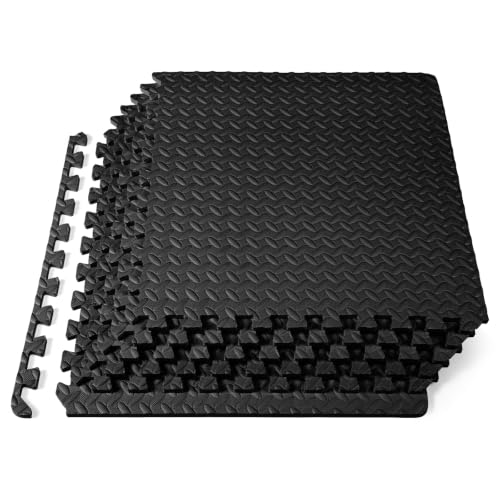 ProsourceFit
 Puzzle Exercise Mat EVA Foam Interlocking Tiles
The default foam puzzle mat: 24 inch tiles, half inch thick, borders included.
- Thickness: 1/2 in
- Tile size: 24 x 24 in per tile
Sources: ProsourceFit puzzle exercise mat product documentation, Amazon listing specifications
Check price on Amazonor add to your Amazon cart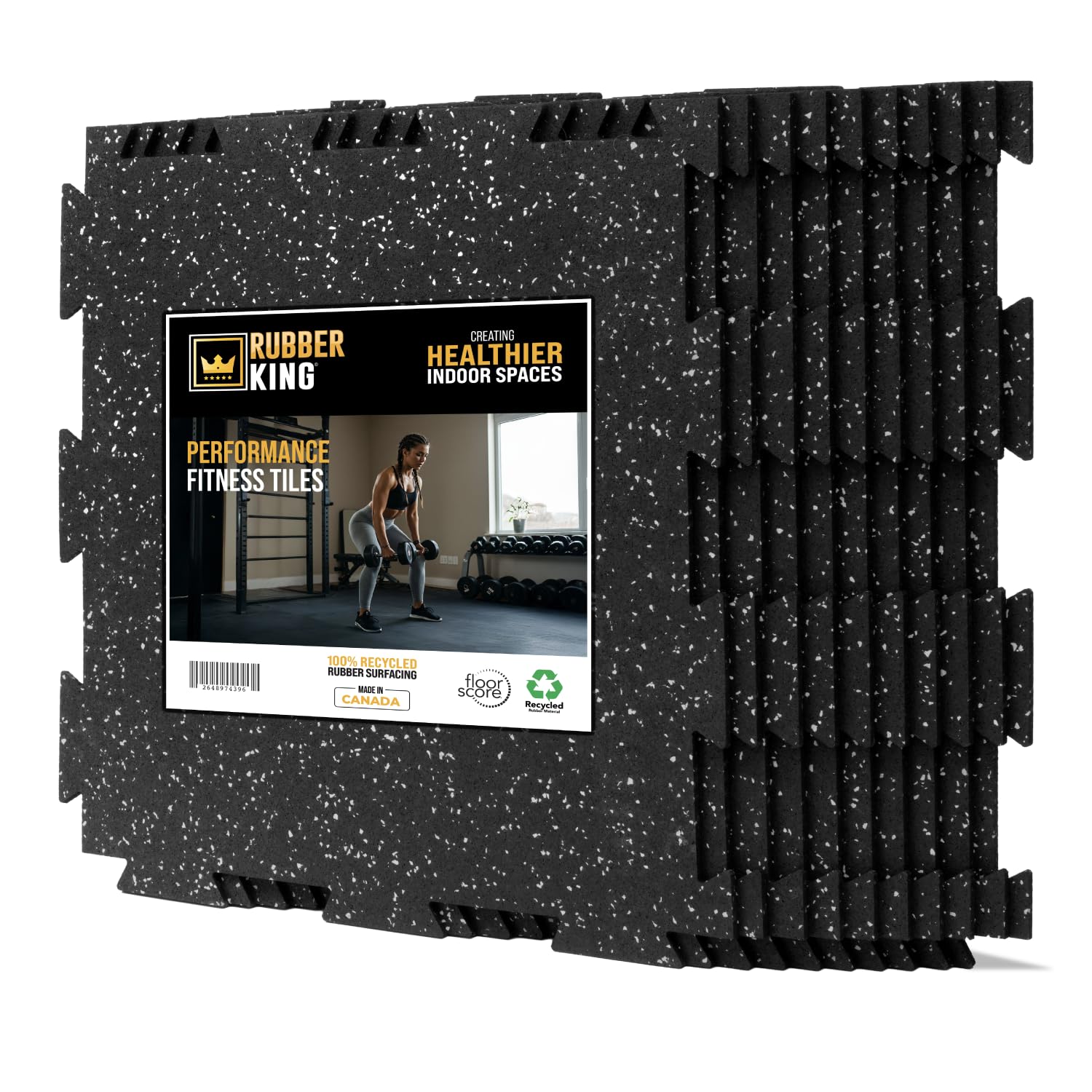 Rubber King
 Interlocking Rubber Floor Tiles
Recycled rubber tiles that behave like gym flooring, not like a mat.
- Thickness: 6 mm and 10 mm versions sold
- Tile size: Interlocking tiles, size varies by version
Sources: Rubber King interlocking tile product documentation, Amazon listing specifications
Check price on Amazonor add to your Amazon cartOur recommendation
Buy foam (ProsourceFit) if your training is bodies on the floor and light gear in hand. Buy rubber (Rubber King) if weights are stored, carried, and set down hard in the space. The wrong-material purchase is the expensive one, because it gets replaced; the right material at either price tends to stay for years.
Load and impact
Rubber spreads point loads and mutes set-downs; foam dents under feet and bottoms out under drops. A rack on rubber is a setup. A rack on foam is a countdown to replacement tiles.
Comfort and grip
Foam cushions knees, elbows, and backs in a way dense rubber never will. Rubber grips shoes harder and stays planted under lateral work that creeps foam seams apart. Each material wins the quality the other cannot offer.
Cost, smell, and lifespan
Foam costs a fraction per square foot, smells briefly, and shows wear in seasons of heavy use. Rubber costs several times more, needs an airing-out period, and then serves for years with minimal visible change. Cost per year is closer than cost per pack suggests.
Choose ProsourceFit Puzzle Exercise Mat EVA Foam Interlocking Tiles if…
- Your training is yoga, mobility, bodyweight, and light dumbbells
- The room is rented or reconfigured often
- Budget per square foot is the deciding constraint
Choose Rubber King Interlocking Rubber Floor Tiles if…
- A rack, bench, or dumbbell set lives on the floor full time
- You set weights down hard at the end of sets
- You want a five-plus-year floor and will pay for it once
FAQ
Interlocking Floor Tiles questions, answered straight
Can I mix foam and rubber in one room?
Yes, and it is the smartest layout for many gyms: rubber under the rack and dumbbell zone, foam on open floor. Match thicknesses as closely as possible or use a transition strip so the step between zones does not catch feet.
Which is better over concrete for winter garages?
Both insulate noticeably. Foam feels warmer underfoot; rubber handles the garage load and moisture reality better. Unheated garages with vehicles point to rubber or hard tiles.
Which would you buy for a first gym?
Foam, unless lifting is already the main training. First gyms change layout and focus within a year, and foam's low cost makes that learning cheap. Migrate the heavy zone to rubber when the training settles.