In-depth review
Rubber King Interlocking Rubber Tiles Review (2027): Real Gym Floor, Tile by Tile
Full research review of Rubber King interlocking rubber tiles: density, load spread, seam hold, odor, and where rubber beats foam outright.
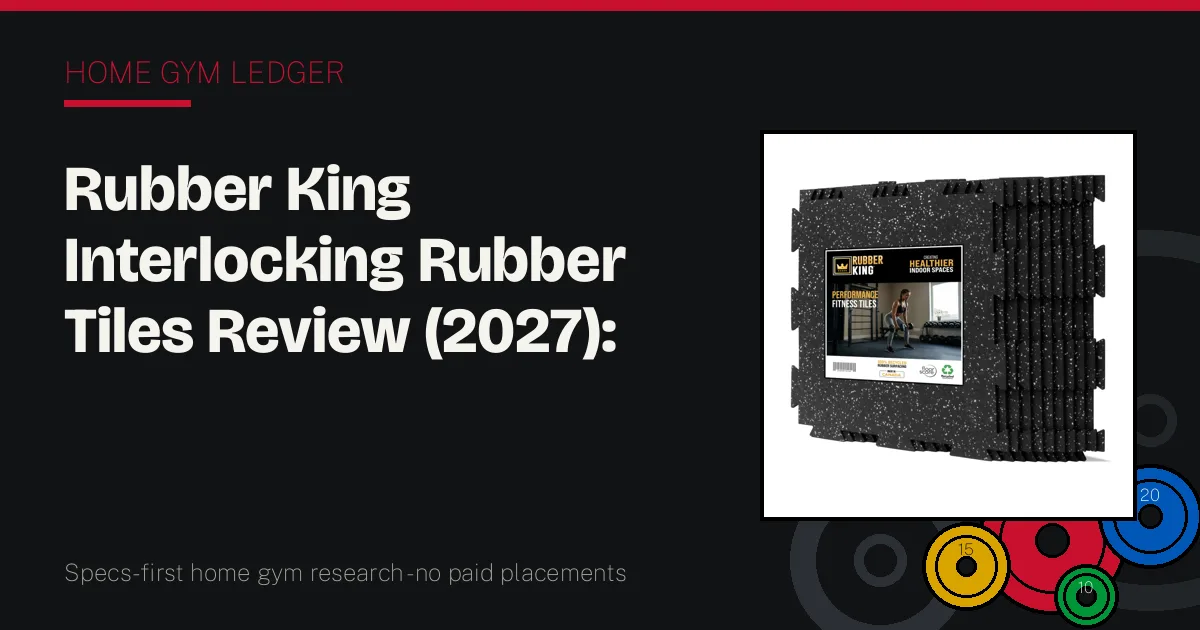
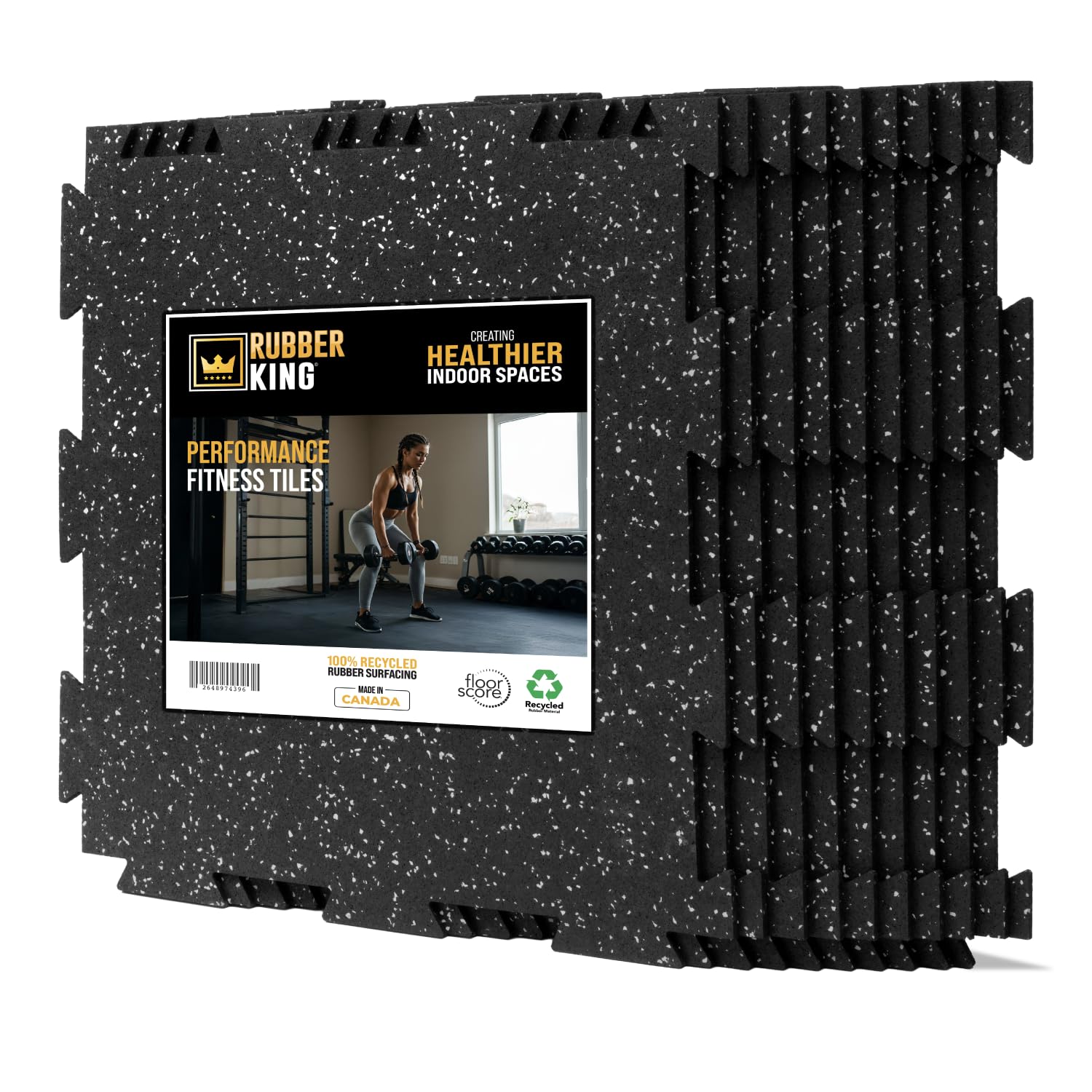
Rubber King Interlocking Rubber Floor Tiles
Recycled rubber tiles that behave like gym flooring, not like a mat.
- 6 mm and 10 mm versions sold
- Thickness
- Interlocking tiles, size varies by version
- Tile size
- Sold in multi-tile packs; check pack square footage on the listing
- Coverage
Our verdict
Rubber King tiles are what foam buyers purchase second, after learning the load lesson once. The recycled rubber is dense enough to spread rack feet, quiet enough to change how a garage gym sounds, and grippy enough to stay planted under lateral work that walks foam across the room. The costs are literal and sensory: several times the foam price per square foot, real weight per tile, and a rubber smell that demands an airing-out period before the room is pleasant. For any space where weights are stored, carried, and set down hard every session, this is the correct first purchase rather than the upgrade.
What we like
- Dense recycled rubber spreads rack and bench loads instead of denting like foam
- Interlocking edges hold together under lateral work far better than foam puzzle teeth
- Individual tiles can be lifted for cleaning or replacement without disturbing the room
What to watch out for
- Rubber odor on opening is strong and needs ventilation time before indoor use
- Cost per square foot is several times the foam options in this guide
Who it is for
Garage and basement lifters with dumbbell sets, benches, and racks who want tile-format install and repair without stall mat wrestling.
Load spread in daily lifting
Density is the whole story. A bench loaded with a lifter and dumbbells rests on four small feet; on rubber those feet make shallow, recoverable impressions instead of permanent foam dents. Dumbbells set down at the end of a hard set land with a muted thud, and the tile, not the concrete or the dumbbell coating, absorbs the meeting.
Seam hold and install behavior
Rubber interlocks plus tile weight make a self-anchoring floor. Owner installs routinely skip adhesive entirely, including in garage gyms with daily lateral work. The install labor is in cutting: thick rubber wants a sharp utility knife, a straightedge, and patience at every post and doorway.
The smell question, honestly
Recycled rubber off-gasses, and Rubber King is not exempt. The standard owner routine works: air tiles in a ventilated space for several days, install, mop once, and let room ventilation finish the job over one to two weeks. Sensitive noses in small sealed apartments should sample one pack before committing a whole room.
Cleaning and long-term wear
The flecked surface hides chalk and dust between cleanings and mops without absorbing moisture. Wear in owner reports is slow: high-traffic lanes polish slightly, edges stay intact, and damaged tiles (rare) swap individually. This is a five-to-ten-year floor in home use patterns, which reframes its price per foot.
Key specifications
- Thickness
- 6 mm and 10 mm versions sold
- Tile size
- Interlocking tiles, size varies by version
- Coverage
- Sold in multi-tile packs; check pack square footage on the listing
- Material
- Recycled rubber with colored fleck options
- Edges
- Interlocking edges; border and corner pieces on selected versions
What owners report
Commonly praised
- Feels like commercial gym flooring once installed
- Dropped dumbbells land with a thud instead of a bounce or a crack
- Tiles stay put without adhesive in most installs
Common complaints
- Initial rubber smell is the most common complaint by a wide margin
- Cutting thick rubber to fit corners takes real effort and a sharp blade
- Tile weight makes large orders a heavy delivery
Recurring themes from owner reviews on retailers and forums, summarised by our editors. Updated November 2026.
Sources: Rubber King interlocking tile product documentation, Amazon listing specifications
Also consider
 IncStores
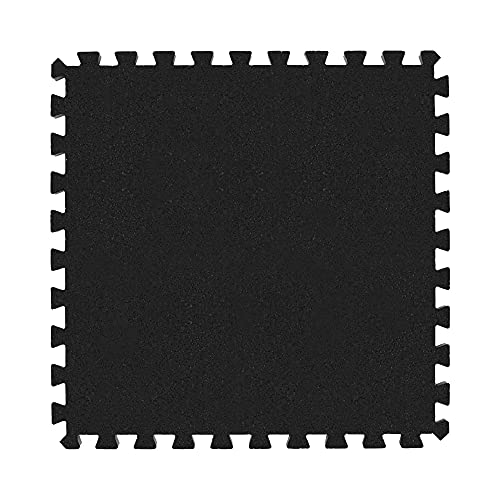
 Impact Foam Rubber Floor Tiles (3/4 in, 2x2 ft)
3/4 in interlocking tiles with gym equipment impact in mind: a recycled rubber wear surface over a foam core.
- Thickness: 3/4 in (19 mm class)
- Tile size: 2 x 2 ft interlocking squares
Sources: IncStores impact foam rubber tile product documentation, Amazon listing specifications
Check price on Amazonor add to your Amazon cartChoose the IncStores impact tiles for a thicker 3/4 in lifting zone, accepting the foam core under their recycled rubber surface.
 ProsourceFit
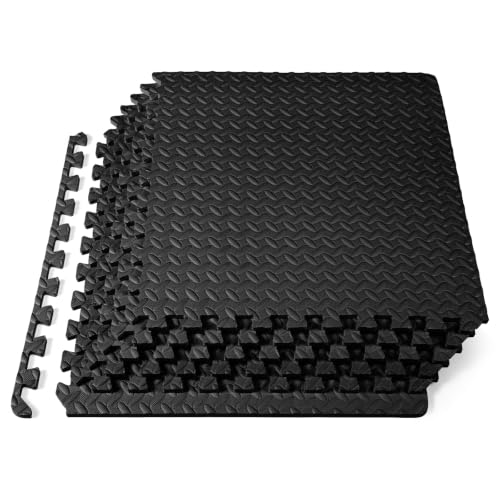
 Puzzle Exercise Mat EVA Foam Interlocking Tiles
The default foam puzzle mat: 24 inch tiles, half inch thick, borders included.
- Thickness: 1/2 in
- Tile size: 24 x 24 in per tile
Sources: ProsourceFit puzzle exercise mat product documentation, Amazon listing specifications
Check price on Amazonor add to your Amazon cartChoose ProsourceFit foam if your training is floor work and light gear; rubber density is wasted money and lost cushioning there. Read our ProsourceFit Puzzle Exercise Mat EVA Foam Interlocking Tiles review
Research-based assessment: manufacturer specifications and documentation, cross-checked against retailer listings and recurring themes in published owner feedback. We do not claim hands-on testing we have not performed.
FAQ
Interlocking Floor Tiles questions, answered straight
Can Rubber King tiles go over hardwood?
With a protective underlay sheet, yes. Rubber can react with some floor finishes over long contact, so the sheet is cheap insurance, and lifting tiles after the first month to check the finish is a sensible habit.
6 mm or 10 mm for a dumbbell area?
10 mm for areas where dumbbells are set down hard and racks stand; 6 mm is a general training surface for lighter loads and mobility-plus-weights rooms. When in doubt, the thicker tile in the drop zone and thinner elsewhere is a common split.
Do the tiles need adhesive or tape?
Most home installs need neither, thanks to tile weight and interlock fit. Small installs of four to six tiles in open space may benefit from perimeter tape until equipment weight pins them.