Fix it
Stretching Machine Problems and Fixes: Crank Play, Uneven Arms, Worn Pads, and Slipping Settings
Fix common stretching machine problems: leg arms that open unevenly, cranks and wheels with play, settings that drift, worn padding.

Stretching machines are simple mechanisms, and their faults are simple too: play where there should be none, drift where a setting should hold, and wear where body meets padding. Work this list at the first change in feel. A leg frame that opens unevenly or a setting that slips under load is a stop-and-fix problem, not a train-through-it problem.
Leg arms open unevenly or one side lags
Close the frame fully, then check that both arms sit at the same closed angle. Clear grit from the drive and pivot points, confirm the connecting linkage bolts are snug on both sides, and open slowly through the range watching for the lagging point. A bent linkage or a cracked pivot housing is a parts conversation with the maker, not a home repair.
Crank or wheel has play before the arms move
Some free movement at the handle is normal in geared drives; growing play is wear information. Check the handle fastener and the drive connection for looseness, and tighten hardware to snug, not forced. If play keeps growing after hardware checks, log it and contact the maker while the frame is still inside its warranty window.
Setting drifts wider during a hold (leg frames)
Stop using wider settings until this is solved. Clean the drive path, verify the ratchet pawl or wheel brake engages fully at each step, and test the hold unloaded, then at a modest setting. Drift under load after cleaning and engagement checks means the holding part is worn and should be replaced.
Seated pivot feels rough or sticks mid-travel
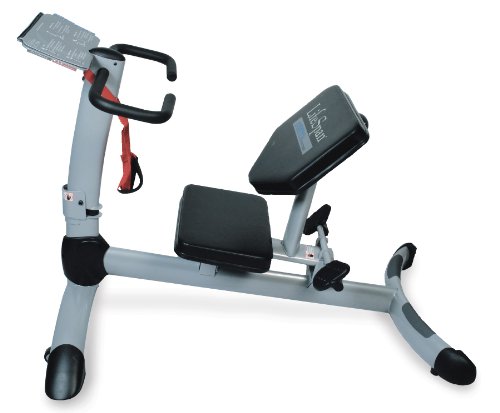
Clear the pivot area of dust and floor grit, check for anything trapped under the seat path, and confirm the machine sits level, because a rocking base loads the pivot unevenly. Move the seat slowly through its travel unloaded. Roughness that survives cleaning and leveling is internal wear; contact the maker rather than adding lubricant the manual does not specify.
Padding is compressed, split, or slippery
Compressed pads change the geometry of a hold before they look truly worn. Clean vinyl pads with a damp cloth only, keep them out of prolonged direct sun, and replace pads that have split or gone hard, because every position on the machine is indexed off those contact surfaces. Strap webbing on station designs gets the same inspection for fraying.
Still stuck? Compare the current top picks
Full ranked list

FAQ
Stretching Machines questions, answered straight
How often should a stretching machine be inspected?
A quick hardware and pad check monthly for daily users, and before the first session after any move or storage period. The checks take minutes: bolts snug, arms even, settings holding unloaded, pads intact.
Can I lubricate a crank or pivot that feels dry?
Only where the maker's manual names a lubricant and a location. Most drives in this category run dry by design, and household oils attract the grit that causes stiffness. Cleaning first solves most feel problems.
When is a fault a stop-using-it fault?
Any setting that will not hold, any crack in a frame, seat, or pivot part, and any strap with visible fraying. Those three end the session until the part is replaced, because each one holds body weight or body position directly.