Fix it
Gym Flooring Problems and Fixes: Shifting Mats, Lingering Odor, Dents, Curling Edges, and Seam Gaps
Fix common gym flooring problems: mats that wander, rubber smell that will not fade, foam dents, roll edges that curl, and puzzle tiles that separate mid.

Floors complain quietly and then all at once: a seam that opens in month three, a mat that has migrated an inch a week, an odor that outstays its welcome. Nearly every fault in this list traces to installation conditions rather than defective material, which is good news, because conditions can be changed in an afternoon. Work the fixes in order and keep notes; flooring problems repeat in patterns, and the pattern tells you the cause.
Mats or tiles shift and seams open during training
Floating islands move; anchored layouts do not. Extend coverage wall to wall where possible, tape seams with mat or double sided flooring tape, and park the heaviest equipment across joints. For puzzle tiles, confirm every interlock is fully seated and consider taping the perimeter of high energy zones like jumping areas.
Rubber smell lingers past the first weeks
Ventilate aggressively with outside air, wash the surface with water and a maker compatible cleaner, and give recycled rubber in a sealed basement more time than garage installations need. Activated charcoal and time finish what airflow starts. If one mat smells dramatically stronger than its neighbors, air that piece outdoors; batch variation concentrates odor in single pieces.
Foam tiles dented under equipment
The dent is the material's honest answer to a point load, and it rarely recovers fully. Move the equipment onto rubber or an equipment mat, rotate fresh tiles into the floor work zone, and keep the dented tiles as spares or under storage. Prevention is the only real fix: foam never belongs under standing loads.
Roll flooring edges keep curling
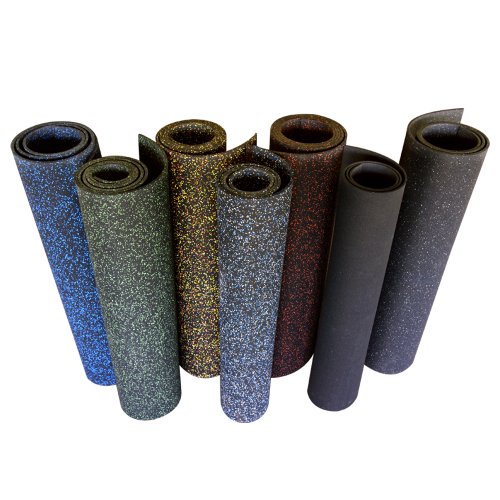
Give the roll more relaxation time with weight along the edges in a warm room, then tape the perimeter. Ends that were innermost on the roll curl most and respond slowest. If a single end refuses after a week of weighting, trimming that section square and taping it is the installer's pragmatic finish.
Flooring feels unstable or spongy under a rack
Check what is under the rack feet: foam, doubled layers, or tiles over carpet all produce this feel. The fix is a single layer of rubber on a hard subfloor in the rack zone. Also confirm rack feet sit mid tile rather than on interlocks, and relevel the rack after any flooring change.
Moisture or musty smell under the flooring
Lift a section and inspect the subfloor. Basement slabs can push moisture that any covering traps. Dry the area fully, address the moisture source, and follow maker guidance on barriers or product suitability for damp slabs before relaying. Do not seal a wet floor under new material and call it solved; the smell will file the report for you.
Still stuck? Compare the current top picks
Full ranked list

FAQ
Gym Flooring and Rubber Mats questions, answered straight
Can I patch one damaged tile in the middle of a room?
Yes, that is a core advantage of tiles and individual mats: lift the surrounding interlocks, swap the piece, and reseat. Rolls repair with a cut and taped patch from spare material, which is why this guide advises ordering spare coverage in the same batch.
Why does my floor squeak or click underfoot?
Usually grit under a tile, a partially seated interlock, or flooring over an uneven subfloor spot. Lift the noisy section, clean both faces and the slab, and reseat with full pressure along the interlocks. A persistent single spot often maps to a subfloor dip that a thicker zone or leveling patch should address.
How often should gym flooring be deep cleaned?
Sweep or vacuum weekly in dusty spaces, mop monthly in typical home use, and clean spills when they happen, especially chalk and protein drinks that grind into textures. Rubber tolerates this routine for years; foam rewards gentler cleaners and no soaking of the interlocks.